Acid Base Reactions
Factors That Affect Base Strength In Organic Chemistry
Last updated: May 28th, 2026 |
Basicity In Organic Chemistry: Some Basicity Trends
In this article we go through some important basicity trends in organic chemistry. (Previous article – Acidity Trends)
- The stronger the acid, the weaker the conjugate base; any factor which stabilizes the conjugate base has the effect of increasing acidity.
- OK, great. But what if we’re asked to determine which base is stronger? How do we do that?
- By flipping our trends around!
- One way of thinking about base strength is “instability” of a pair of electrons.
- So any factor which destabilizes the conjugate base…. increases basicity.
- For instance, removing resonance… increases basicity; removing electron-withdrawing groups…increases basicity; decreasing electronegativity of the atom… increases basicity.
- In other words, basicity will be increased by the opposite of any factor which increases acidity.
- Avoid the common misconception that “weak acids are strong bases”. Not true! Methane (CH4) is a weak acid, but cannot act as a base since it lacks a lone pair of electrons. The proper phrasing is that “weak acids have strong conjugate bases”. The conjugate base of CH4, CH3(-) is an extremely strong base.
After reading this article, you should be better at spotting basicity trends. You can test yourself with lots of quizzes on this topic at the bottom.

- “Basicity” Is Just Another Word For “Stability Of A Lone Pair Of Electrons”
- First Things First: Basicity Requires a Lone Pair of Electrons
- Basicity Increases With Increasing Negative Charge
- Basicity Increases With Decreasing Electronegativity and Size Of Atom
- Basicity and Resonance
- Basicity and Inductive Effects
- Basicity Increases As s-orbital Character Decreases
- One Approach To Solving “What’s The Strongest Base” Problems
- A Final Word of Caution
- Notes
- Quiz Yourself!
1. “Basicity” Is Just Another Word For “Stability Of A Lone Pair Of Electrons”
We’ve learned 5 key factors to look at that determine acidity.
The natural next question is, well, what about factors that the affect basicity?
Good news: they are the same factors. But they work in opposite directions.
Recall that acidity is determined by the equilibrium:
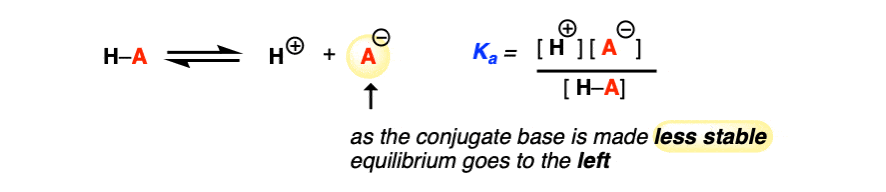
- The further this equilibrium goes from left to right, the stronger the acid.
- Any factor which stabilizes the conjugate base A(-) increases acidity.
So what does this mean for basicity?
If we want to think about factors that increase basicity, then we need to look at this equilibrium from right to left.
- The further this equilibrium goes from right to left, the stronger the base.
- Any factor which destabilizes the conjugate base A(-) increases basicity.
That’s right. We can really just think of basicity as “instability of a lone pair of electrons”. The more unstable a pair of electrons is, the more basic it will be.
So here are the two sides of the same coin:
- The stronger the acid, the weaker the conjugate base, and
- The weaker the acid, the stronger the conjugate base.
In this article, let’s look again at the five factors that influence acidity, but we will look at it through the lens of basicity instead.
2. First Things First: Basicity Requires A Lone Pair
Let’s start with a simple point.
Recall that one definition of basicity (Lewis basicity) states that a base is an electron-pair donor.
If a molecule or atom can’t donate a lone pair of electrons, it can’t be a base.
(For our purposes here, this means “it must have a lone pair of electrons”. Later on you might see examples like BH4(-) and AlH4(-) which are basic since they can readily donate H(-) but we’re not going to deal with that right now).
CH4 is not a base since there is no lone pair of electrons on carbon. Same for ethane, hexane, cyclopentane and other alkanes.
Similarly, NH4+ is not a base since there is no lone pair on nitrogen.
So any discussion about the “base strength” of molecules like this just ends with – no lone pair, not a base, discussion over.
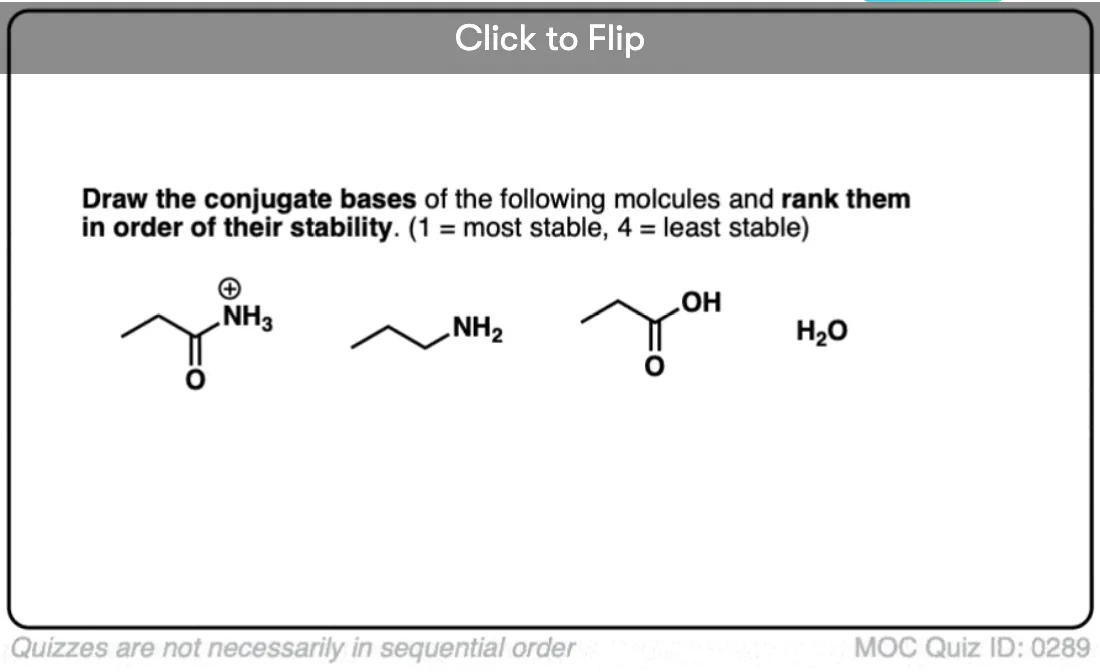
3. Basicity Increases With Increasing Negative Charge
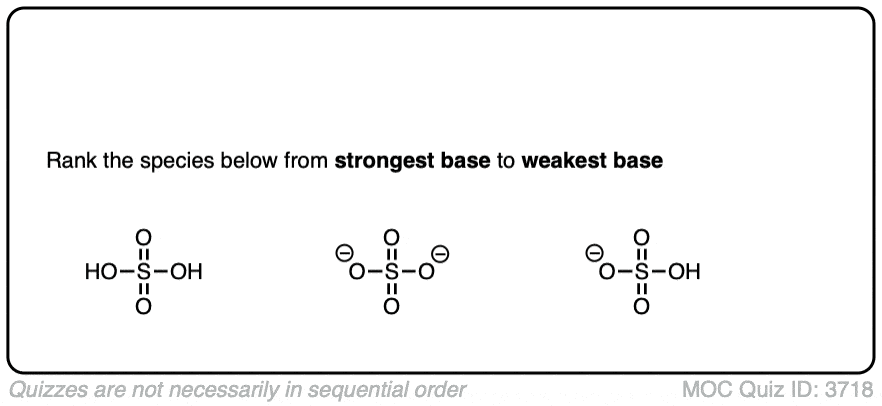
If acidity increases as the positive charge is increased, then it follows that basicity increases as negative charge is increased.
Increasing the density of negative charge is destabilizing and we would predict this to increase basicity.
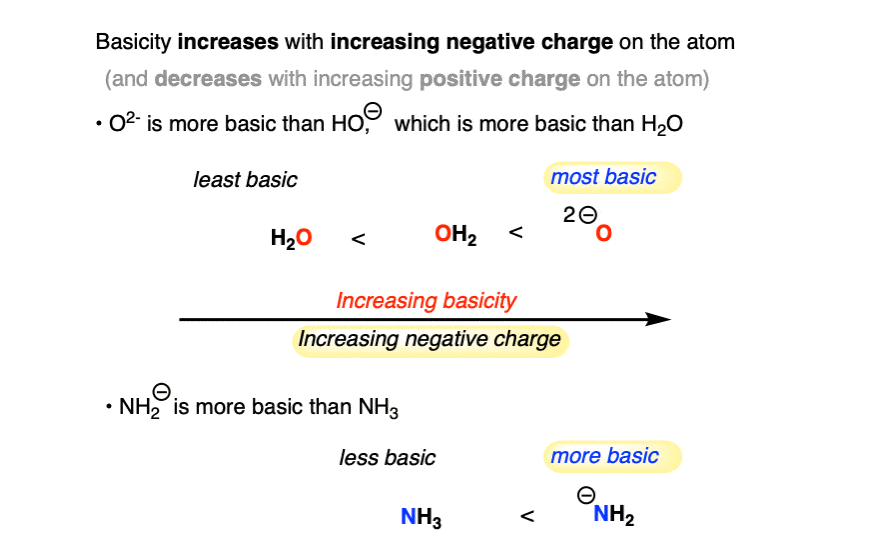
This is another way of saying that a conjugate base is always a stronger base than its parent acid, since a conjugate base is what’s left over after a molecule loses H+ (that is, its charge becomes more negative by 1).
I realize this may fall into the “water is wet” category of obvious observations for some people, but sometimes it’s helpful to have this clearly spelled out. :-)
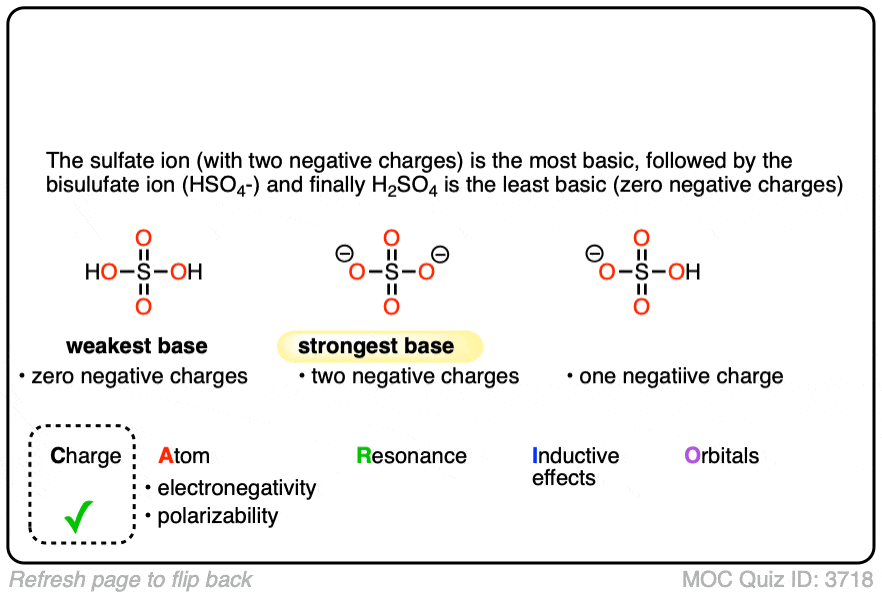
In Gen Chem you might have done some titrations of phosphate ion and learned that (PO4)3- is more basic than [HPO4]2- which is more basic than [H2PO4]- which is more basic than phosphoric acid. Same idea.
 Click to Flip
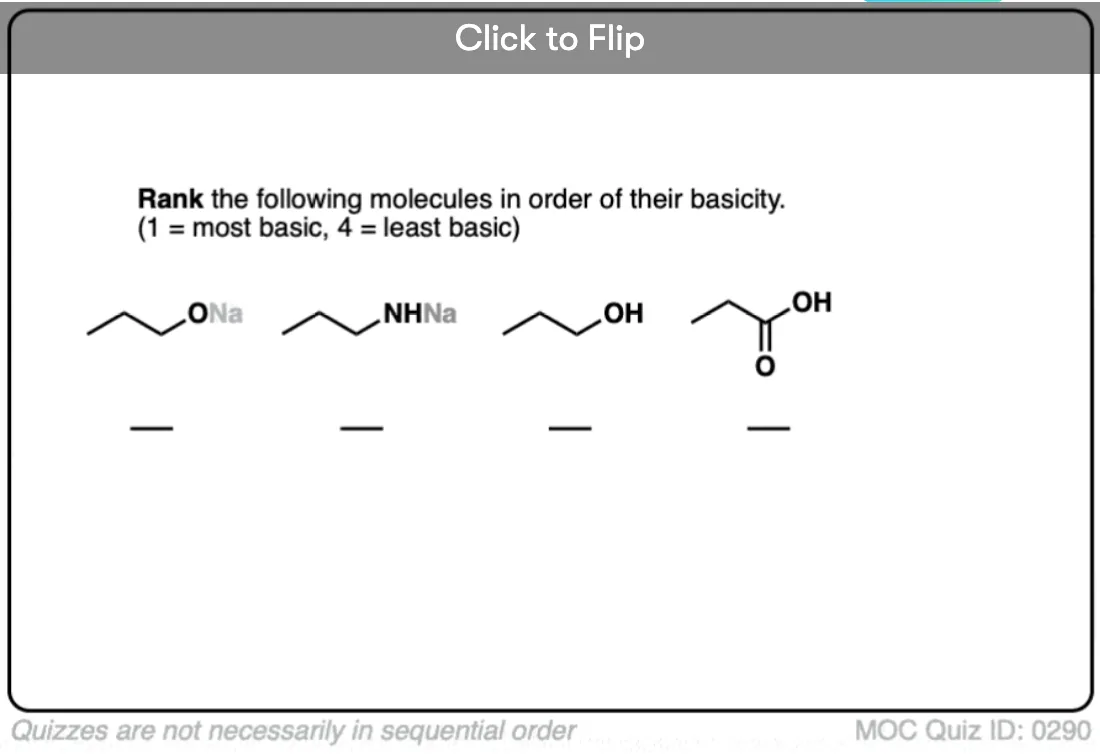
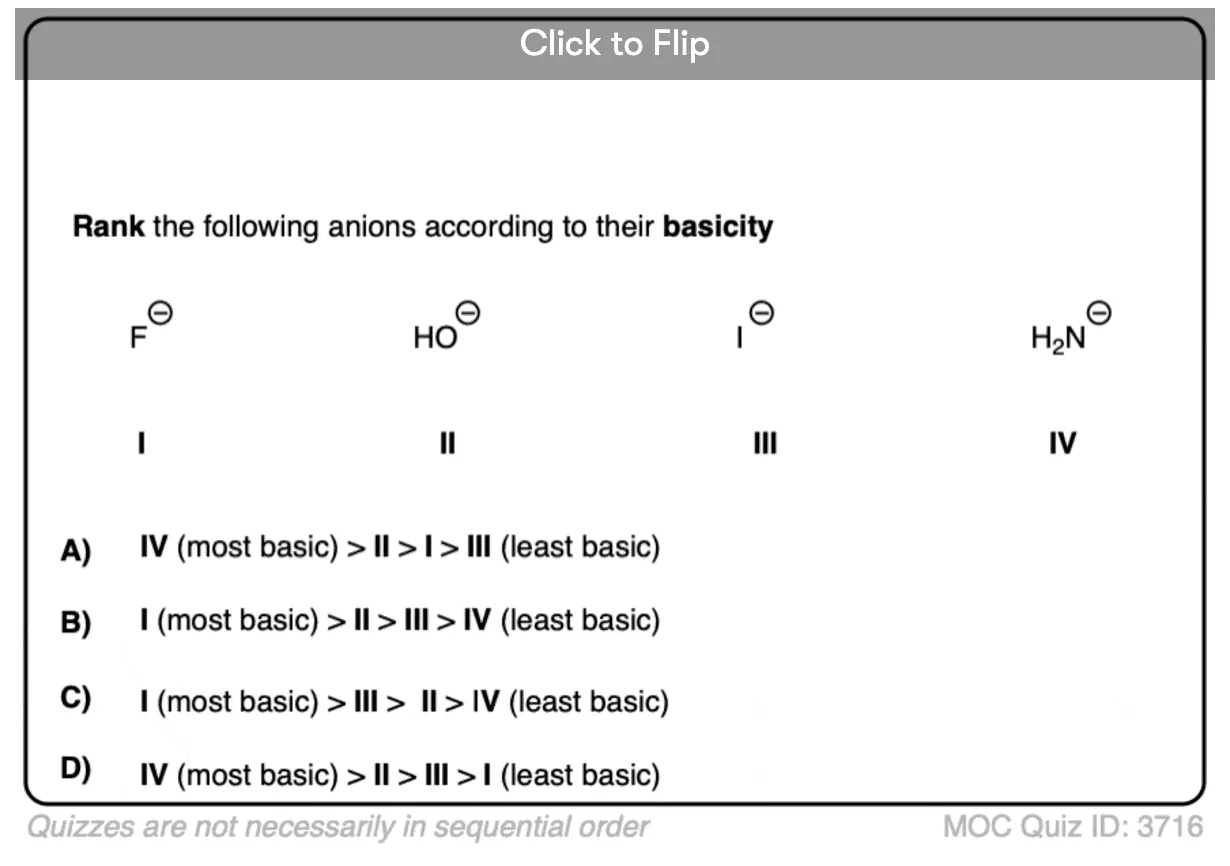
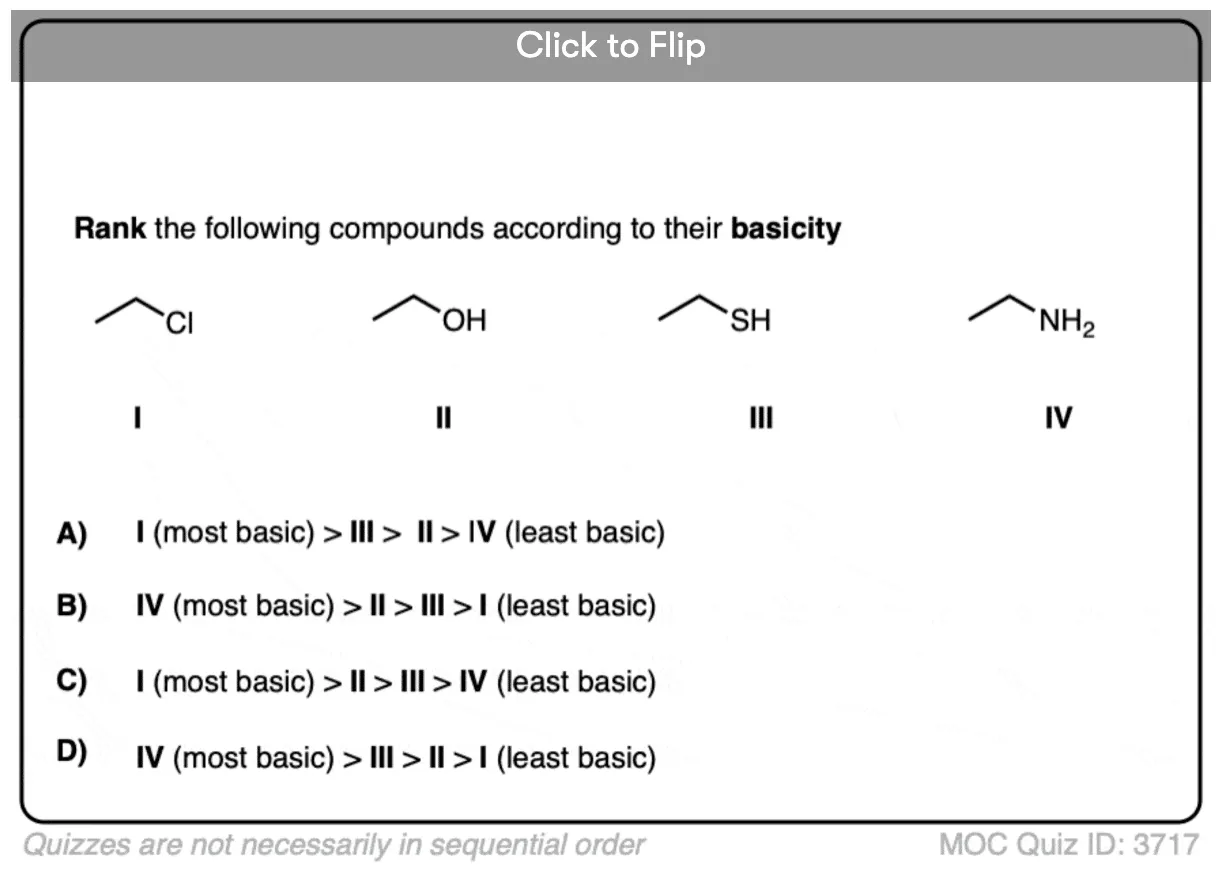
4. Basicity Increases Depending On Electronegativity and Size Of The Atom
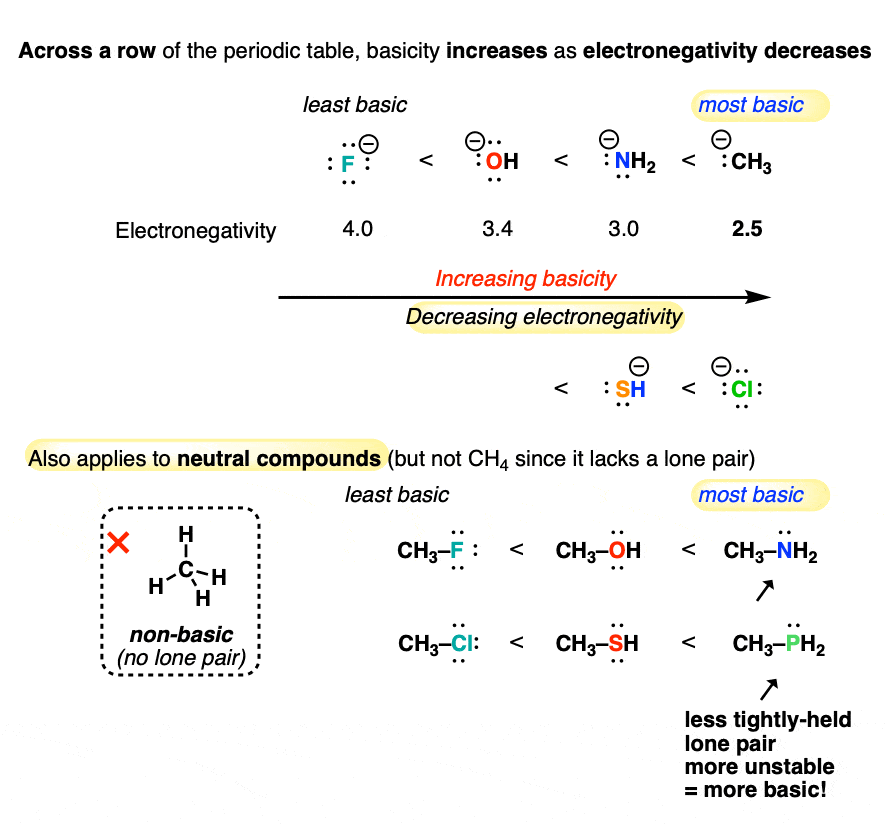
If acidity increases as the atom becomes more electronegative going from left to right across the periodic table, then we should predict that basicity increases as electronegativity decreases going from right to left along the periodic table.
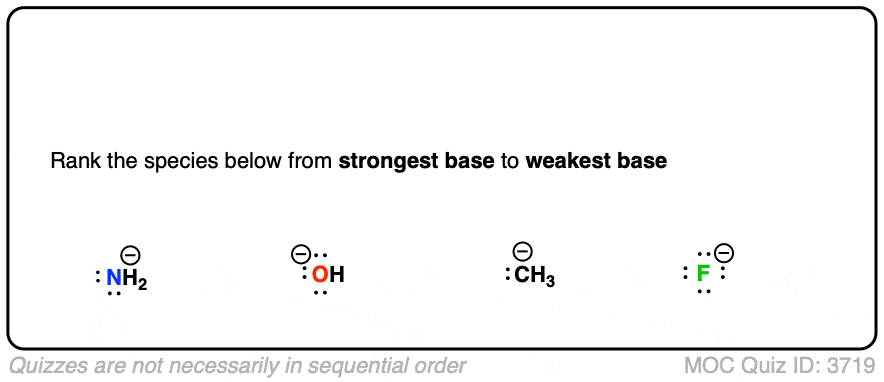
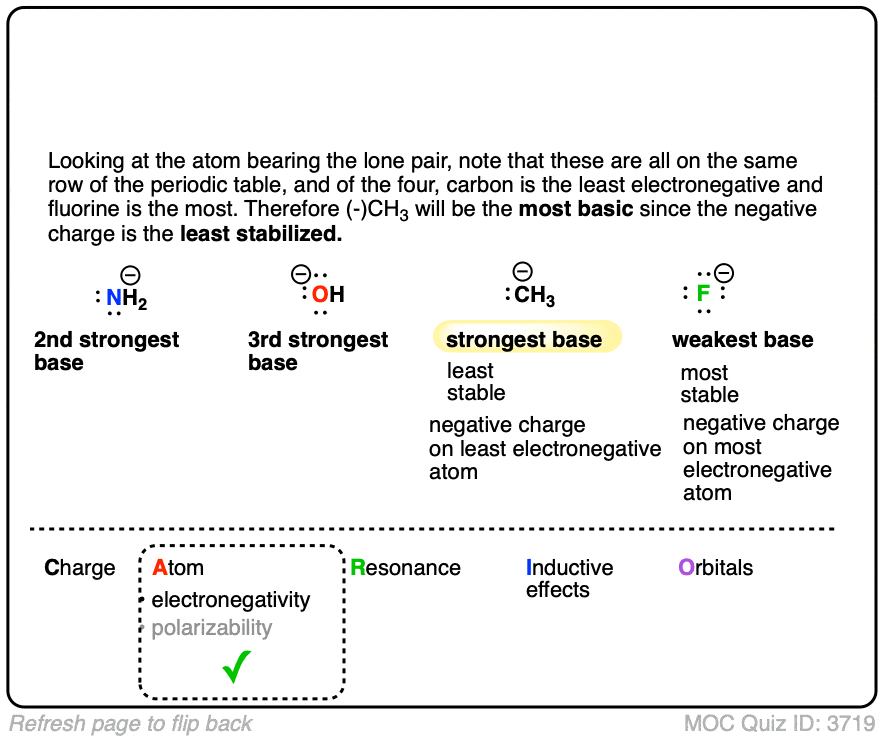
This means that CH3(-) is a stronger base than NH2(-) which in turn is a stronger base than HO(-) which is stronger than F(-).
It also applies to neutral compounds; it helps to explain why amines are more basic than alcohols which in turn are more basic than alkyl halides; the electron pair isn’t held as tightly!
Try this quiz:
 Click to Flip
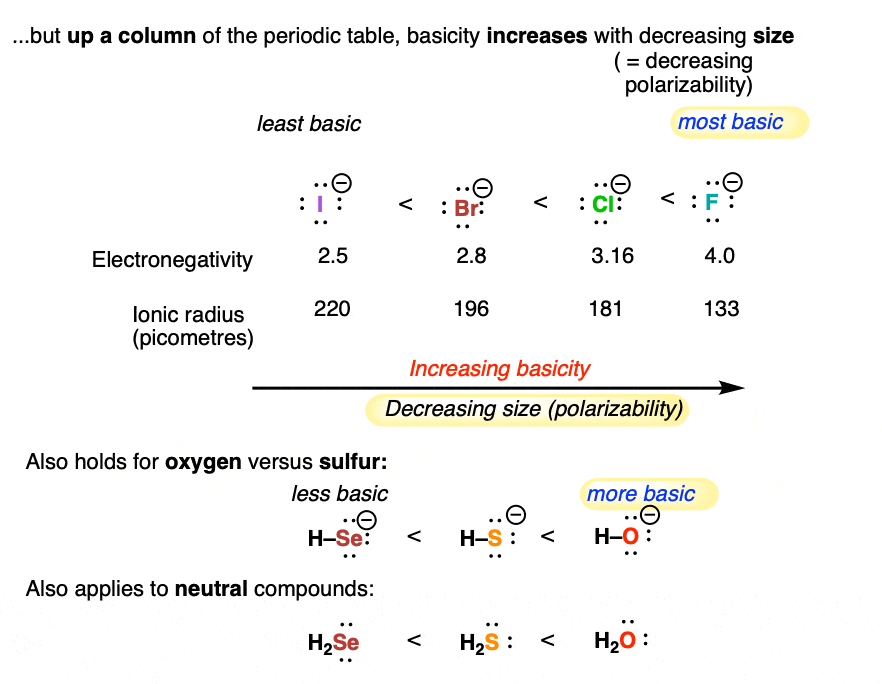
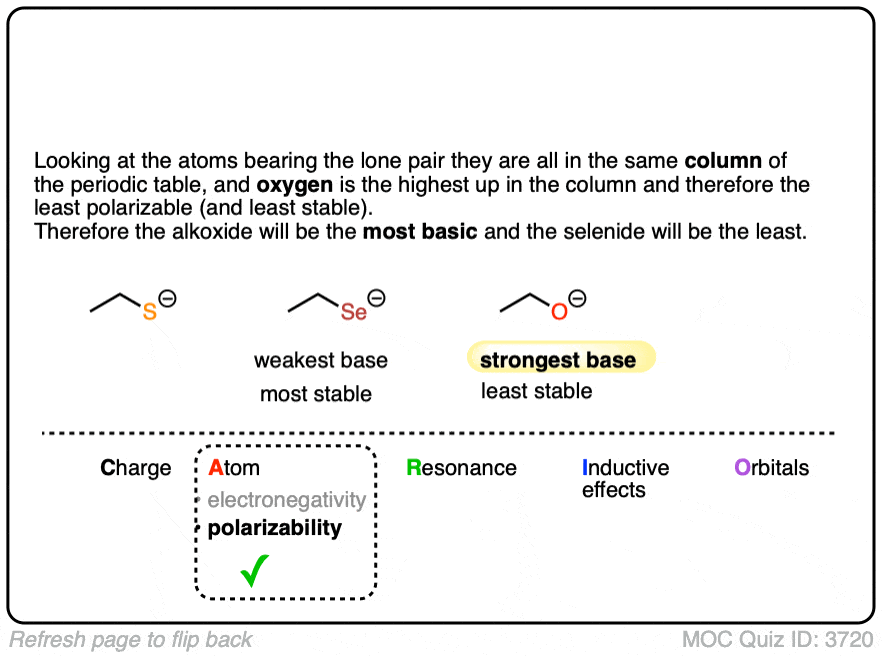
We also saw that acidity increases going down a column of the periodic table (H-F, H-Cl H-Br H-I) since the negative charge is spread out over a much larger volume as the size of the atom increases (greater polarizability). Negative charge in the iodide ion (I-) is more stable than it is in the fluoride ion (F-) since the same charge of -1 is spread out over a larger volume.
Conversely, basicity should increase going up a column of the periodic table since the negative charge is spread out over a smaller volume.
So F(-) is more unstable (more basic!) than Cl(-), which is more basic than Br(-), which in turn is more basic than I(-).
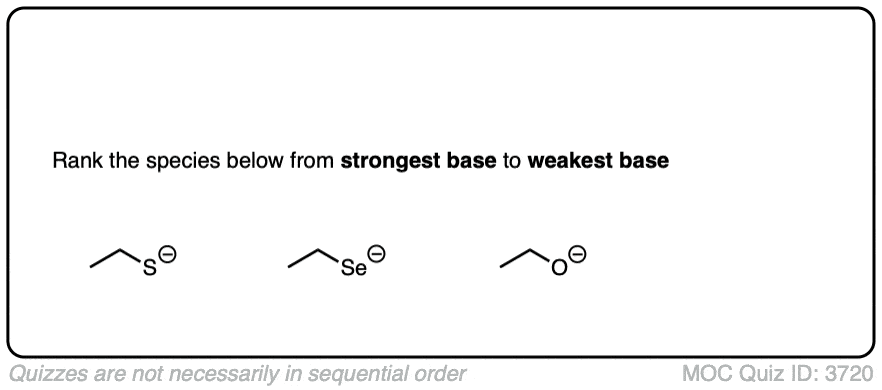
This also helps to explain why alkoxides (RO(-) ) are more basic than thiolates (RS(-) and also why neutral alcohols (ROH) are more basic than thiols (RSH). Same idea.
Think you understand the concept? Try this quiz:
 Click to Flip
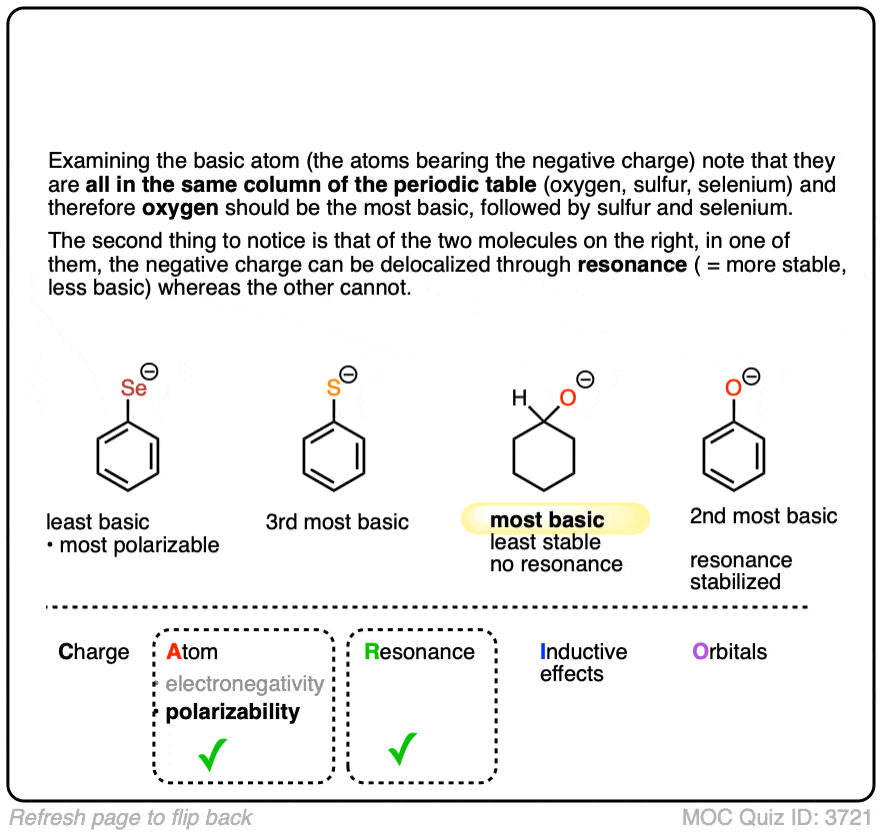
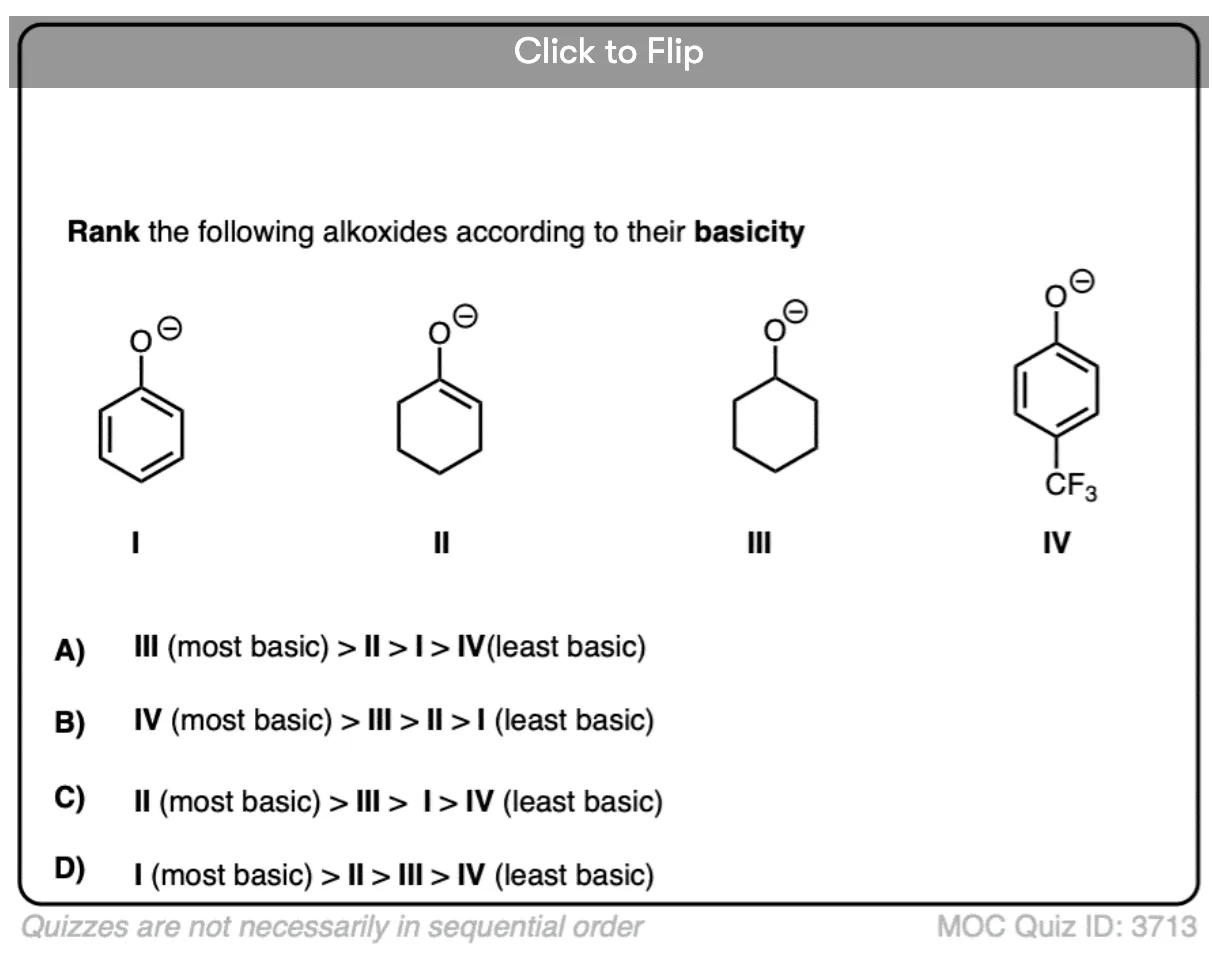
5. Basicity and Resonance
We’ve seen that acidity increases if the conjugate base can be stabilized through resonance, since that lone pair of electrons can be distributed over a greater volume (“delocalization”).
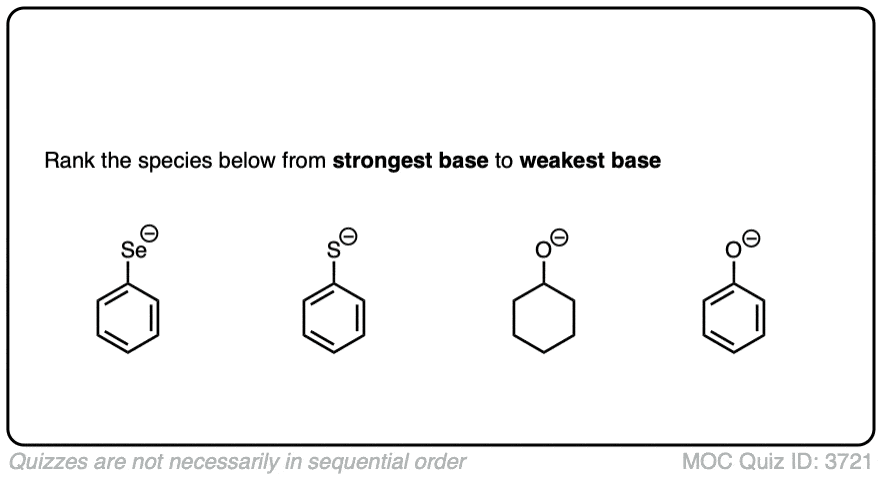
What happens if you take resonance away? That would make the lone pair less stable – more basic, in other words.
Compare the conjugate bases of phenol and cyclohexanol:
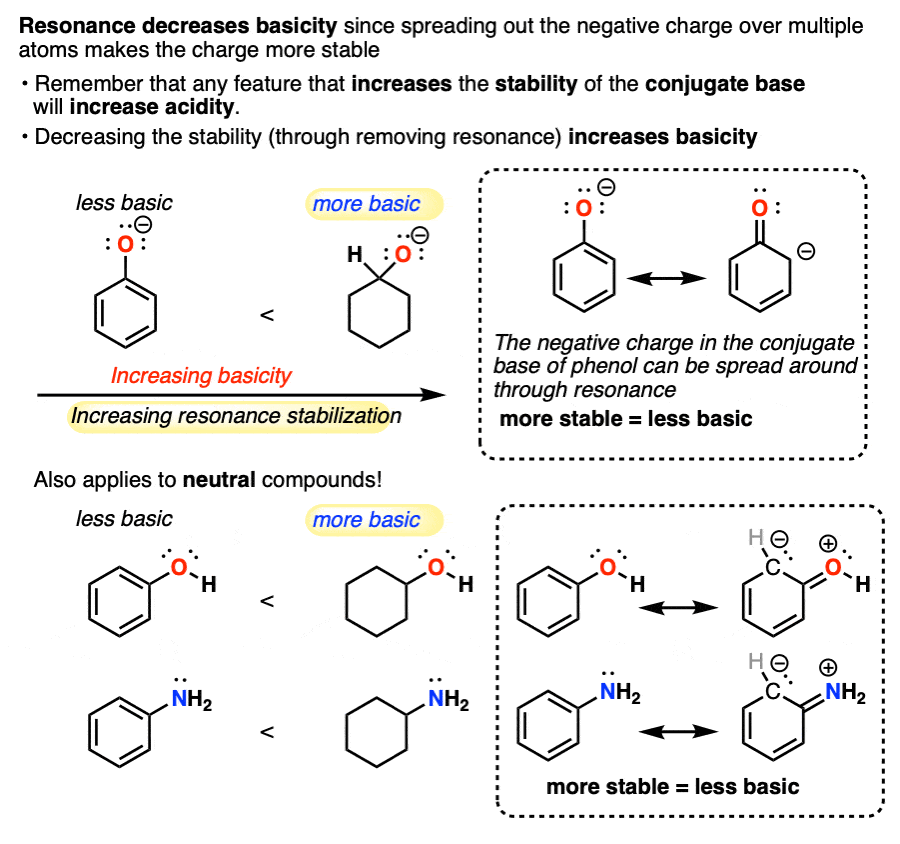
It also helps to explain why amines adjacent to aromatic rings are less basic than amines that can’t be delocalized through resonance. When lone pairs can be delocalized through resonance, that makes the lone pair more stable, and therefore less basic.
 Click to Flip
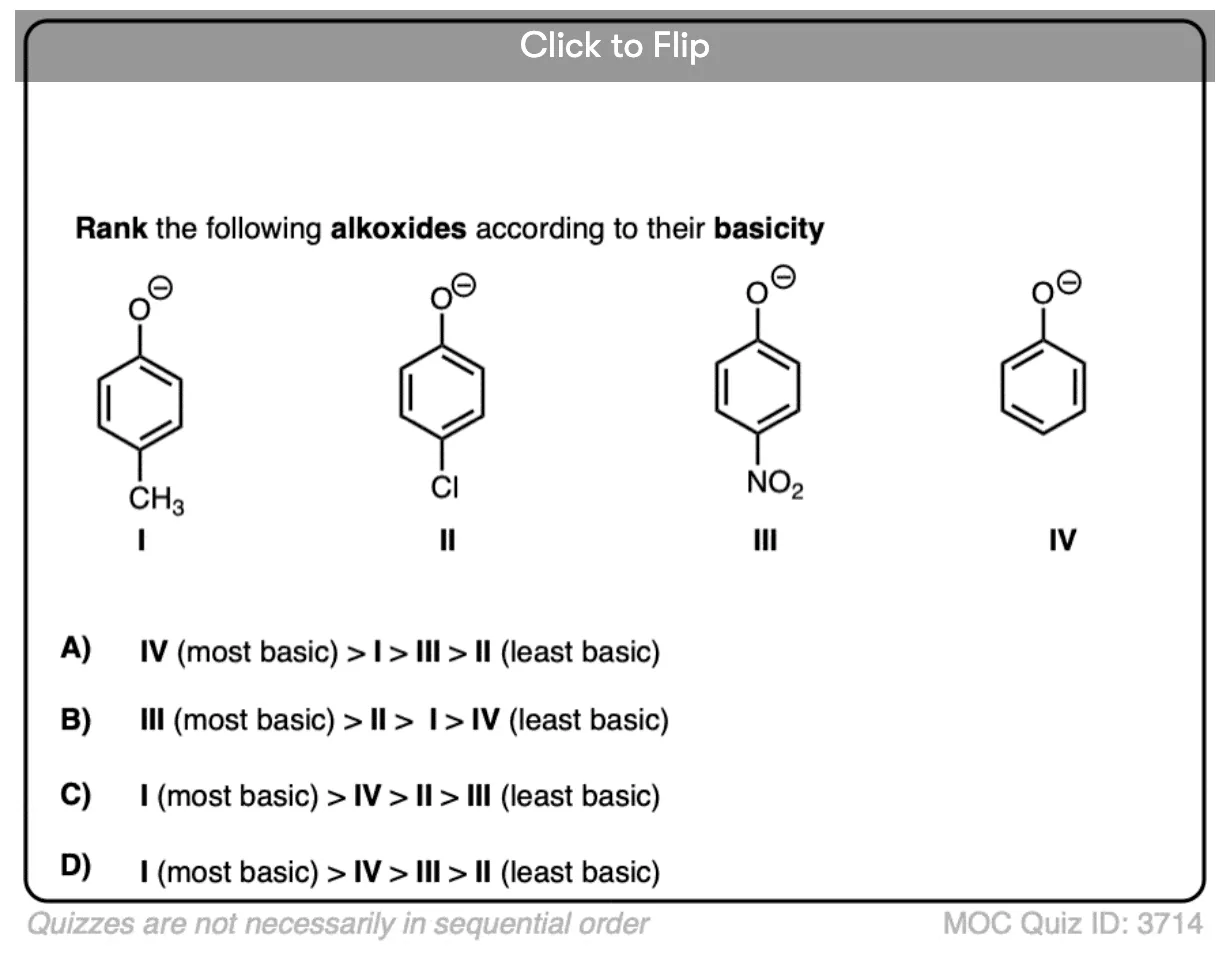
6. Basicity and Inductive Effects
Hopefully you’re starting to get the picture by now that any factor which increases acidity, decreases the basicity of the conjugate base.
So all we have to do to increase basicity is to remove this factor.
Let’s look at inductive effects now.
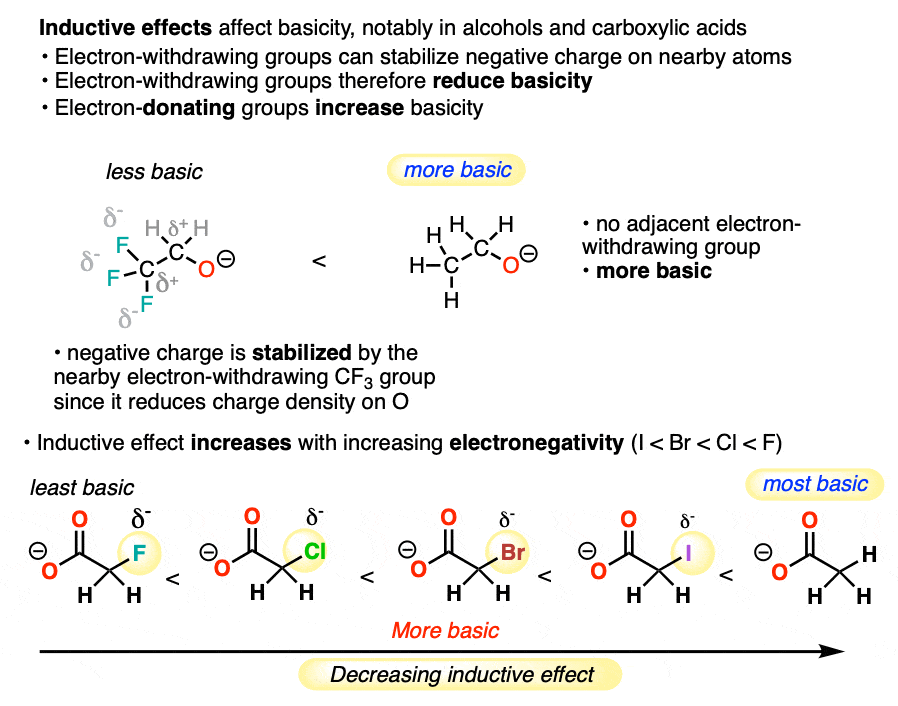
Remember that strongly electronegative atoms (e.g. fluorine, chlorine) draw electron density away from a negative charge and help to stabilize it.
That’s why 2,2,2-trifluoroethanol is a stronger acid than ethanol.
If we know this, then we would predict that if the electron withdrawing groups are removed, then we should increase basicity (spoiler: this is true)
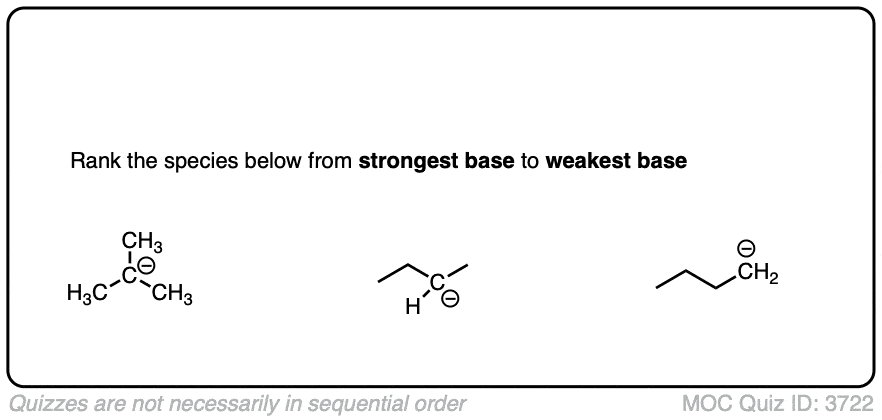
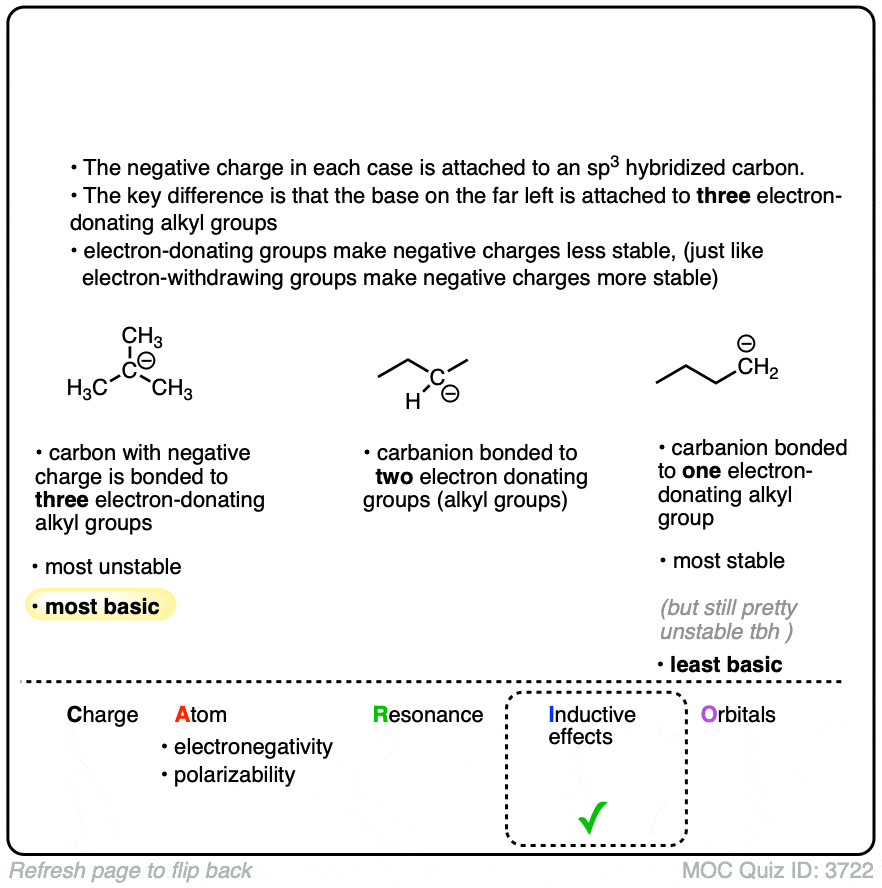
Basicity is increased even more if there are electron-donating groups nearby that make the negative charge even less stable.
 Click to Flip
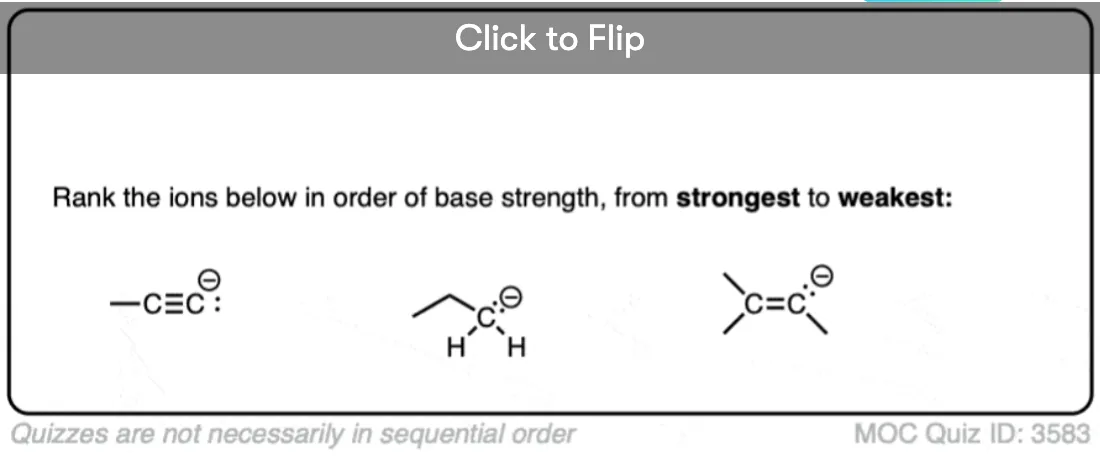
7. Basicity Increases As s-orbital Character Decreases
Here’s the last item on our list: orbitals.
s-orbitals are closer to the nucleus than p-orbitals. When a pair of electrons is held more closely to the nucleus, it’s effectively increasing the electronegativity – that lone pair feels a greater pull from the nucleus than it would when it’s in an orbital that’s farther away.
That’s why alkyne C-H bonds (sp-hybridized, 50% s-character) are more acidic than alkene C-H (sp2-hybridized, 33% s-character) and alkane C-H bonds (sp3-hybridized, 25% s-character).
So let’s apply this in reverse.
Alkyl anions [e.g. CH3(-) ] should therefore be more basic than alkenyl anions, which in turn are more basic than alkynyl anions.
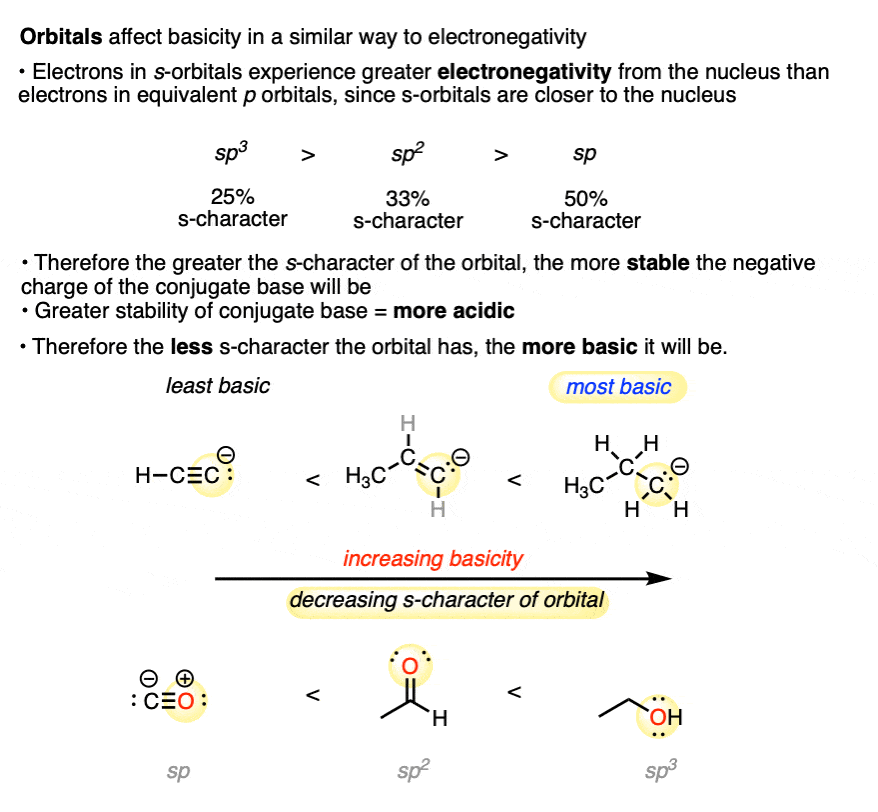
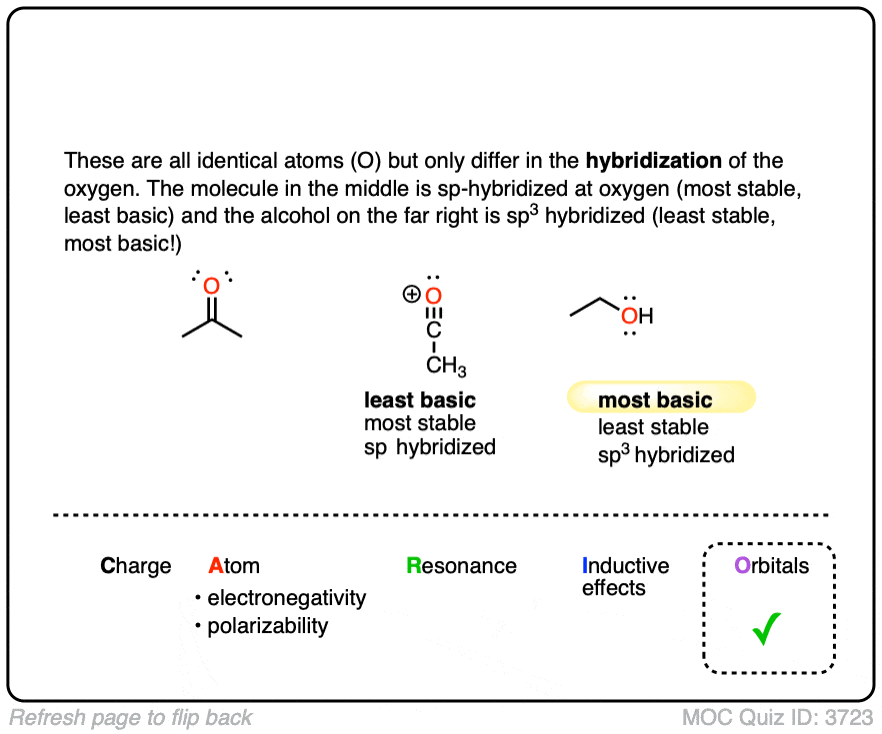
This also works with atoms that are not carbon, as in the quiz below:
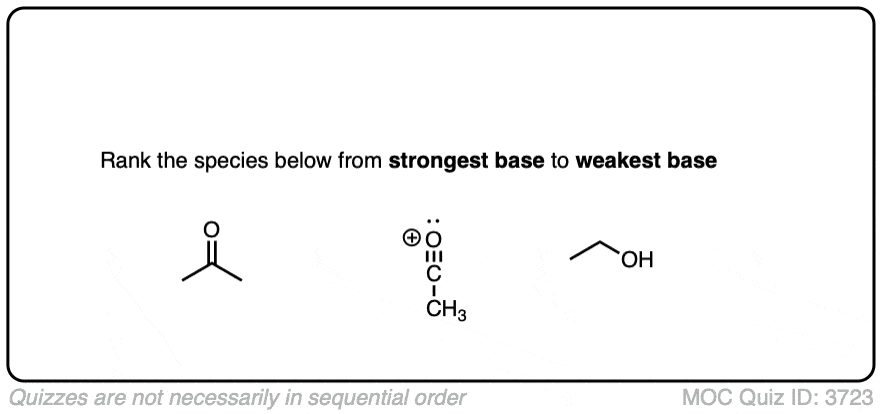 Click to Flip
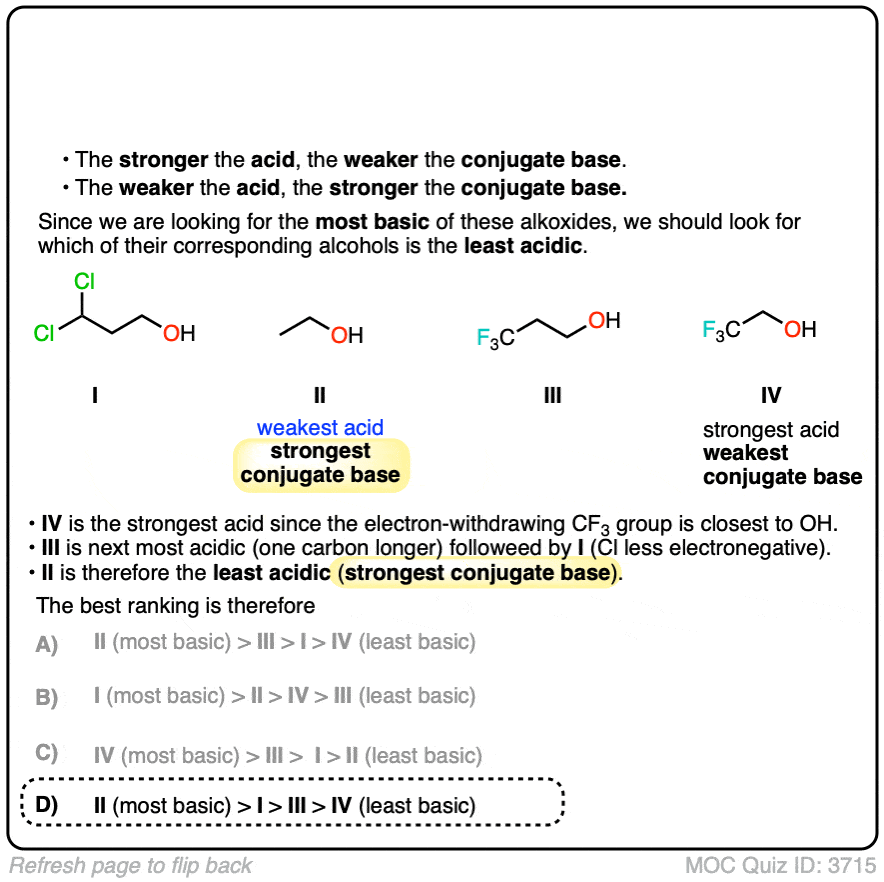
8. One Approach To Solving “What’s The Strongest Base” Problems
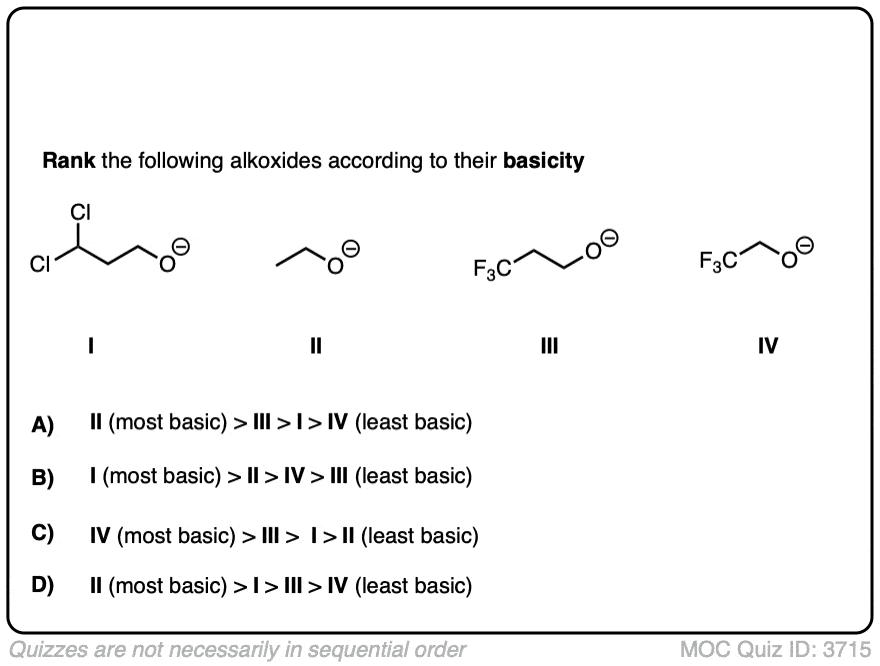
If you already understand the factors that affect acidity, then you need no new information to solve problems that ask you questions like, “rank the compounds here in order of increasing basicity”.
Since acidity increases with decreasing basicity (stability) of the conjugate base, all you need to do is invert the problem.
As Charlie Munger wisely said, “Invert, always invert”.
One way to do it is to redraw all the molecules as their conjugate acids.
Then ask yourself, “What’s the weakest acid here”.
The weakest acid will have the strongest conjugate base.
Try it:
 Click to Flip
9. A Final Word of Caution
A common misconception students have is that “weak acids are strong bases”.
Not true! Methane (CH4) is a weak acid, but it can’t act as a base – it doesn’t have a lone pair.
The proper way to say it is that “weak acids have strong CONJUGATE bases“. So the conjugate base of CH4, CH3(-) is an extremely strong base.
That’s it!
Notes
Quiz Yourself!
Become a MOC member to see the clickable quiz with answers on the back.
Become a MOC member to see the clickable quiz with answers on the back.
Become a MOC member to see the clickable quiz with answers on the back.

Become a MOC member to see the clickable quiz with answers on the back.
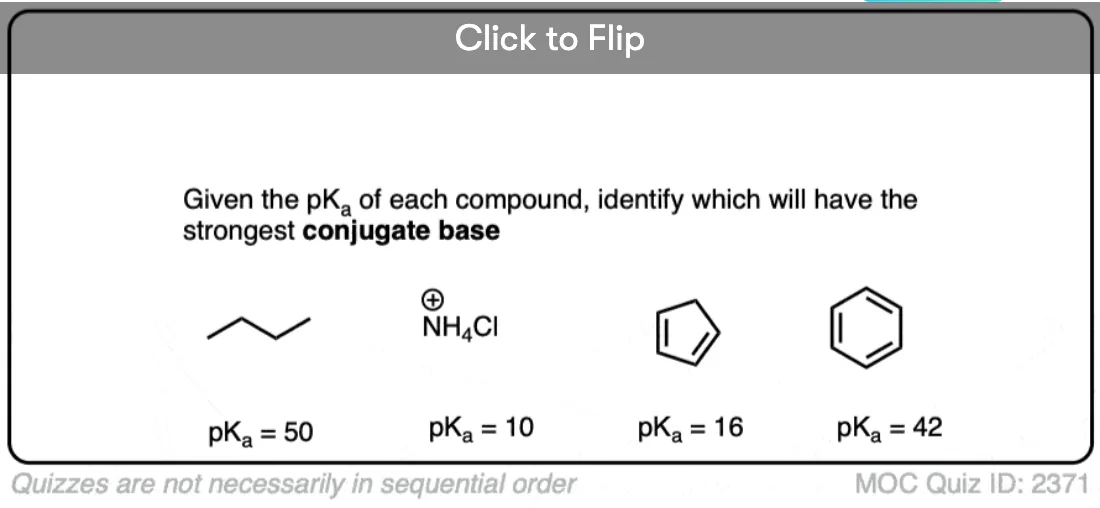
Become a MOC member to see the clickable quiz with answers on the back.
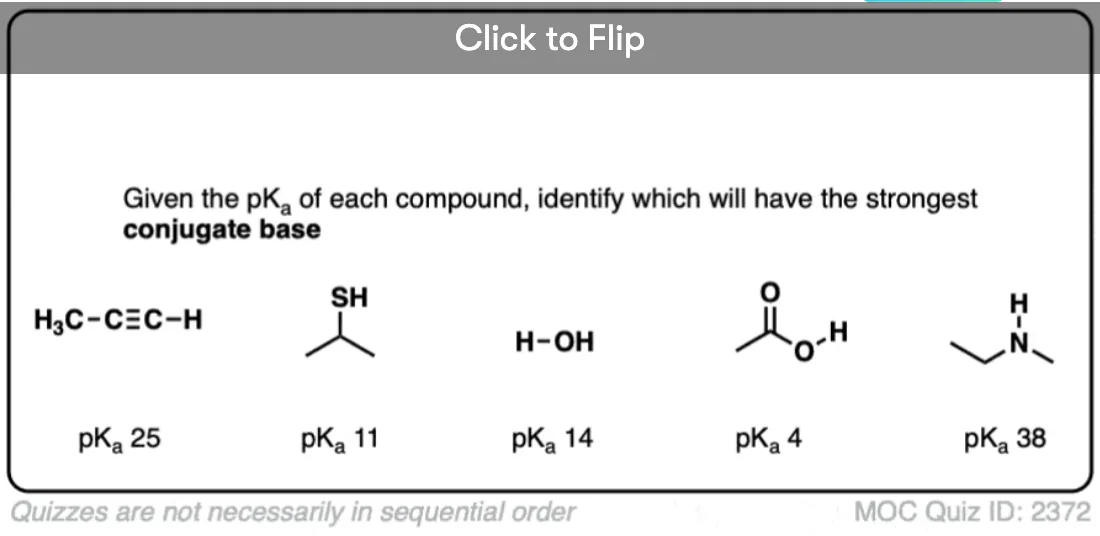
Become a MOC member to see the clickable quiz with answers on the back.
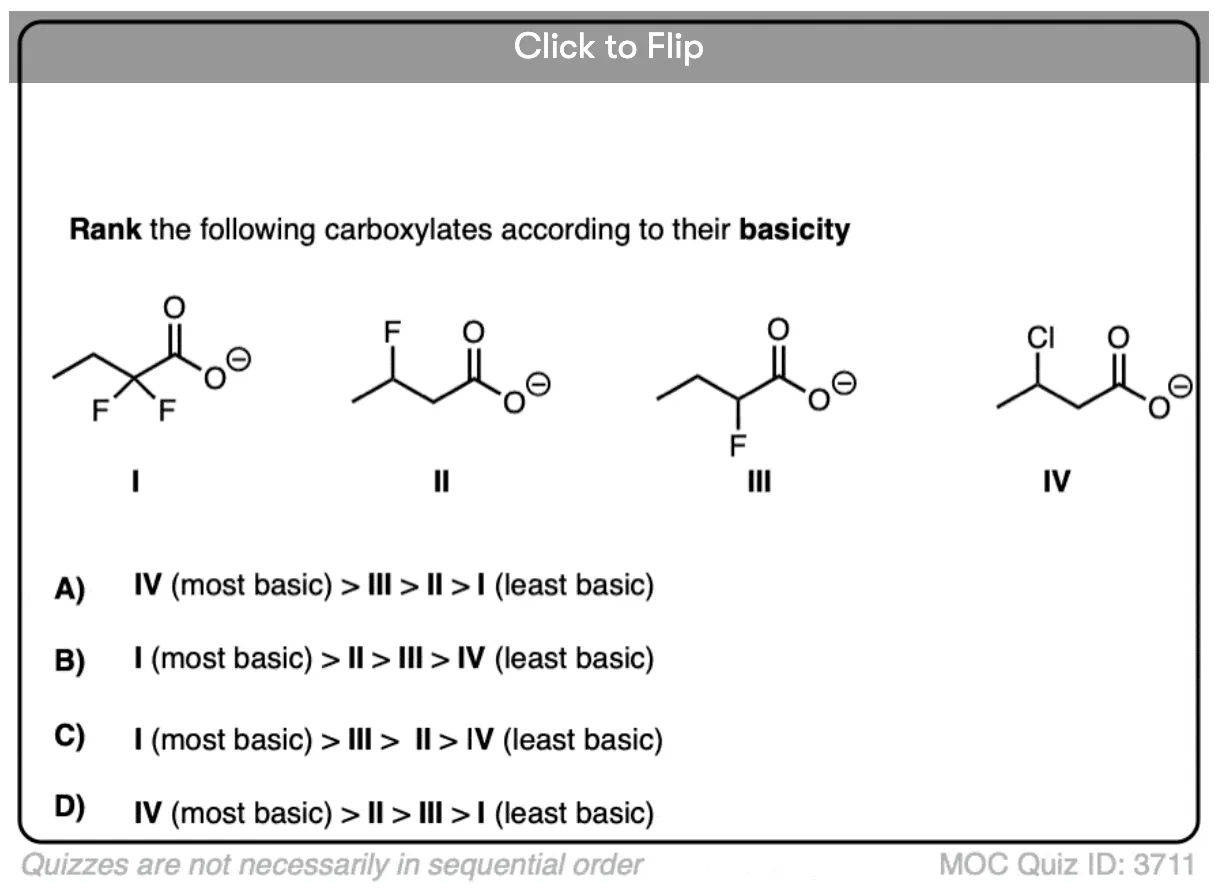
Become a MOC member to see the clickable quiz with answers on the back.
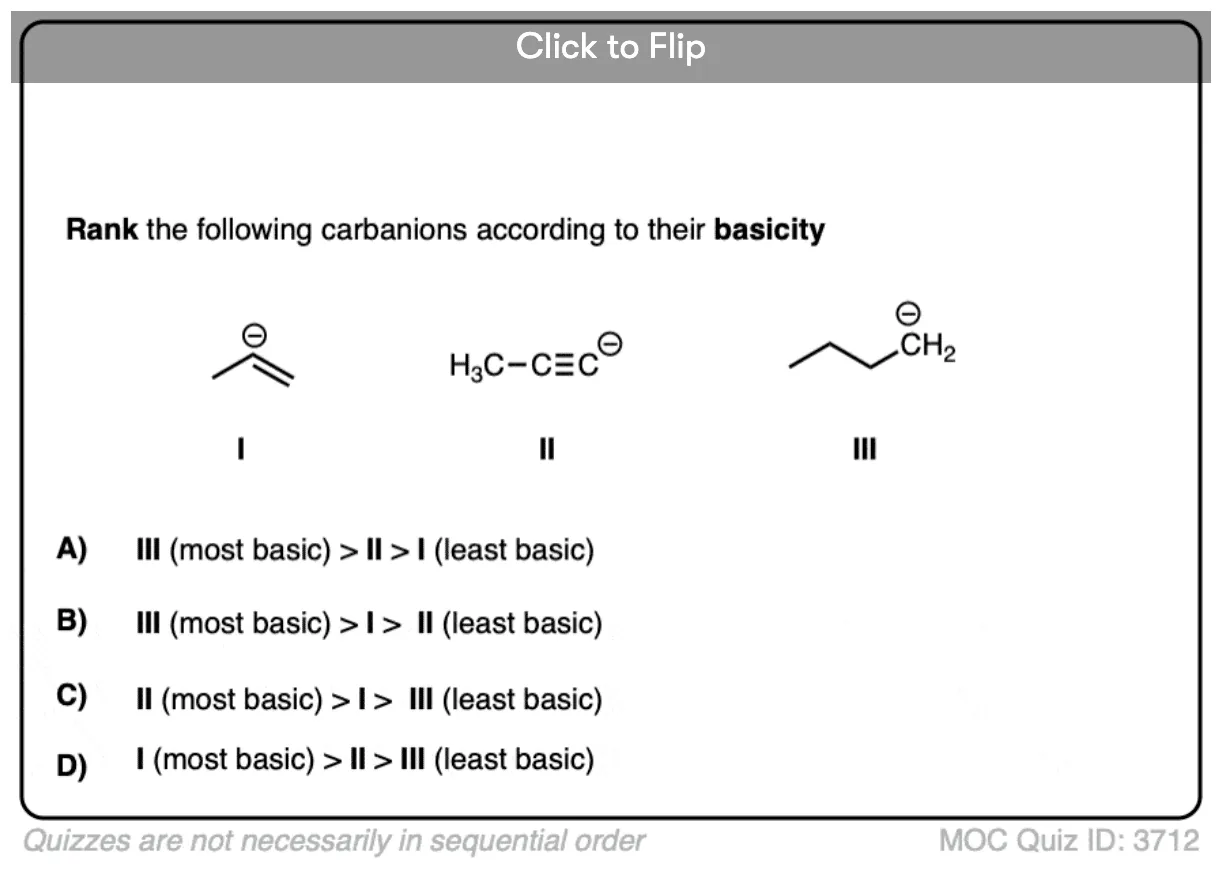
Become a MOC member to see the clickable quiz with answers on the back.
Become a MOC member to see the clickable quiz with answers on the back.
Become a MOC member to see the clickable quiz with answers on the back.
Become a MOC member to see the clickable quiz with answers on the back.
Become a MOC member to see the clickable quiz with answers on the back.
Why does lone pair stability increase going from C, N, O to F, but radical stability is the opposite way around?
Think about it this way.
Imagine you have a lone pair on C: , N:, O:, F: .
How much energy is it going to take to remove an electron from each of these species to get the radical?
Because of electronegativity, it’s going to take *more* energy to remove an electron from F than from O and so on down the line until we get to C.
Another way of saying it is that F• has more electron affinity (less stable) than O• which has less electron affinity than N• which has less electron affinity than C• .
Great site & I appreciate your efforts ♡
Is that’s the case than why HCl is stronger acid than HF
Cl(-) *is* a weaker base than F(-).
I am not understanding F- reaction with base. As you have written that F- with H2O doesn’t proceed but the product in this reaction is HF which is the strongest acid and nature always want more stability so why doesn’t it proceed?
Because the other product is HO(-) which is a considerably stronger base than F(-) (by about a factor of 11 orders of magnitude, compare the pKa of H2O (14) to that of HF (3). ). That’s why it doesn’t proceed.
What would happen if I were to compare HF and HI? I am lost beacuse Flouride ion ,as you pointed out, has the highest electronegativity so a stable lone pair thus rendering HF the stonger acid and HI the weaker acid but that’s not the case.
So what is meant by stability of lone pairs? Is it related to eletronegativity or size of the ion?
Thank You so Much. This content secured 6 marks in my Term Test. Keep UP!
I study for JEE ADVANCED, an engineering entrance exam in India. Honestly there are lots of books for one to study organic chemistry from. If you guys are to publish an Organic chemistry book for the entrance I bet it’ll sell like flash sale Android phones all over. Also thank you for the wonderful and TO THE POINT explanation.
Thanks Itachi, no plans for Android but I am glad you find the site useful.
Don’t clearly explain acidity and basicity.
Which of these factors has the greatest effect on basicity? Is there a hierarchy we should go through when asked, for instance, to rank the basicity of five or six conjugate bases?
Unless there’s a clear trend, the only way to rank basicity when multiple factors are in play is to use a pKa table, which employs experimental data.
This site is really great, I want to ask with reference to your last note that if a compound A is more basic than B then can we infer that B is more acidic then A. Please help urgently, I am a beginner with organic chemistry
Thank you
If A is more basic than B, then we can infer that the CONJUGATE ACID of B is more acidic than A.
Master Organic Chemistry literally saved my life! Thank you for the helpful source!!!
So glad to hear it Jennifer. Thank you!
Sir
Does bascity order also change with changing solvents
Like in nucliophilcity
F- >Cl- in polar aprotic
But
Cl-<F- in polar protic
The order of basicity F(-), Cl(-), Br(-), and I(-) is the same in both polar protic and polar aprotic solvents.
However the *magnitude* of basicity for F(-) is much higher in polar aprotic solvents than in polar protic solvents. Hydrogen bonding greatly attenuates the basicity of F(-). In cases where water can be (mostly) removed, anhydrous F(-) is an extremely strong base.
When nothing is mentioned which medium should i consider while determining basicity of amines?
Please help me classify the following in order of increasing basicity..
Aniline, 2-Toluene, dinitribenzene and 4-chloroaniline
Thank you so much for the explanation! It has helped me a lot :-)
However I still cannot figure out which one is a stronger base between -OH and -OC(CH3)3..
They’re quite similar, but t-butoxide is a bit more basic, mostly because the oxygen of the t-butoxide won’t be able to accept as many hydrogen bond donors as hydroxide (and hence be more “unstable”)
This thing is completely wrong. It’s always that strong acid give weak bases!
The conjugate base of a strong acid is a weak base. That’s what I said.
What I advise against saying is, “strong acids are weak bases”. That’s not necessarily true.
This is an incredible site! I really appreciate your hard work and all the effort you put into this. Studying from your site has drastically increased my marks in organic chemistry at university and I totally owe it all to you! Thank you once again! :D
What are the main difference between basicity and nucleopilicity???
The main difference is that nucleophilicity is much more sensitive to steric hindrance.
Basicity is a measure of the equilibrium between a Lewis base and a proton (H+). These reactions are often reversible. So the position of the equilibrium tells you the relative energy differences between the starting material and reactants.
Nucleophilicity is a measure of the reaction between a Lewis base and any other electrophile besides H+ (most commonly carbon in our cases). These reactions are generally not reversible. So to measure nucleophilicity we generally have to measure the reaction *rates*.
Reactions between Lewis bases and carbon are much more sensitive to steric hindrance than are reactions of Lewis bases with H+ (because attacking carbon requires orbital overlap with a sigma* orbital that may be difficult to access on a tetrahedral carbon atom via backside attack).
I appreciate your a great work . Today I learnt what mean acid base reaction
THIS SITE IS GREAT!!! I couldn’t find videos on Khan Academy but this had a ton of info and it was explained in a way I could understand! Thanks a ton!