Home / Why the SN2 Reaction Is Powerful
Substitution Reactions
Why the SN2 Reaction Is Powerful
Last updated: May 7th, 2026 |
SN2 Reaction Examples To Give Alcohols, Ethers, Thiols, Sulfies, Alkynes, and More.
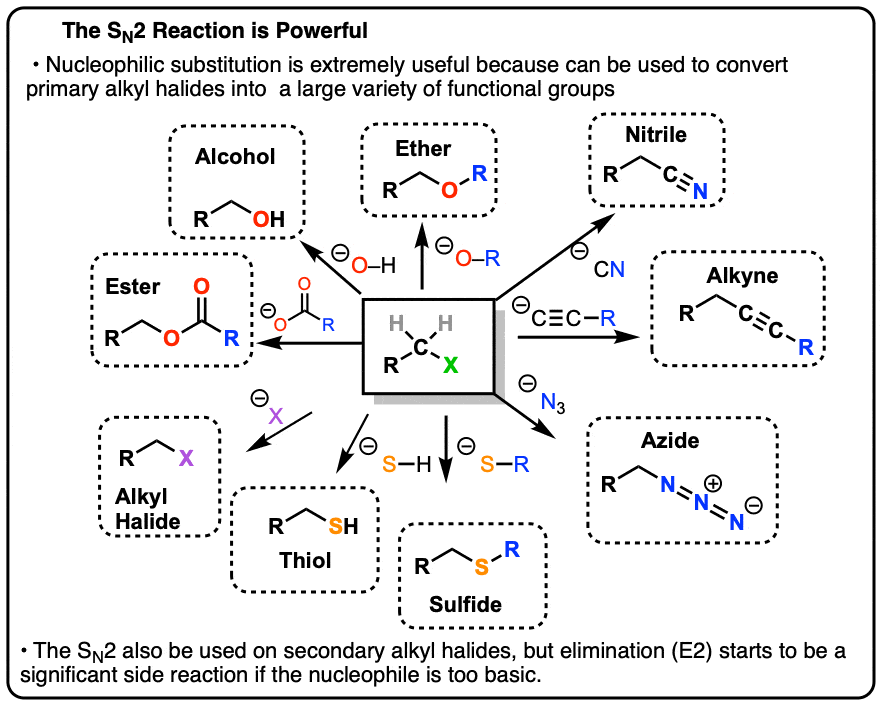
Having gone through the mechanism of the SN2 reaction, let’s take a second and look at why it might be useful.
In nucleophilic substitution reactions, we’re trading a carbon-(leaving group) bond for a carbon-(nucleophile) bond.
If we choose a good leaving group – i.e. an appropriately weak base – we can use this reaction with a *large* variety of nucleophiles.
The SN2 Reaction Is Incredibly Powerful And Can Be Used To Build A Large Number Of Functional Groups From Alkyl Halides
I could write many more words about this, but instead, here’s a table. Look at all the different functional groups you can make from just this one reaction!
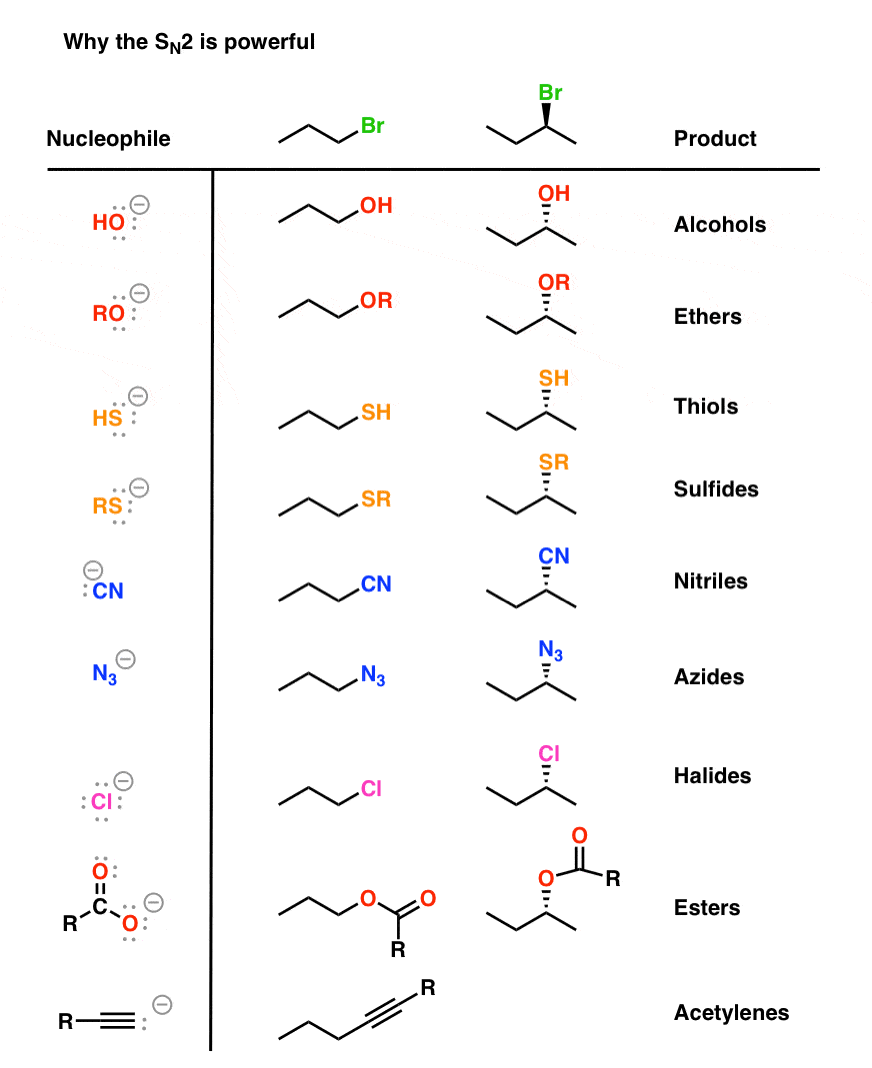
Note – some of these substitution reactions work better than others, especially on secondary carbons – depending on conditions, elimination reactions can start to compete when strong bases are used. We’ll get there!
Quiz Yourself!
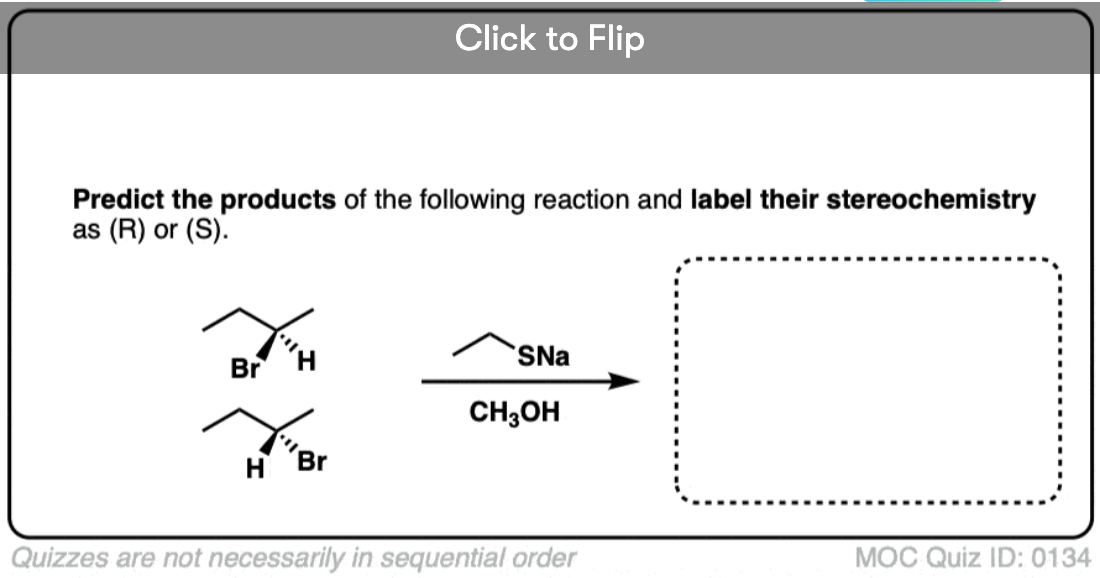
Become a MOC member to see the clickable quiz with answers on the back.
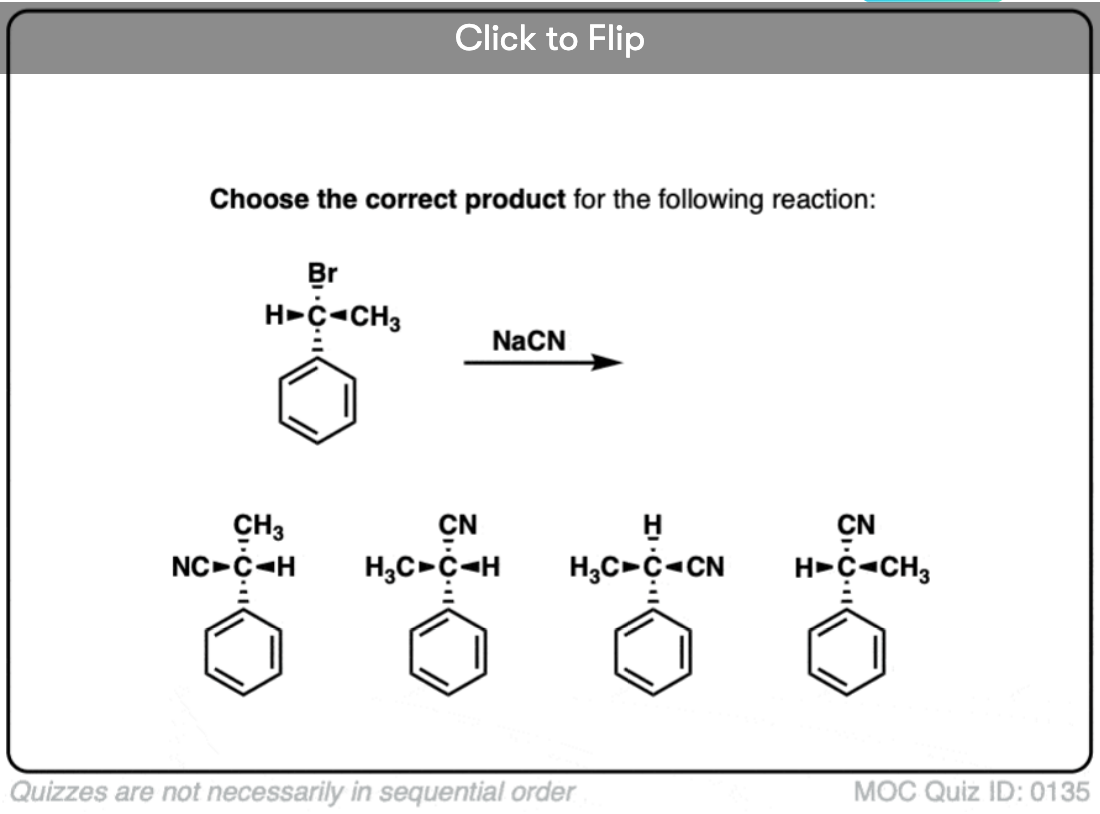
Become a MOC member to see the clickable quiz with answers on the back.
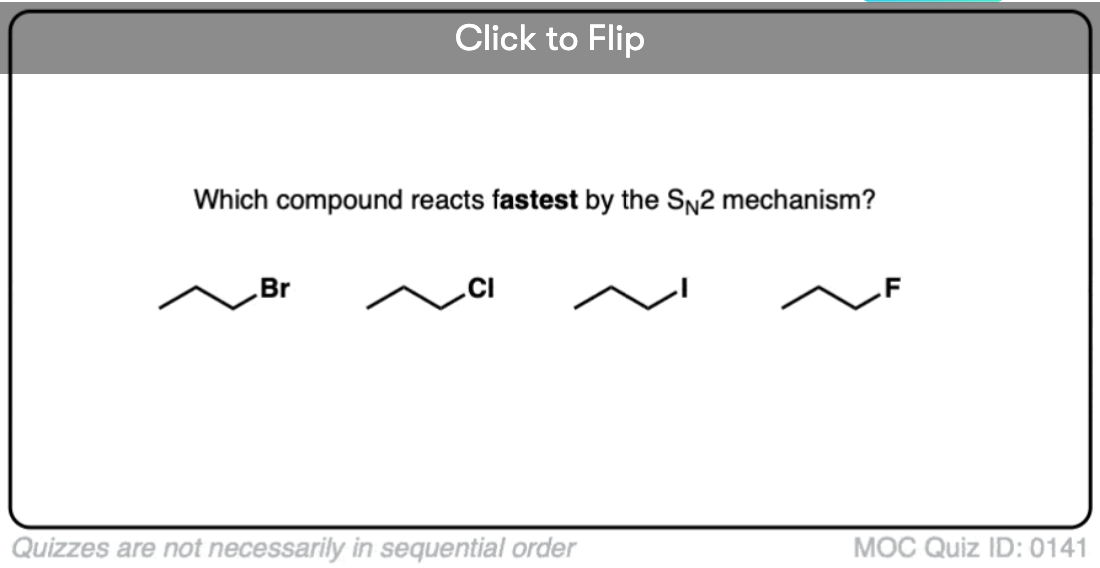
Become a MOC member to see the clickable quiz with answers on the back.
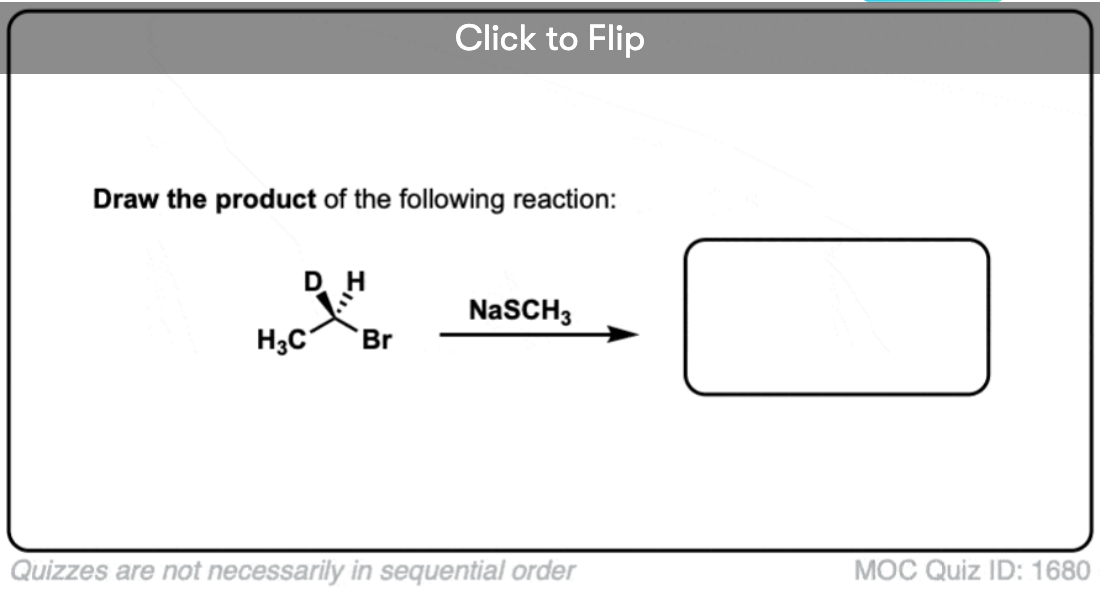
Become a MOC member to see the clickable quiz with answers on the back.
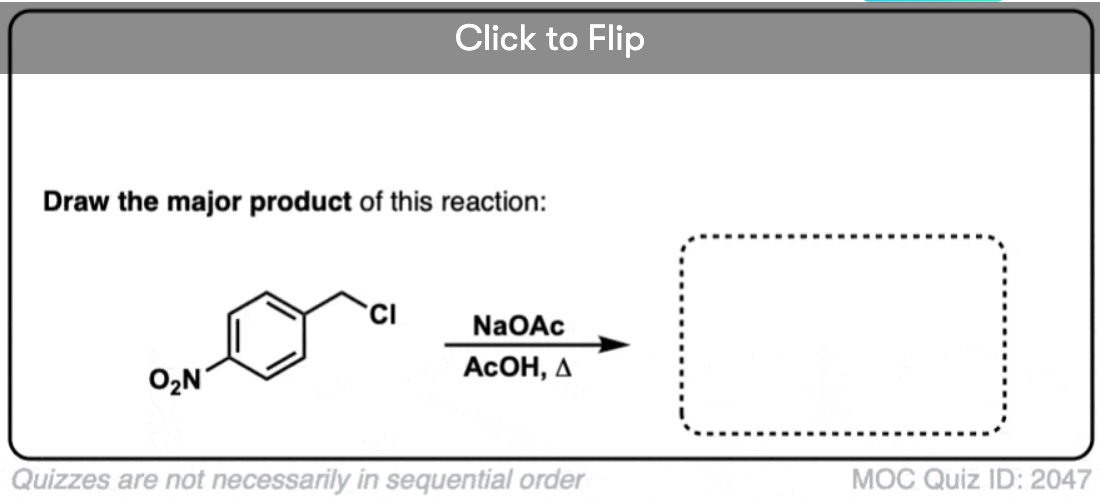
Become a MOC member to see the clickable quiz with answers on the back.
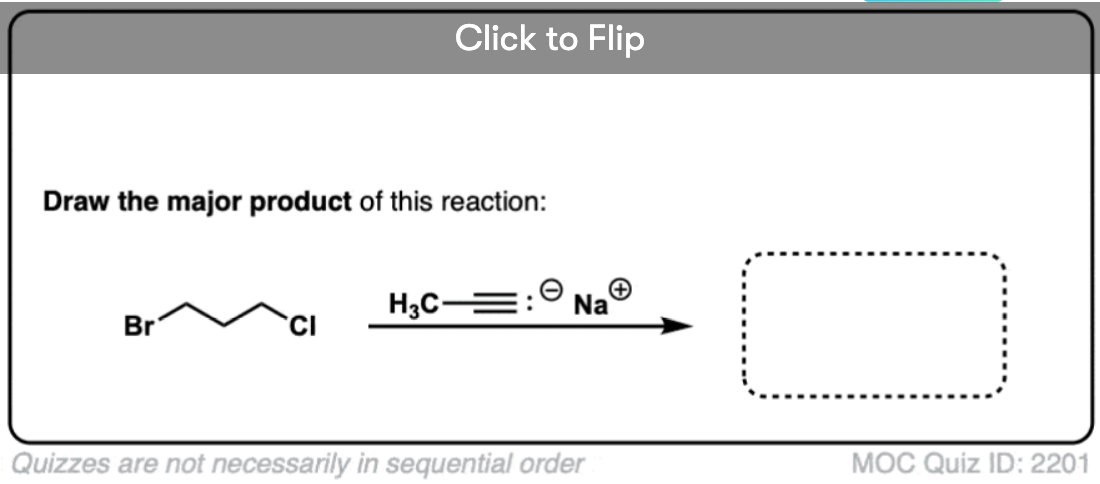
Become a MOC member to see the clickable quiz with answers on the back.
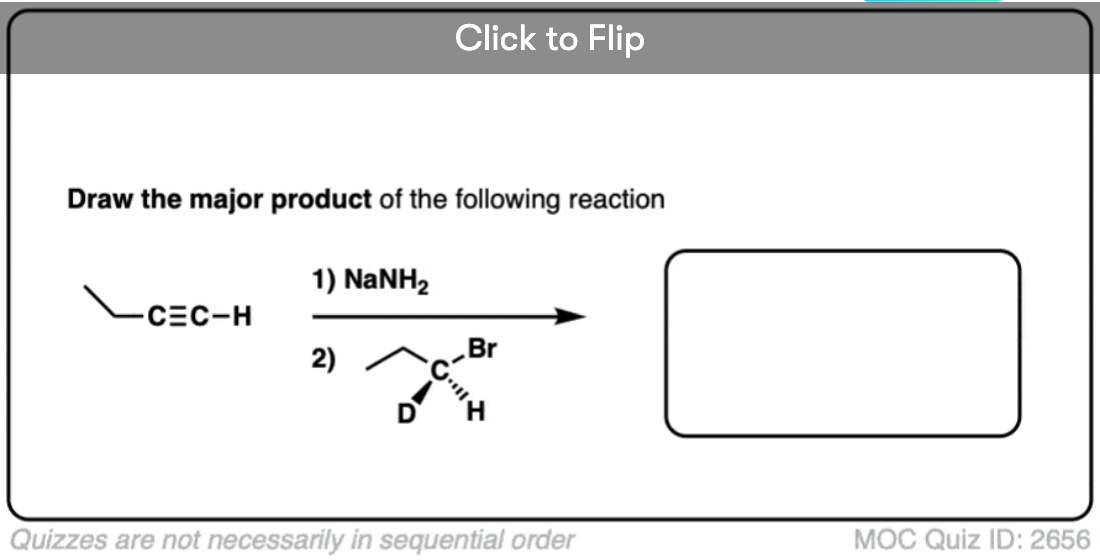
Become a MOC member to see the clickable quiz with answers on the back.

Become a MOC member to see the clickable quiz with answers on the back.
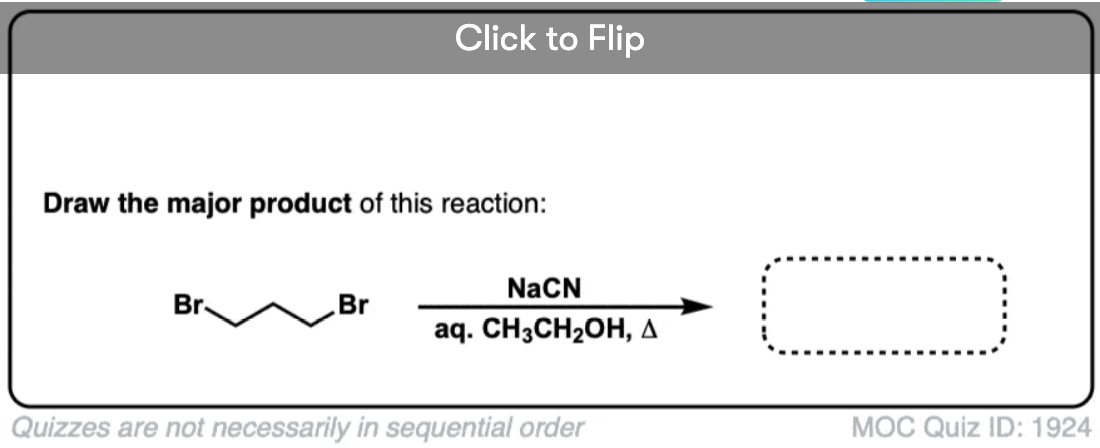
Become a MOC member to see the clickable quiz with answers on the back.
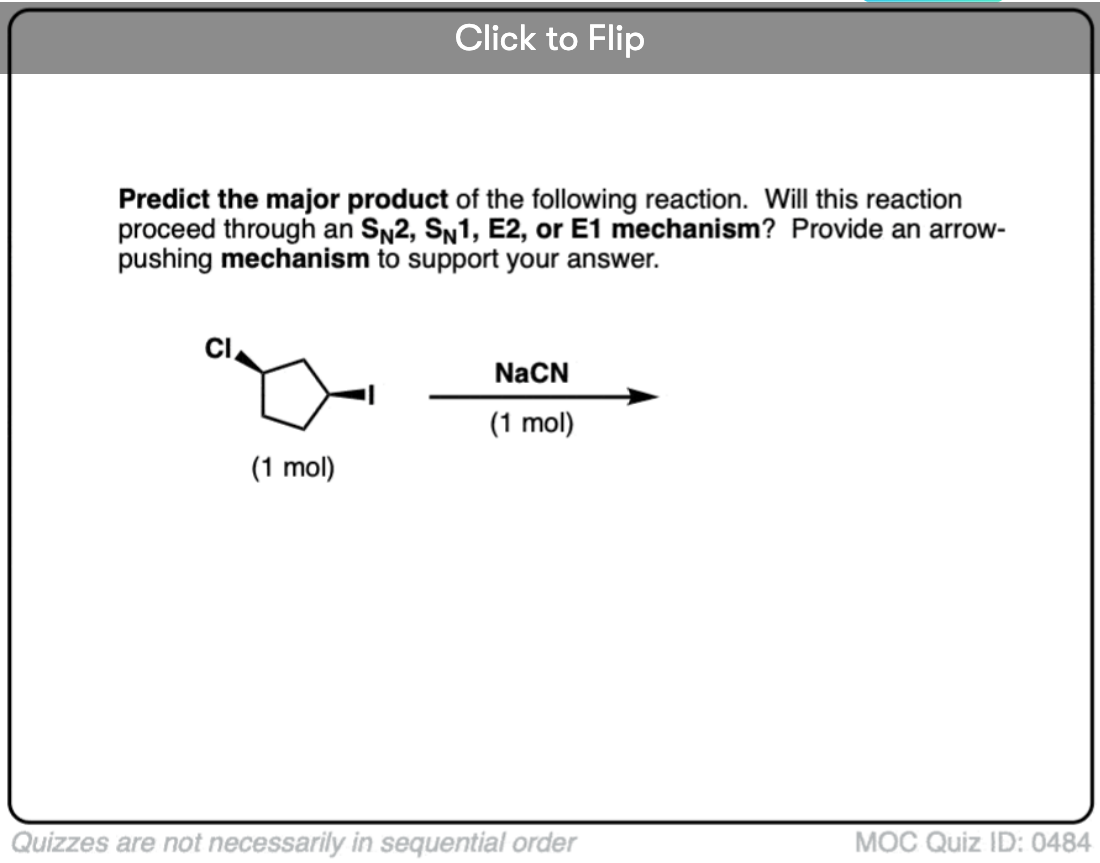
Become a MOC member to see the clickable quiz with answers on the back.
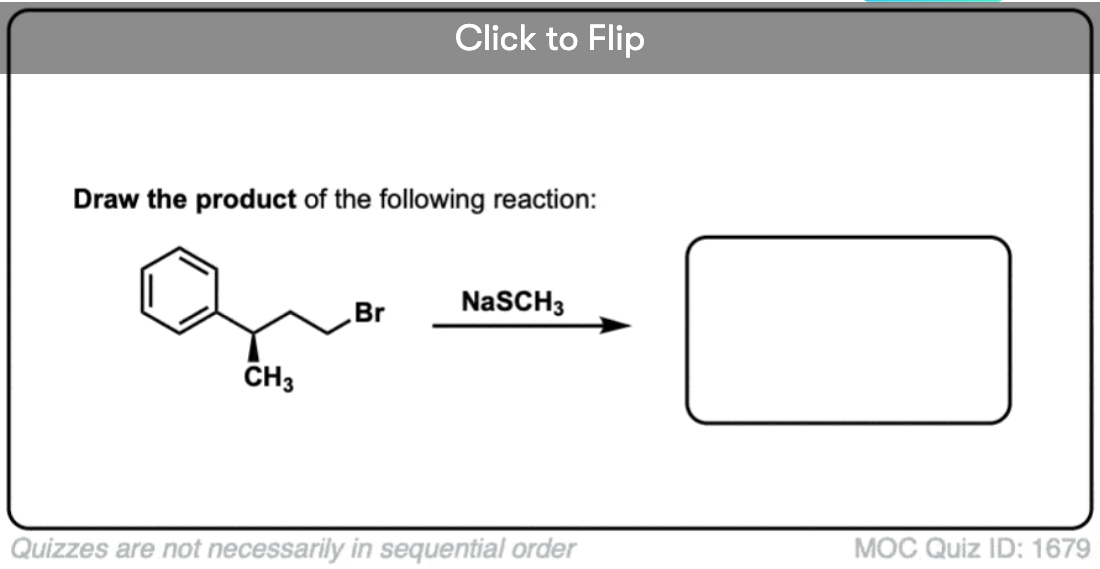
Become a MOC member to see the clickable quiz with answers on the back.

Become a MOC member to see the clickable quiz with answers on the back.

Become a MOC member to see the clickable quiz with answers on the back.
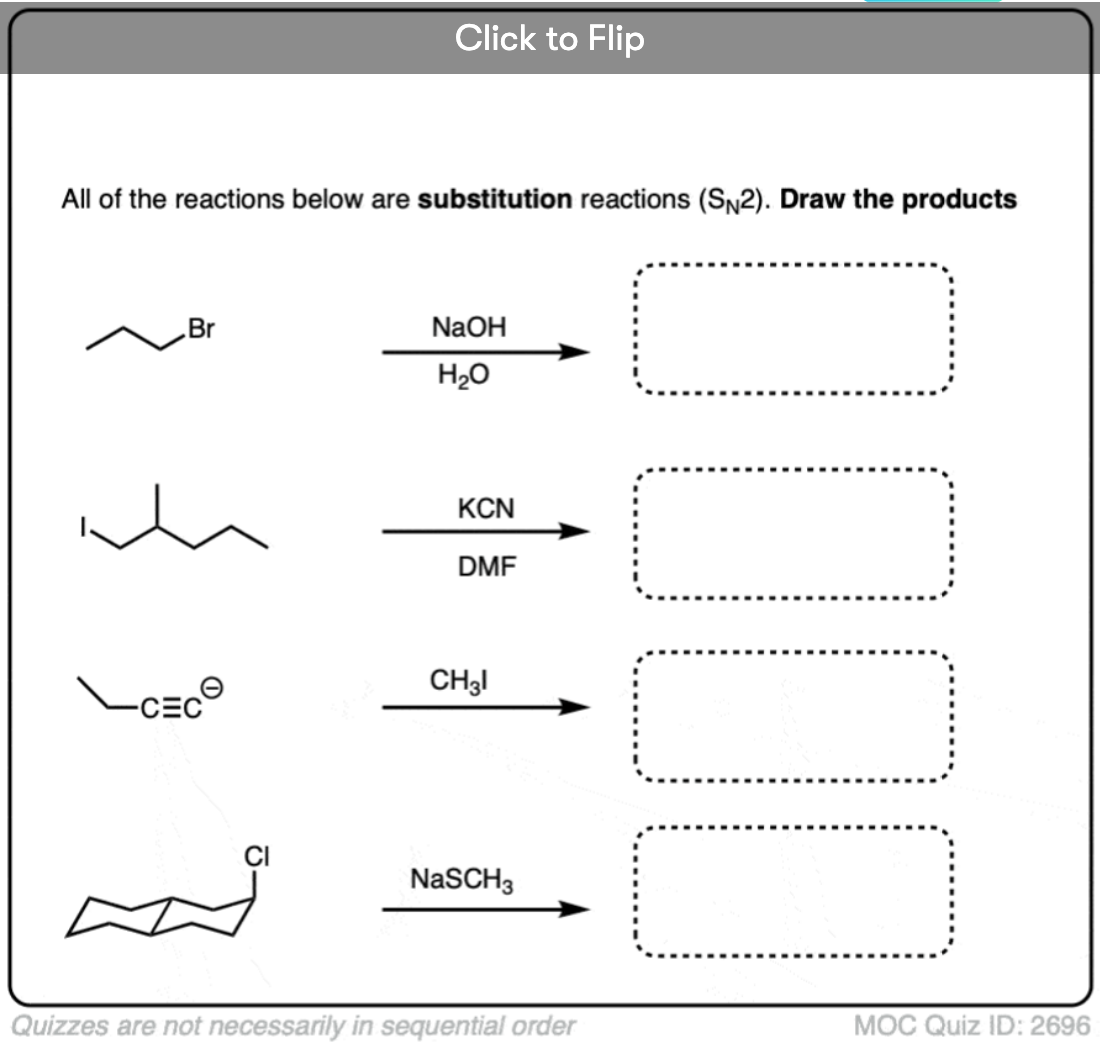
Become a MOC member to see the clickable quiz with answers on the back.
Find Master Organic Chemistry first when you search on Google:
00 General Chemistry Review
01 Bonding, Structure, and Resonance
02 Acid Base Reactions
03 Alkanes and Nomenclature
04 Conformations and Cycloalkanes
05 A Primer On Organic Reactions
06 Free Radical Reactions
07 Stereochemistry and Chirality
08 Substitution Reactions
- Nucleophilic Substitution Reactions - Introduction
- Two Types of Nucleophilic Substitution Reactions
- The SN2 Mechanism
- Why the SN2 Reaction Is Powerful
- The SN1 Mechanism
- The Conjugate Acid Is A Better Leaving Group
- Comparing the SN1 and SN2 Reactions
- Polar Protic? Polar Aprotic? Nonpolar? All About Solvents
- Steric Hindrance is Like a Fat Goalie
- Common Blind Spot: Intramolecular Reactions
- Substitution Practice - SN1
- Substitution Practice - SN2
I was struggling with these reactions ( E1,E2,SN1 and SN2) but after going through these notes, I feel like I can answer all the questions related to these. Thank you very much, you have helped me a lot.
Cl- is a weak base(as it is a conjugate of strong acid),then how is it performing an SN2?
It seems to me as though the products formed after the reaction has more carbons than the initial..
Like first one for example, after OH attached to the second carbon it became a butanol but initial it was a propanol
Can you explain that for me please
Hi – the first column shows a reaction with a primary alkyl halide, the second column shows a reaction with a secondary alkyl halide. Sorry if this appears confusing!
You explanation is immaculate, logical and orderly. It meets my need in organic chemistry. Thanks. Do you have a youtube channel?
I really liked your page,especially in finding priority order of functional groups.These are well mentioned with their use.
Thank you.