Blog
Org 1, Midterm Number 1
Last updated: April 21st, 2026 |
Org 1, Midterm 1: 10 Common Types of Exam Problems
I’ve looked at a lot of first midterms for Org 1 at North American schools. Here, I’ll share some of the common types of questions that come up, with examples. There won’t be much commentary here, mostly just a problem dump for now.
- Hybridization questions (crucial!)
- Lewis structures
- Formal charges
- Geometry / bond angles
- Bond types
- Dipole moment
- Simple nomenclature
- Boiling points / melting points
- Resonance questions
- Acid-base questions
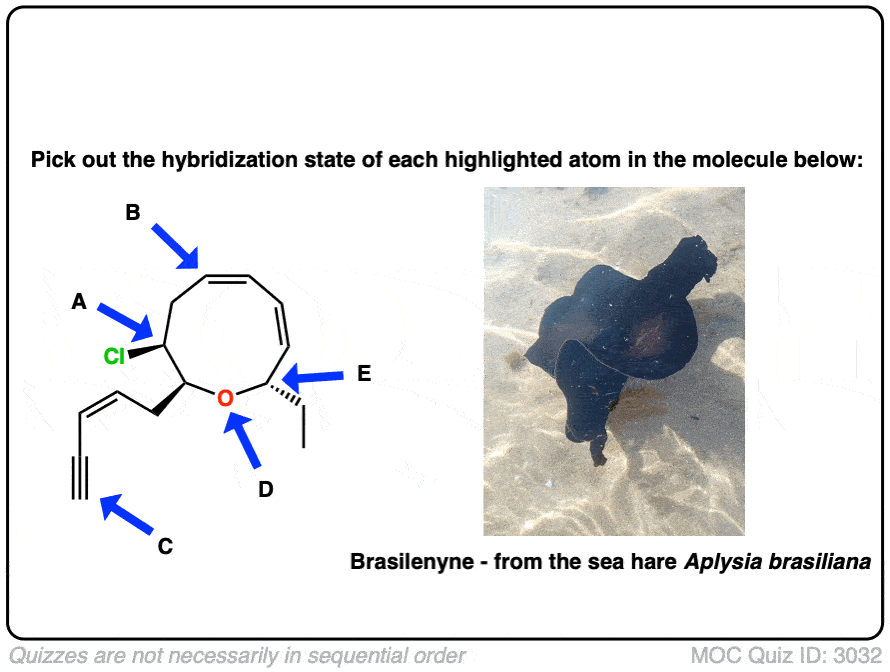
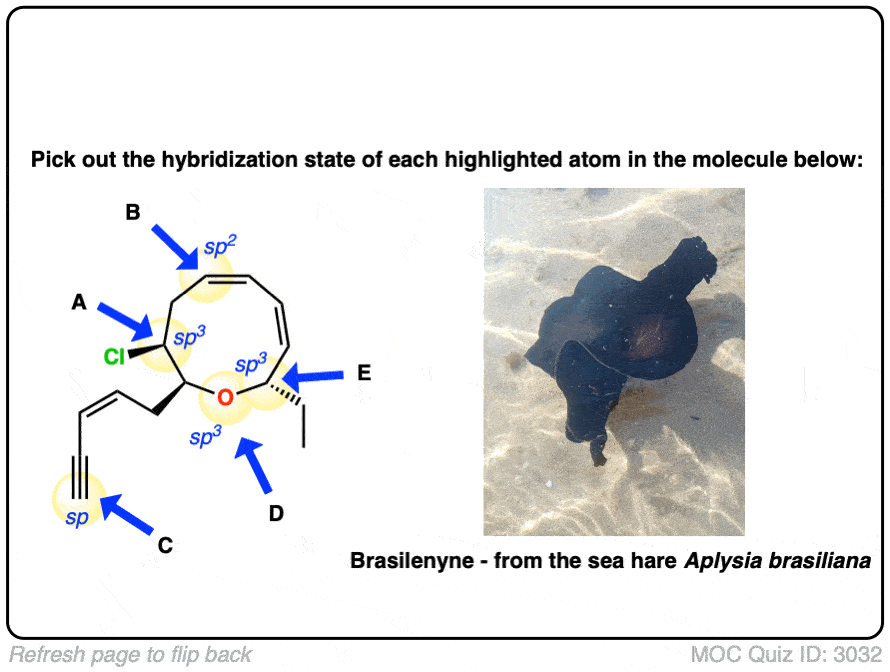
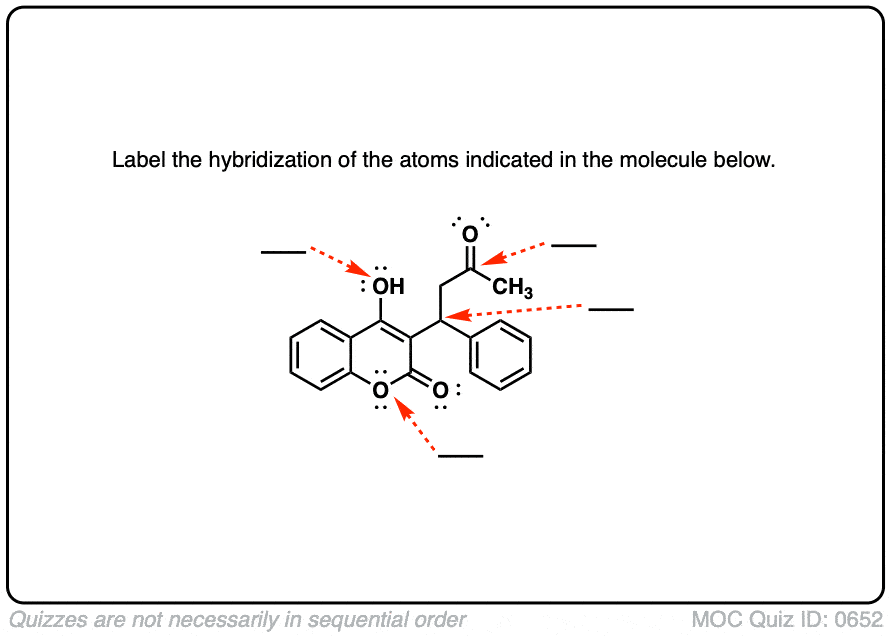
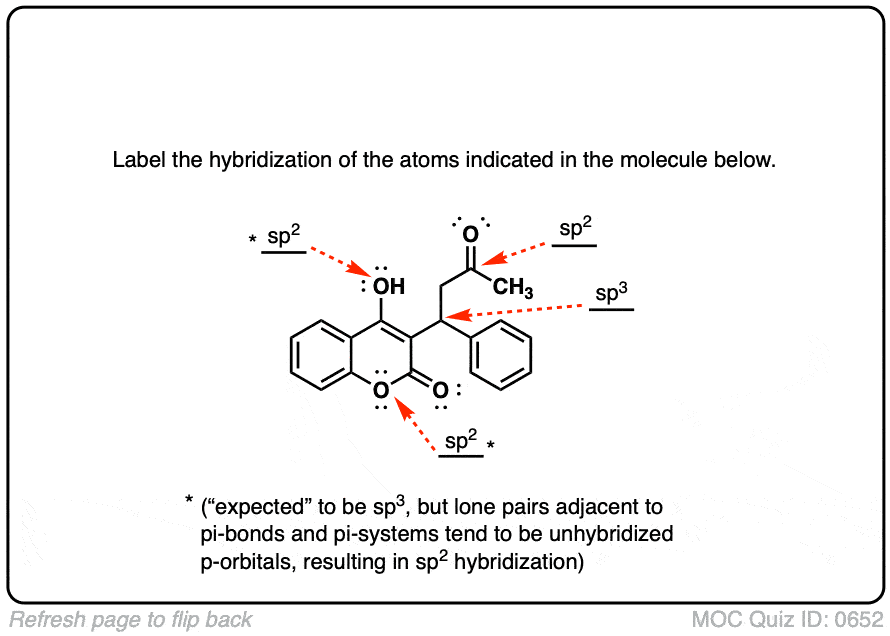
1. Hybridization (*crucial*)
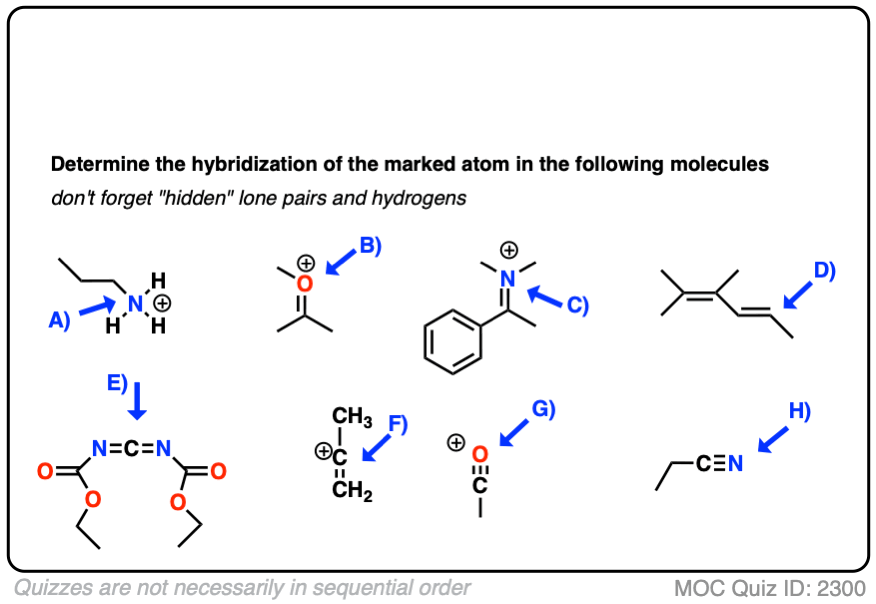
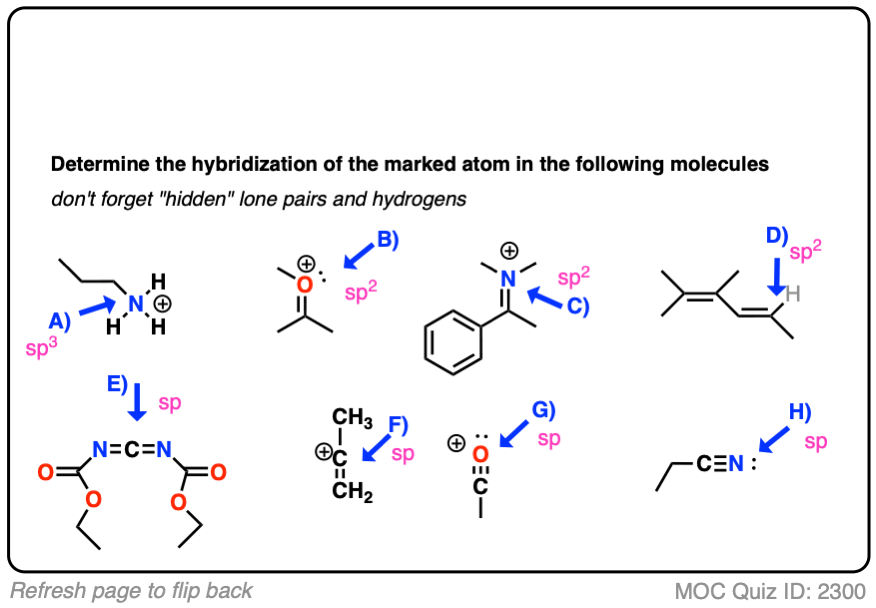
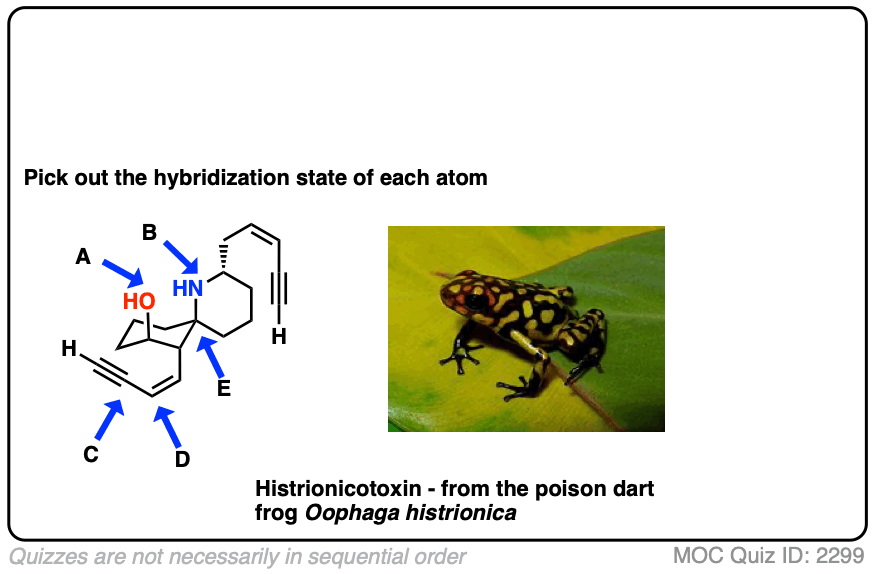
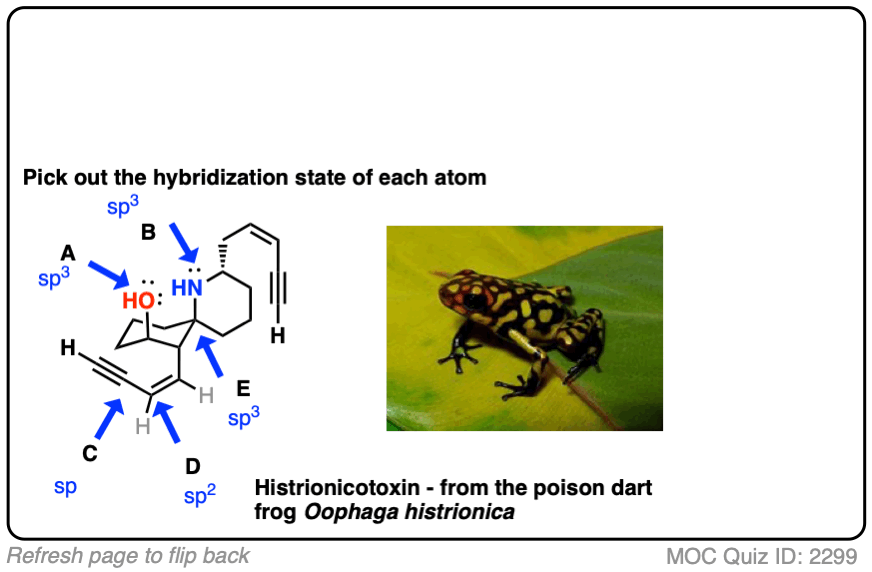
Expect to be able to determine the hybridization at pretty much any atom. One form this commonly takes is to be shown a large molecule and your job is to assign hybridization at various atoms. Remember the hybridization shortcut, which involves counting the number of attached (atoms + lone pairs).
- If it’s 4, the atom is sp3,
- If 3, it’s sp2,
- If 2, it’s sp. (If it’s 1, it’s probably hydrogen.) Just be on the lookout for atoms with lone pairs adjacent to pi bonds.
 Click to Flip
 Click to Flip
 Click to Flip
 Click to Flip
2. Lewis structures
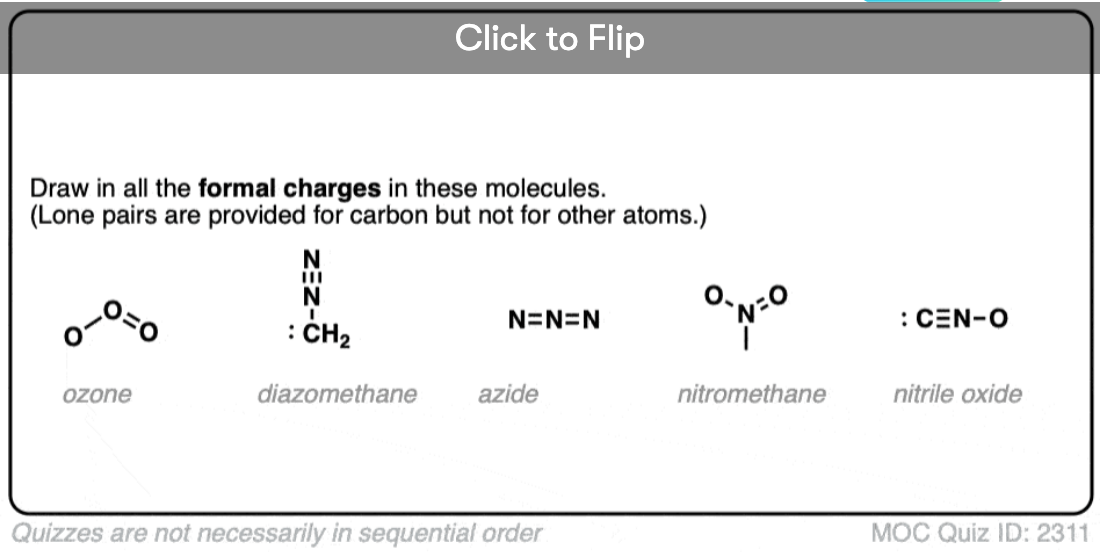
Expect to be able to draw a Lewis structure for simple molecules. Popular examples include diazomethane (CH2N2), nitromethane (CH3NO2), the carbonate ion (CO3)2- and others. Here are a few examples:
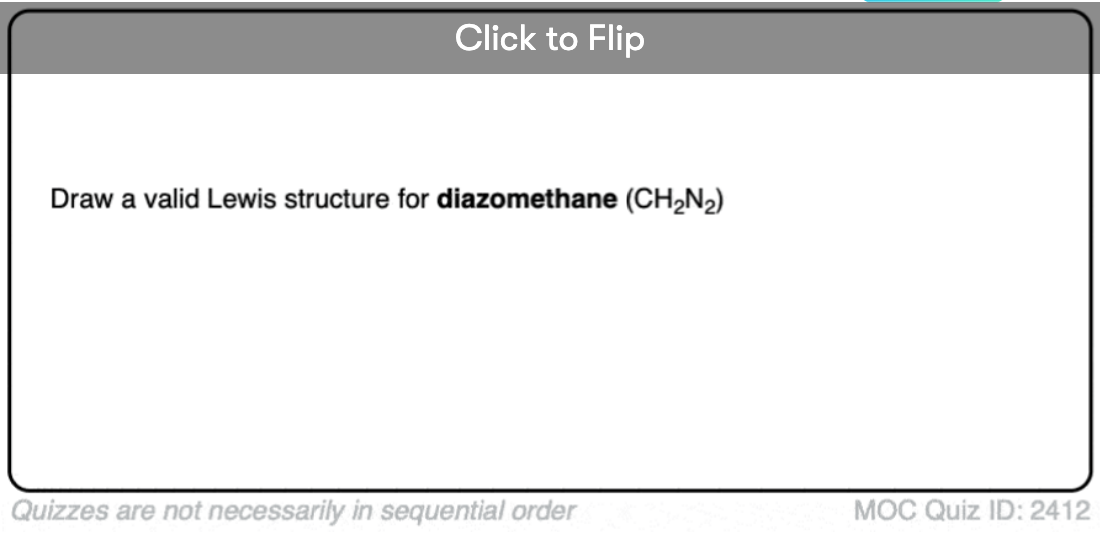
Become a MOC member to see the clickable quiz with answers on the back.
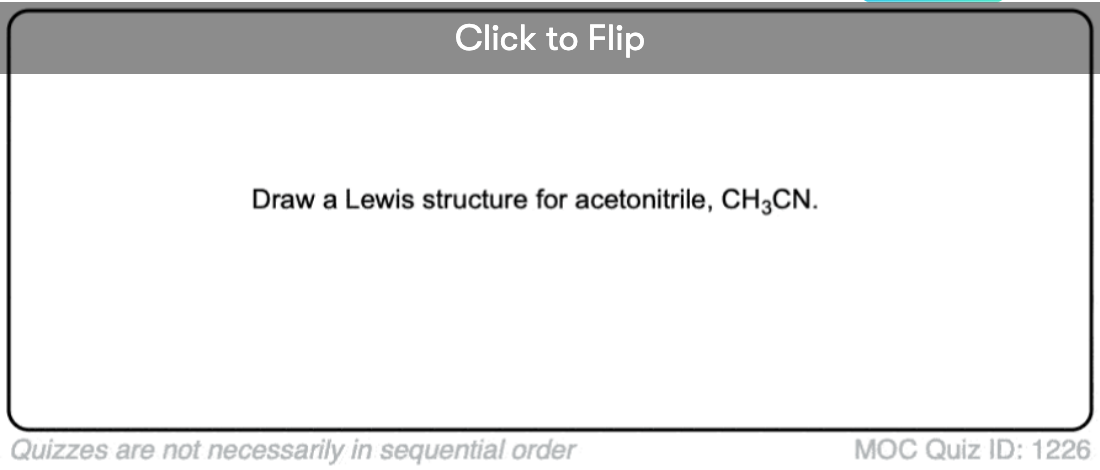
Become a MOC member to see the clickable quiz with answers on the back.
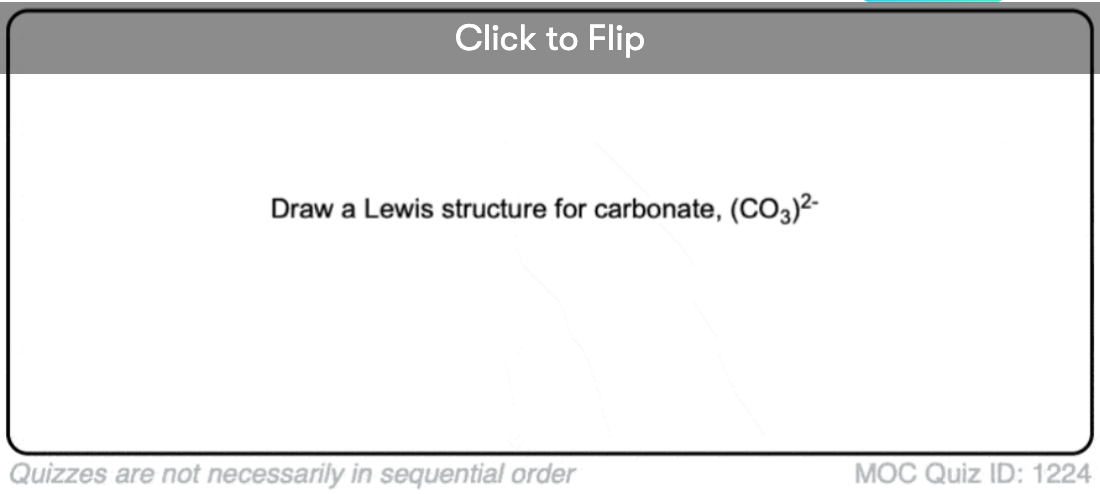
Become a MOC member to see the clickable quiz with answers on the back.
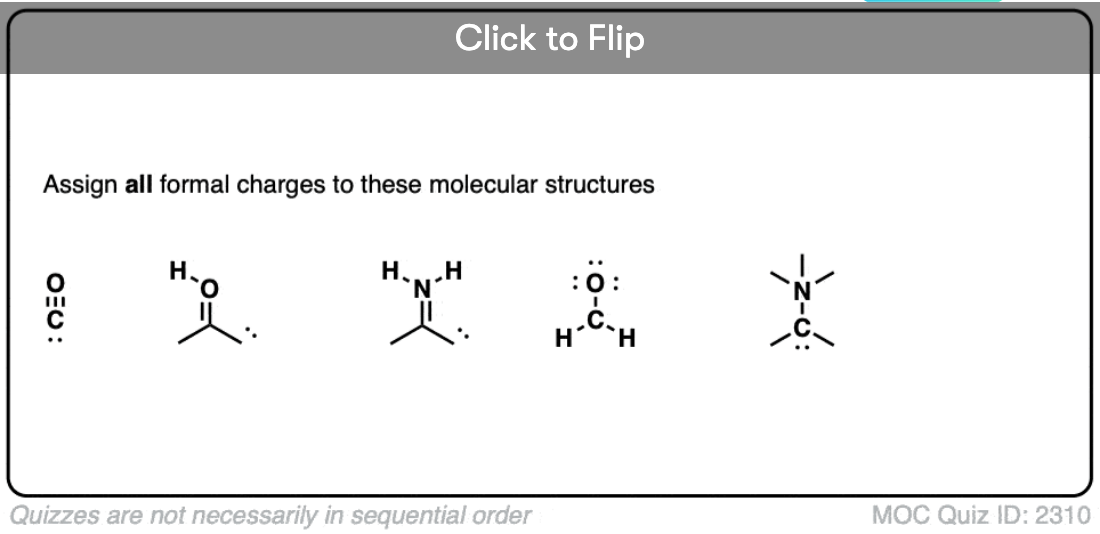
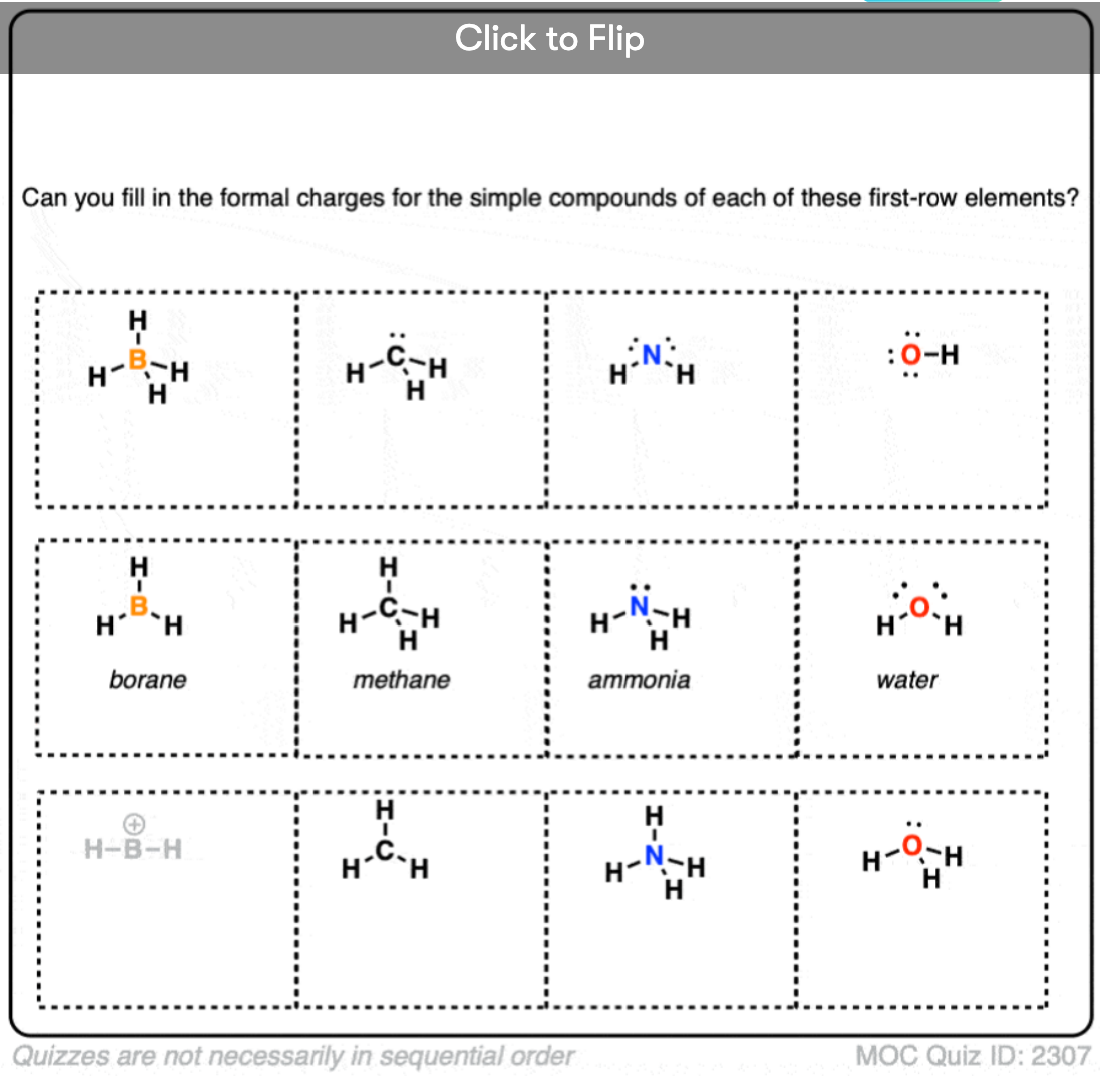
3. Formal Charges
Formal charge calculations are a staple. If you’re given the structure of a simple molecule, expect to be asked to quickly be able to calculate the formal charge of different atoms.
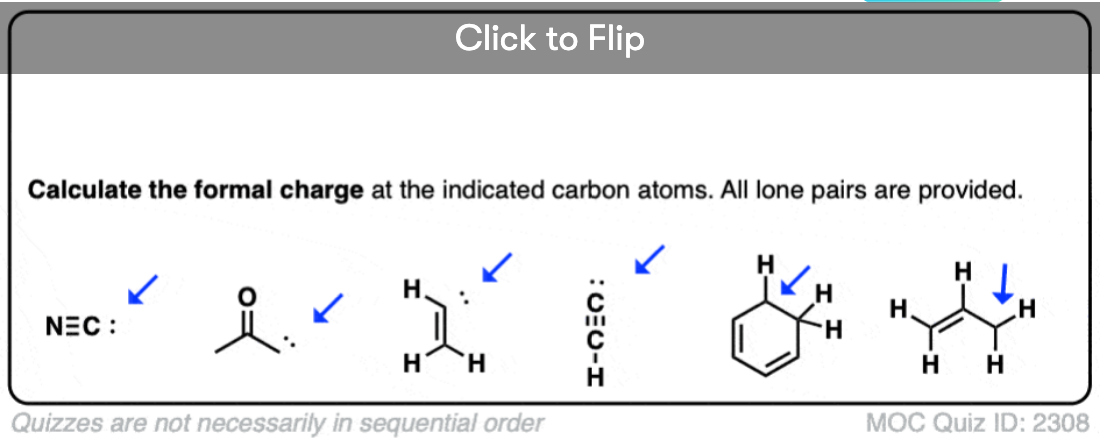
Become a MOC member to see the clickable quiz with answers on the back.
Become a MOC member to see the clickable quiz with answers on the back.
Become a MOC member to see the clickable quiz with answers on the back.
Here’s the final boss:
Become a MOC member to see the clickable quiz with answers on the back.
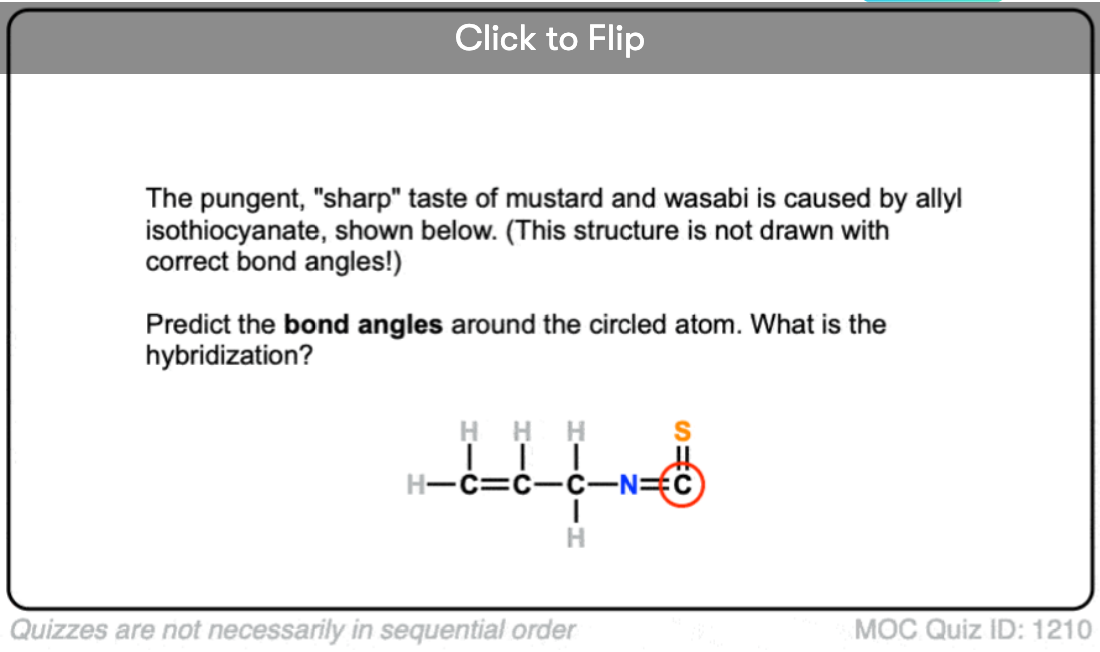
4. Geometry / Bond Angles
If you’re shown the chemical formula for a molecule, can you predict the geometry / bond angles at specific atoms? If you can determine hybridization, this should be straightforward.
Become a MOC member to see the clickable quiz with answers on the back.
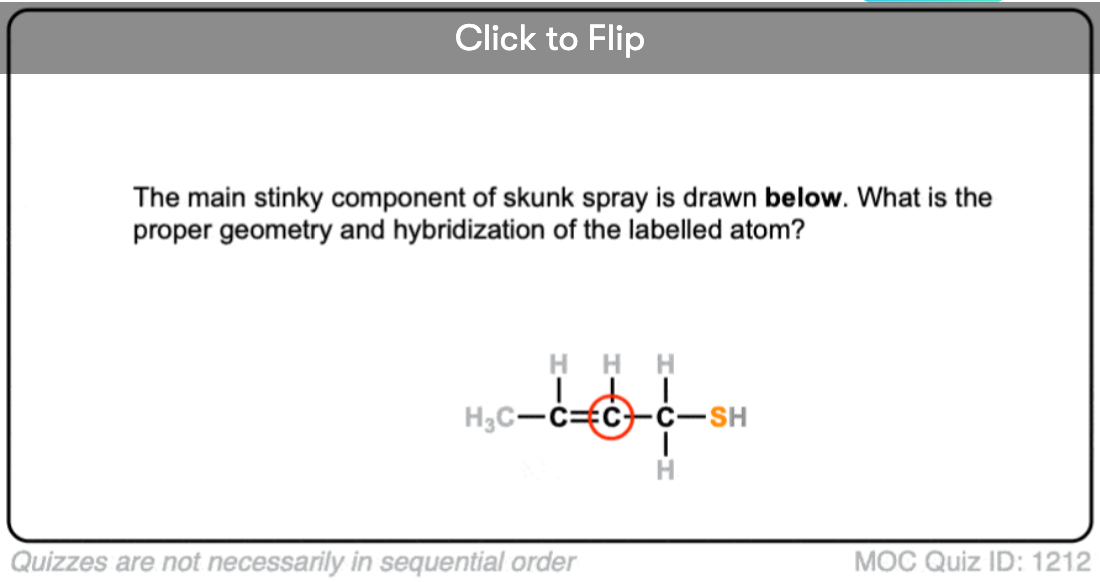
Become a MOC member to see the clickable quiz with answers on the back.
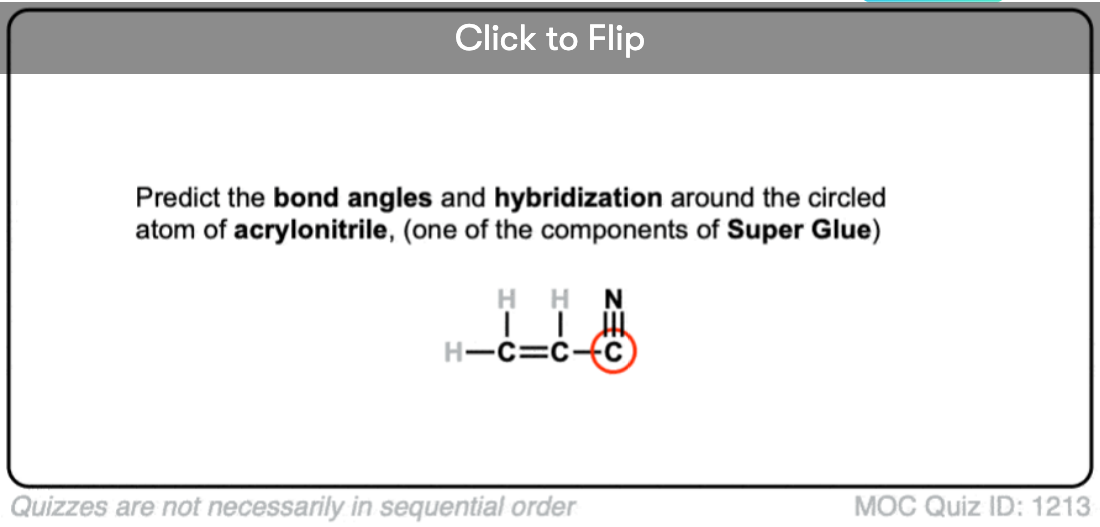
Become a MOC member to see the clickable quiz with answers on the back.
5. Bond types
Another wrinkle on hybridization questions is to be given the structure of a molecule and to identify the types of bonds. Not too tricky, but it starts with being able to assign hybridization. Here are some examples.
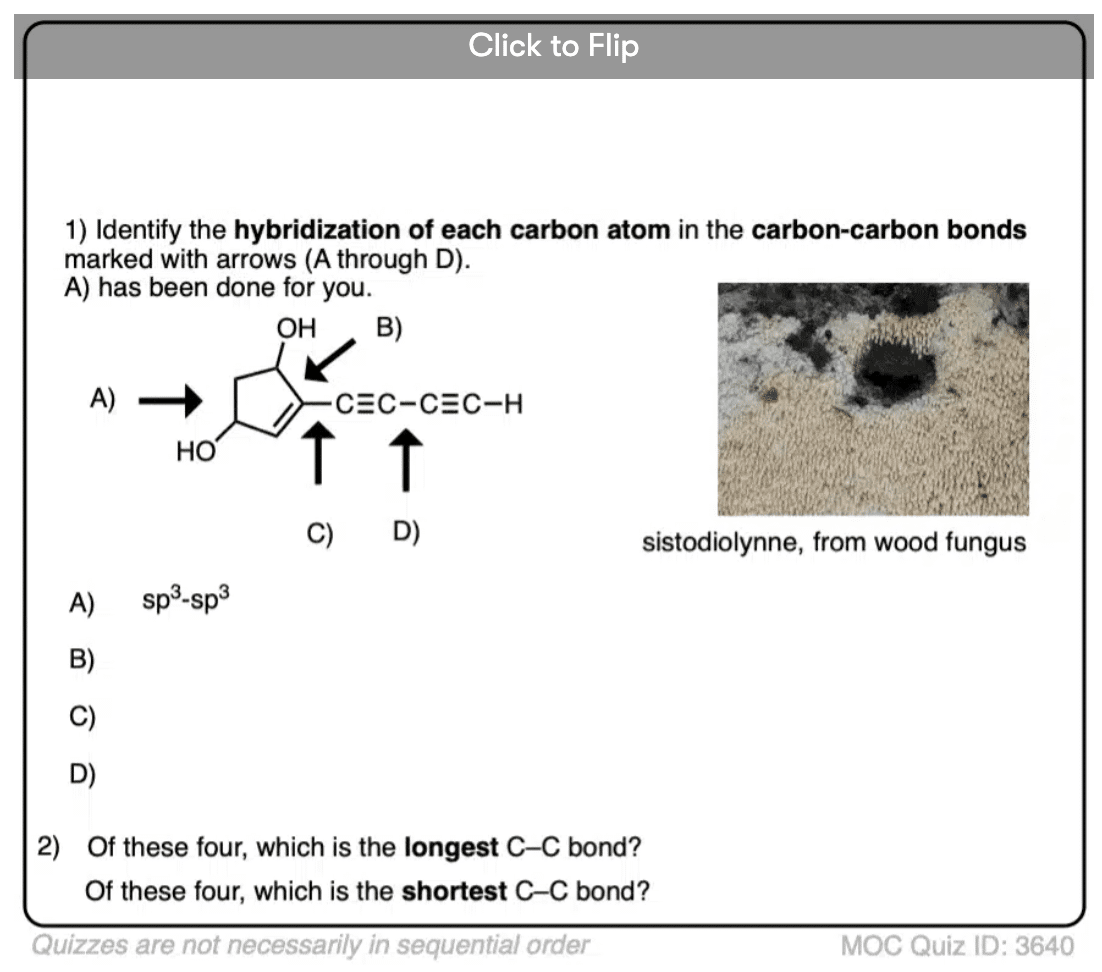
Become a MOC member to see the clickable quiz with answers on the back.
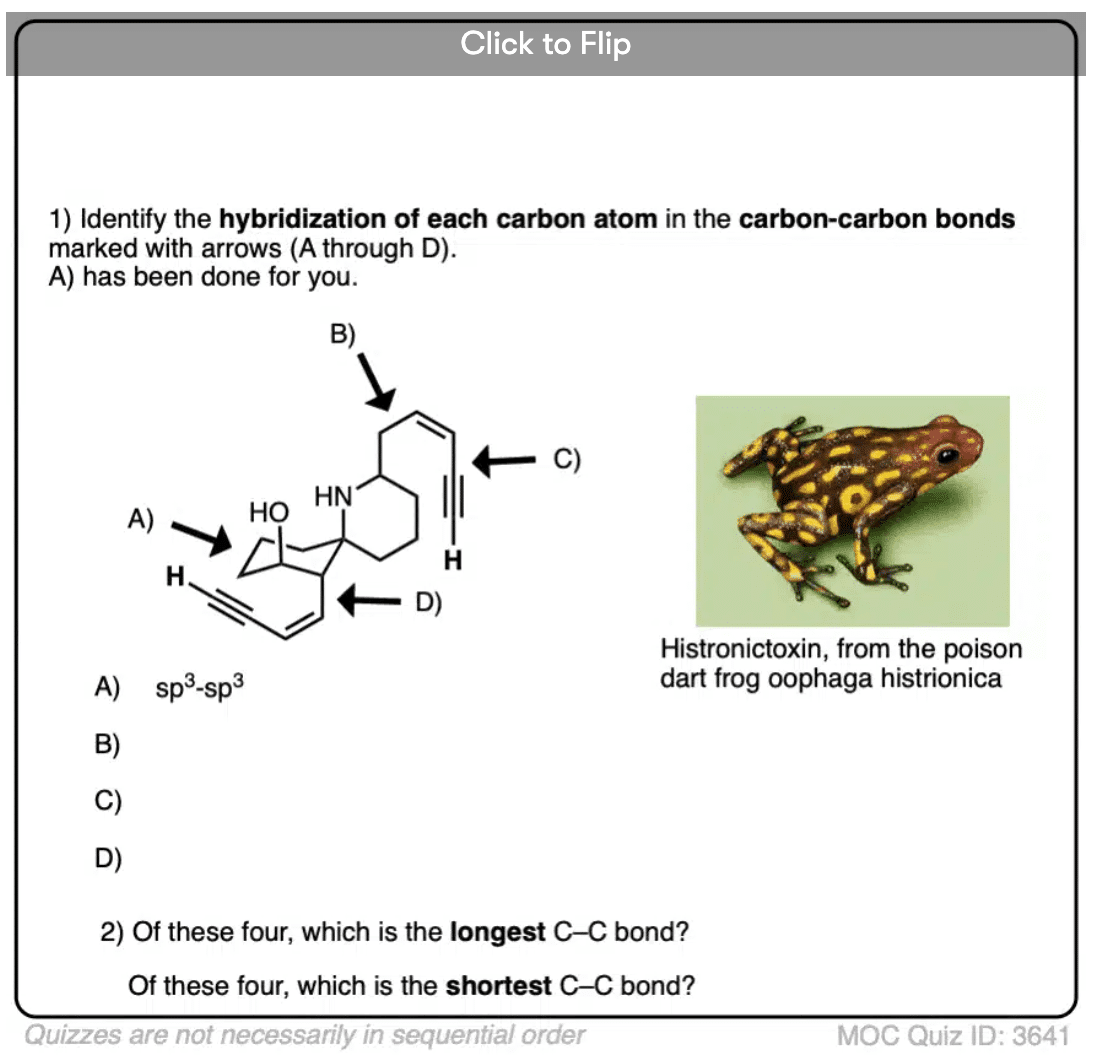
Become a MOC member to see the clickable quiz with answers on the back.
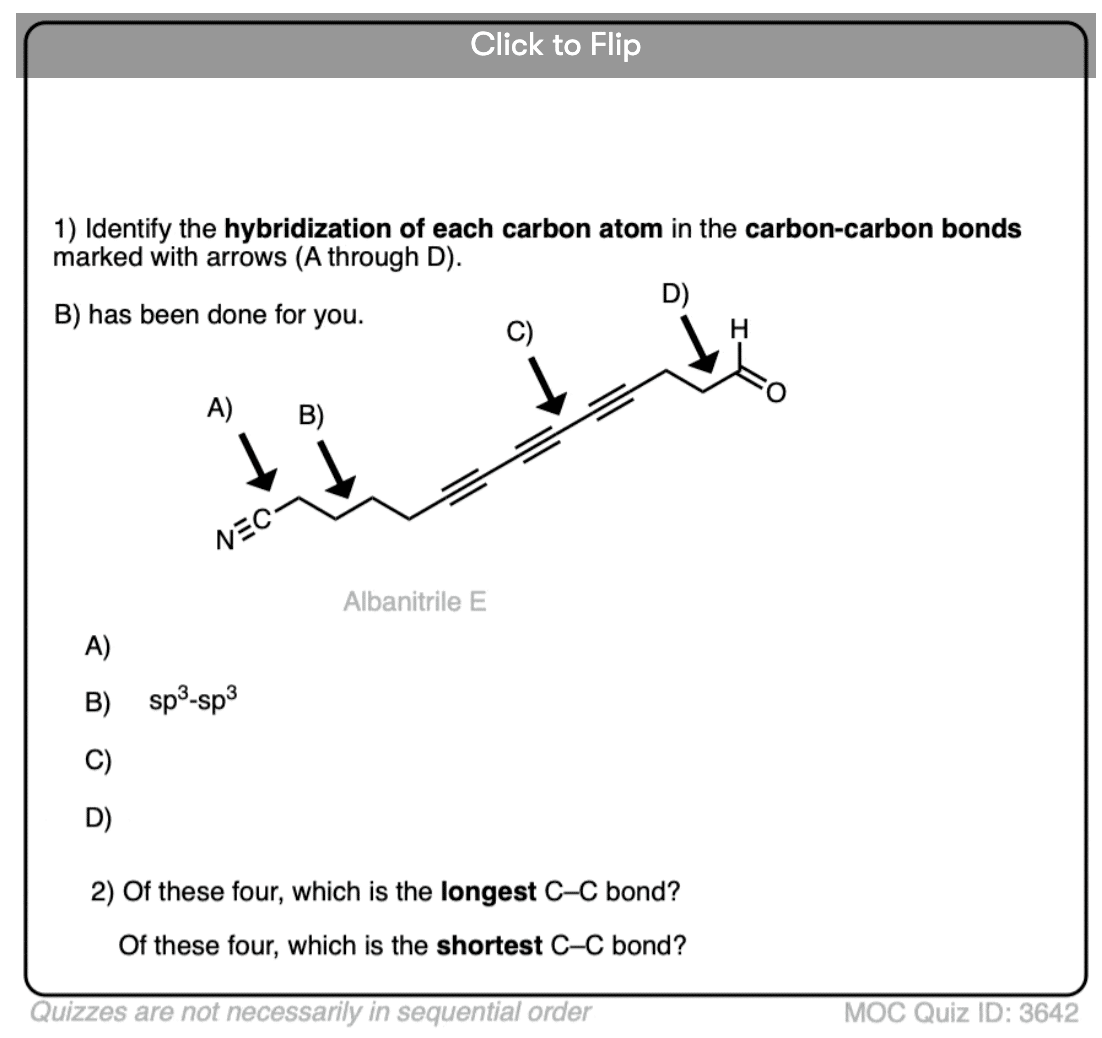
Become a MOC member to see the clickable quiz with answers on the back.
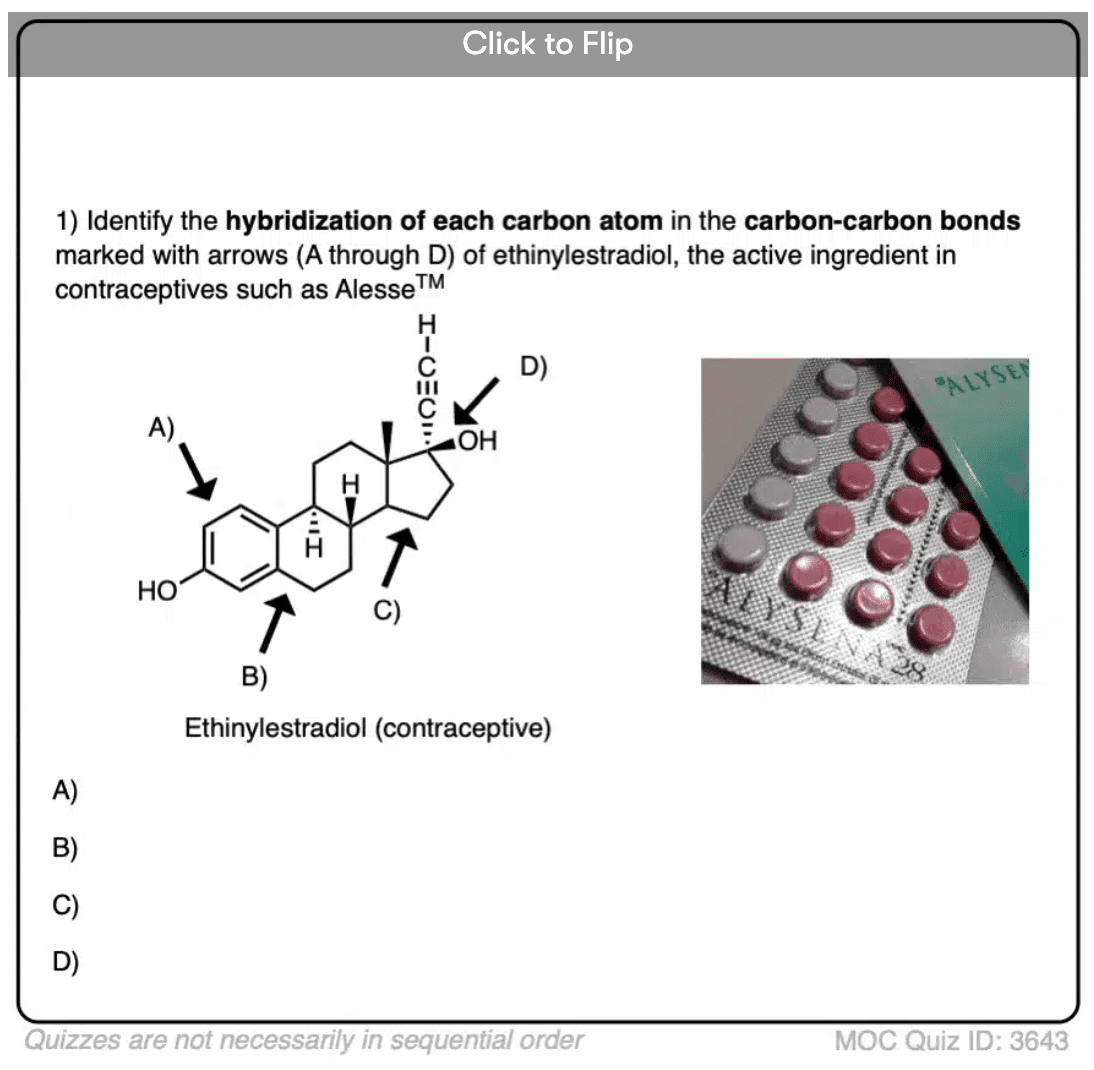
Become a MOC member to see the clickable quiz with answers on the back.
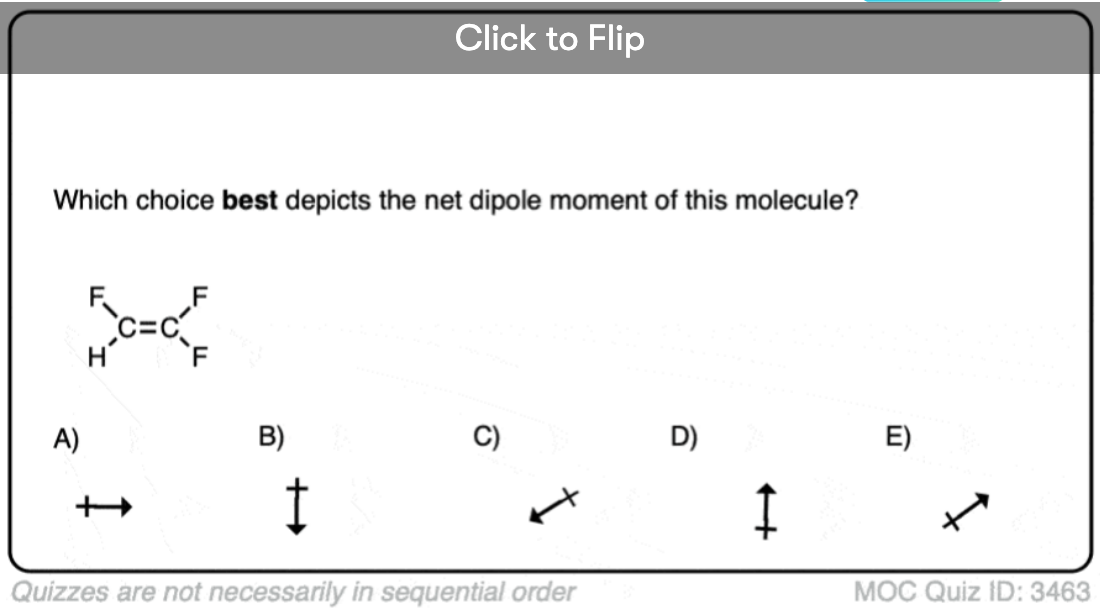
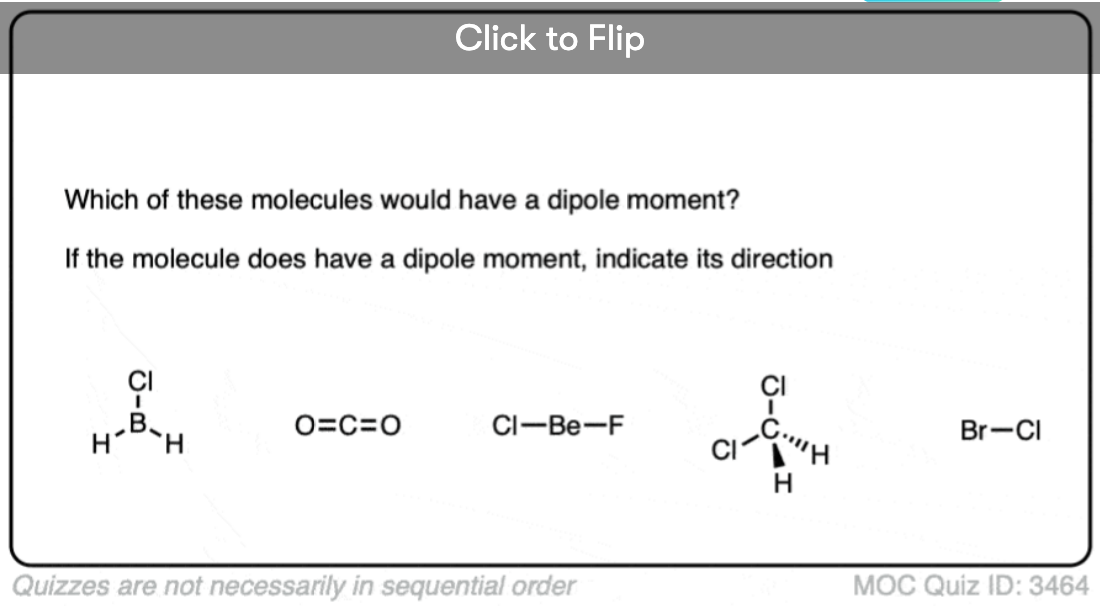
6. Dipole moments
Not a huge component of midterms, but recognizing dipoles and dipole moments in molecules is a fundamental skill. Understand that atoms have different electronegativities and this leads to bond polarization. Furthermore, these small dipoles are vectors, and the vector sum affects the overall dipole moment of the molecule.
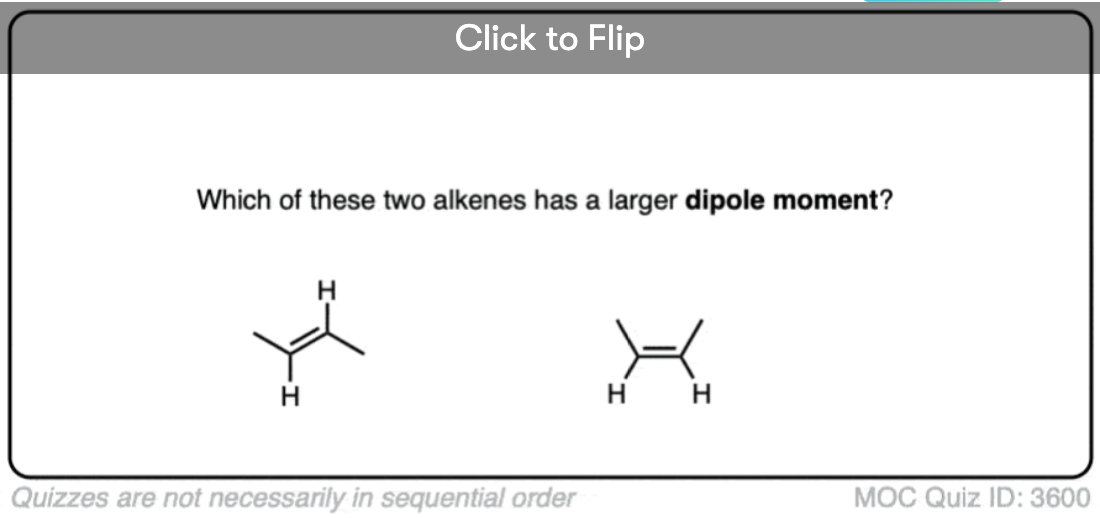
Become a MOC member to see the clickable quiz with answers on the back.
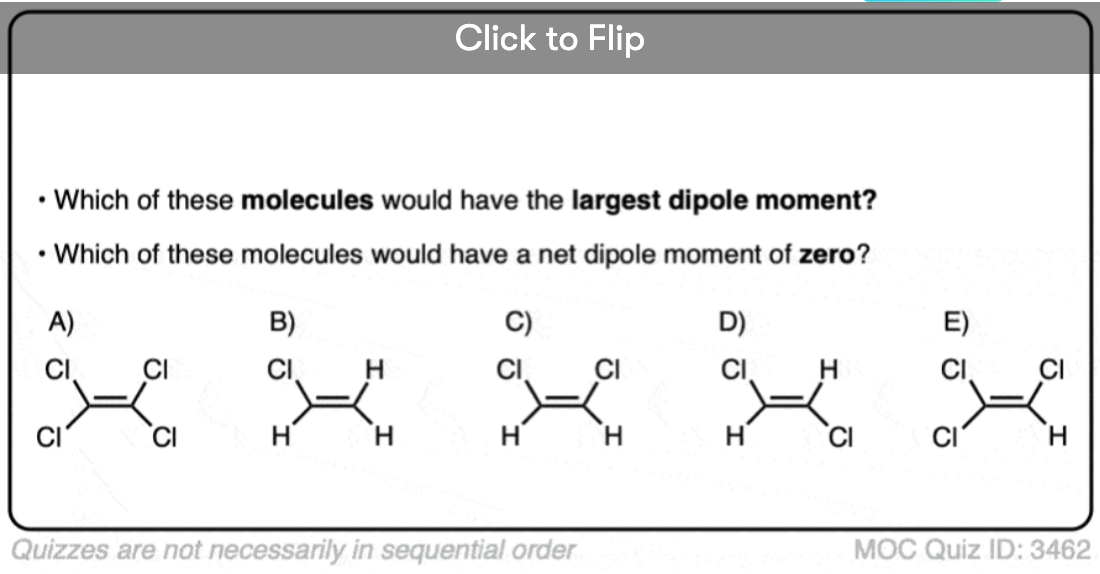
Become a MOC member to see the clickable quiz with answers on the back.
Become a MOC member to see the clickable quiz with answers on the back.
Become a MOC member to see the clickable quiz with answers on the back.
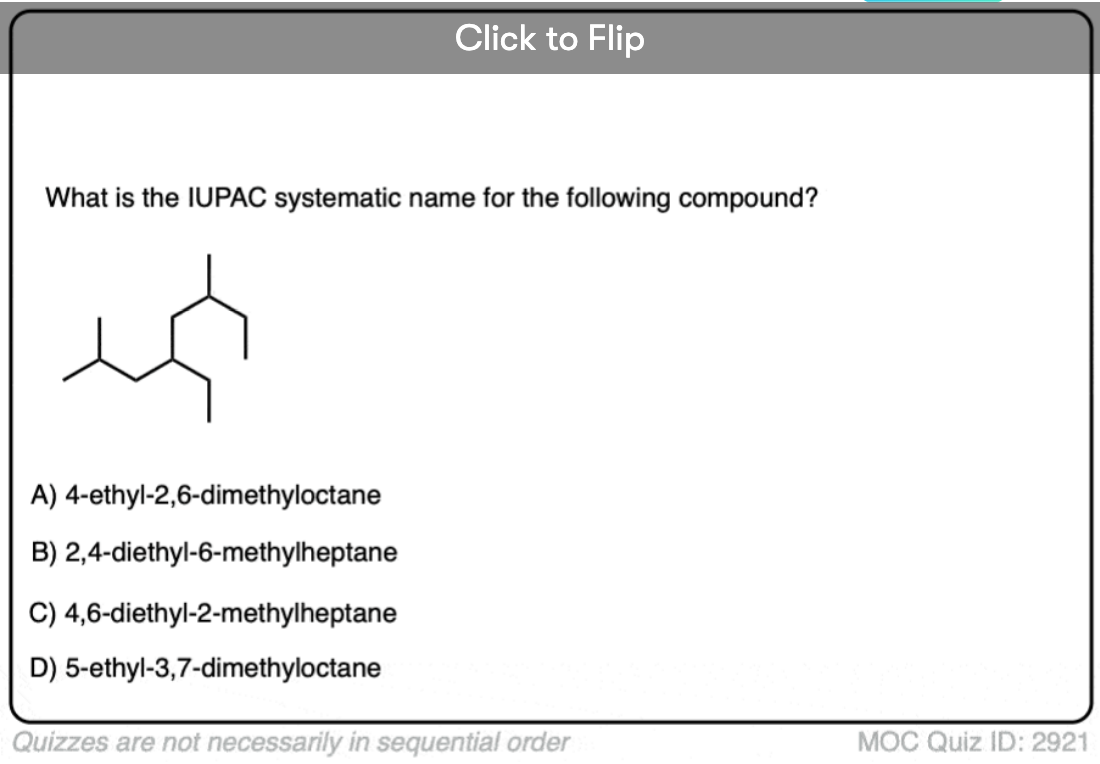
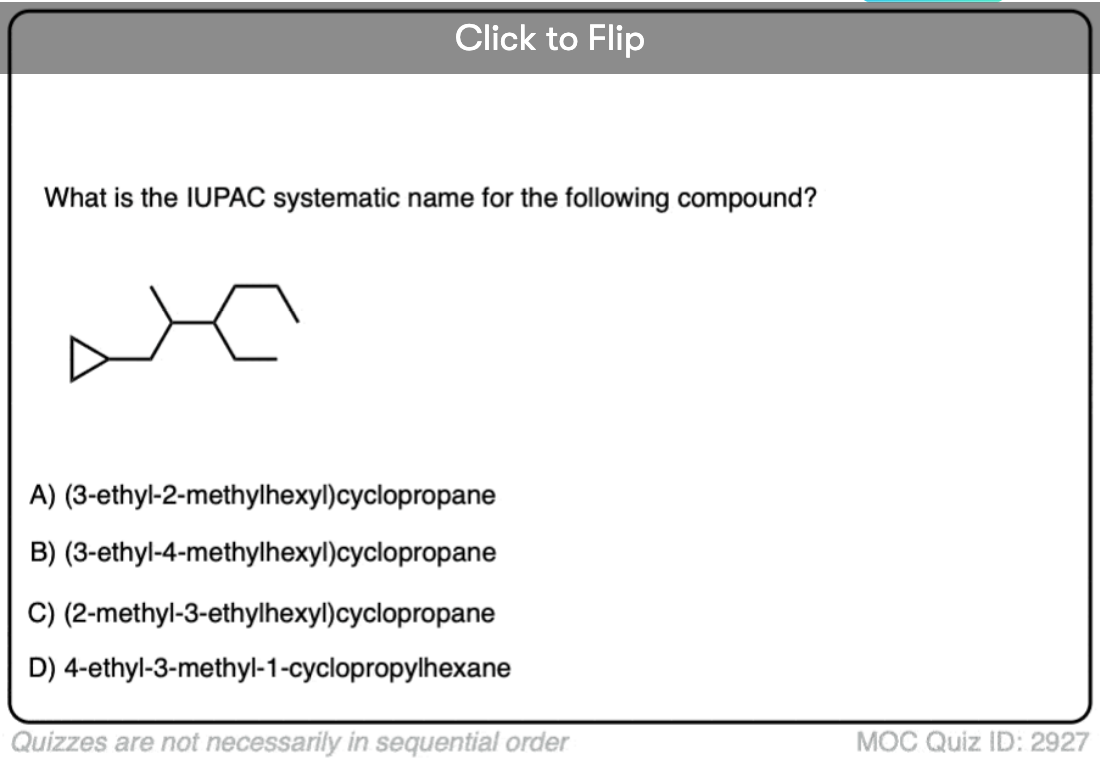
7. Simple nomenclature
Identifying the longest chain in an alkane and properly assigning substituents and naming locants is important. So is being able to determine whether different carbons are primary, secondary or tertiary. This latter skill is absolutely crucial for later success in the course!
Become a MOC member to see the clickable quiz with answers on the back.
Become a MOC member to see the clickable quiz with answers on the back.
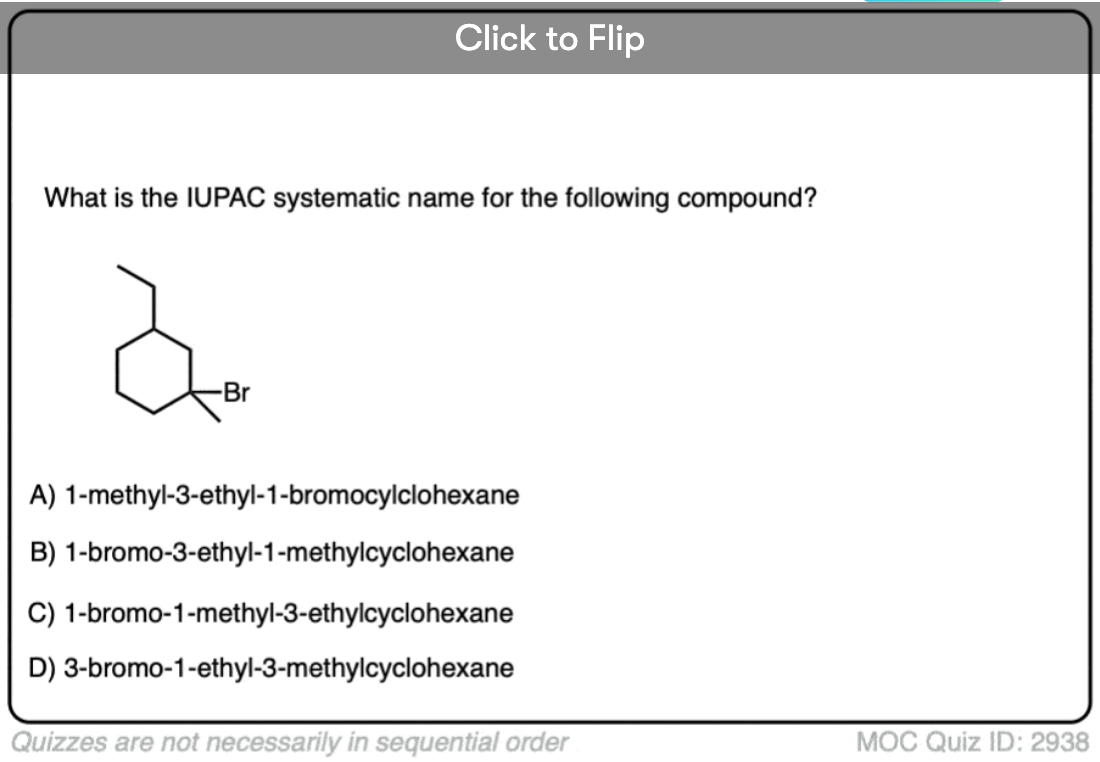
Become a MOC member to see the clickable quiz with answers on the back.
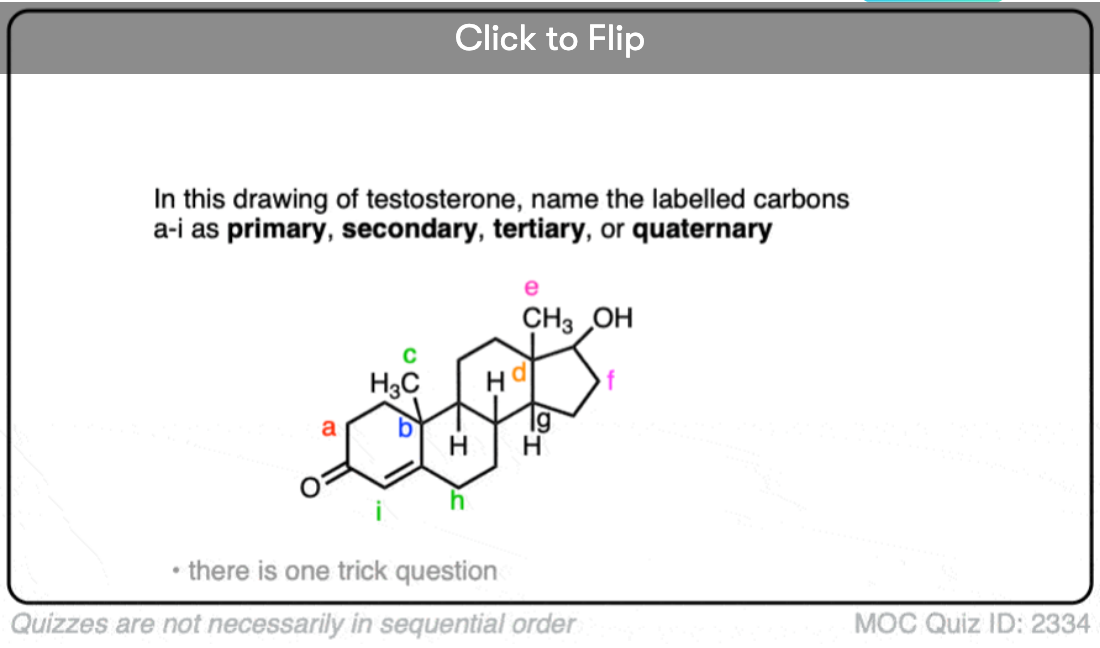
Become a MOC member to see the clickable quiz with answers on the back.
8. Boiling / melting points
Here, just know the trends. Part 1 is recognizing the four intermolecular forces and how they affect boiling points. Part 2 is looking at other factors such as the molecular weight, geometry, and number of polar functional groups in each molecule to make a decision. Melting points may also make an appearance.
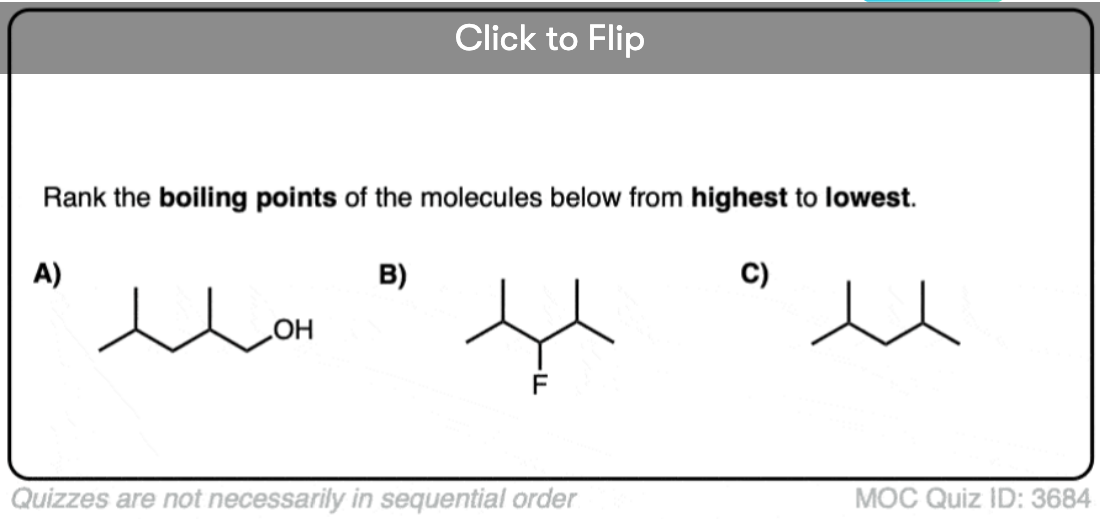
Become a MOC member to see the clickable quiz with answers on the back.
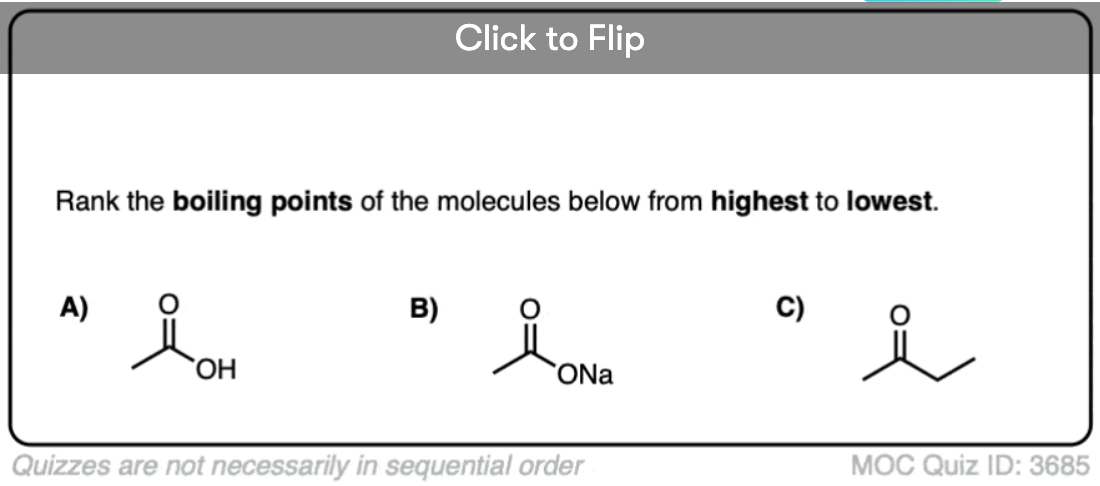
Become a MOC member to see the clickable quiz with answers on the back.
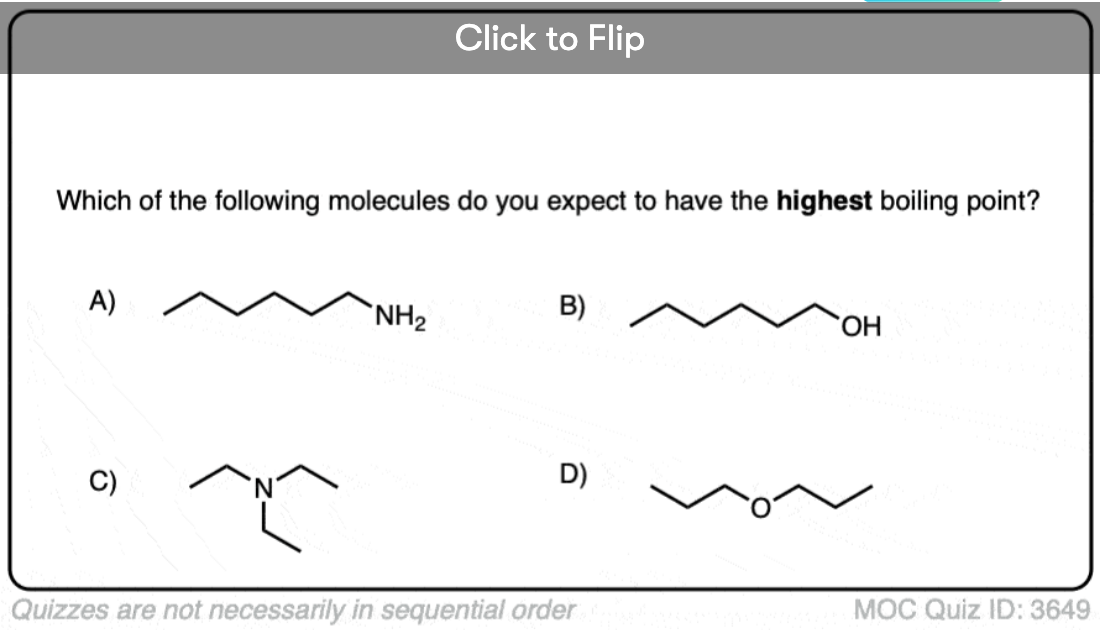
Become a MOC member to see the clickable quiz with answers on the back.
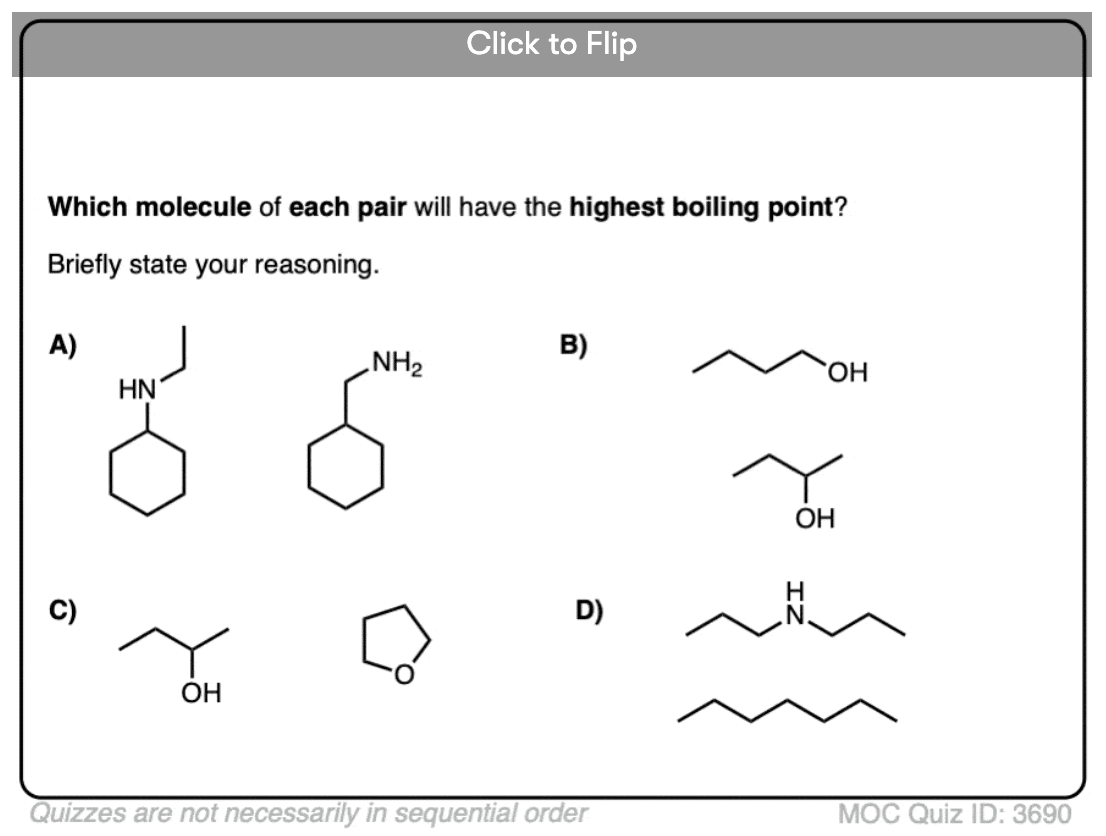
Become a MOC member to see the clickable quiz with answers on the back.
9. Resonance
A fundamental subject. It’s important to be able to recognize resonance forms, first of all (don’t break single bonds! don’t move atoms!) and then to be able to rank them in order of their importance (full octets, put negative charges on least basic atoms, carbocations with adjacent alkyl groups are best…).
Even if you’re taking Org 2 these are worth revisiting, since resonance is a huge theme all throughout Org 2.
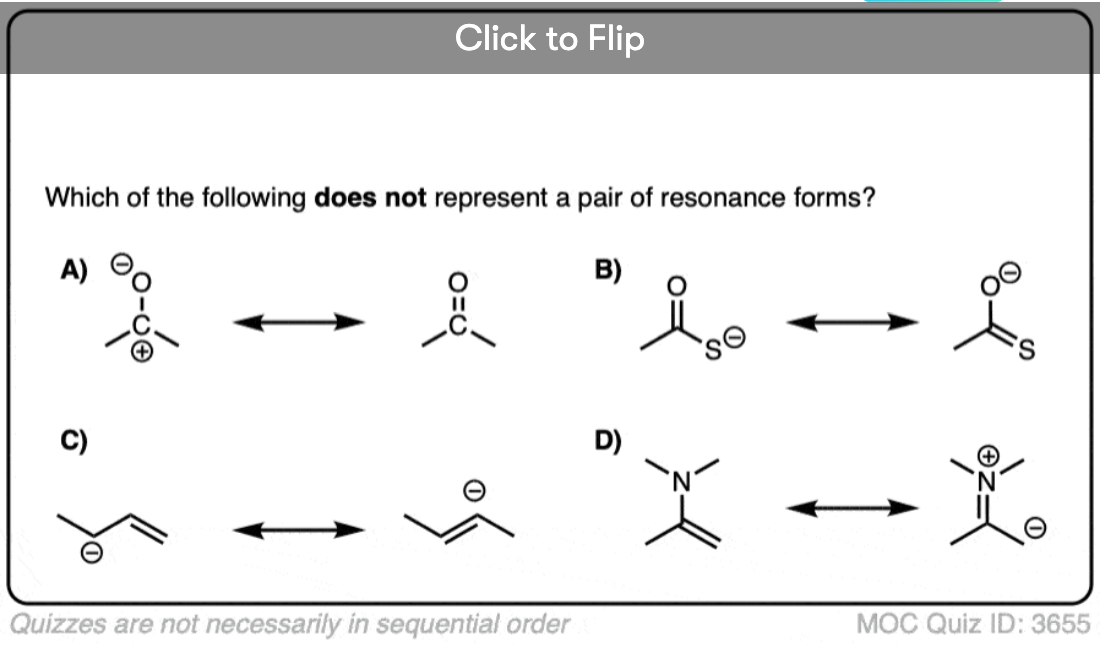
Become a MOC member to see the clickable quiz with answers on the back.
Become a MOC member to see the clickable quiz with answers on the back.
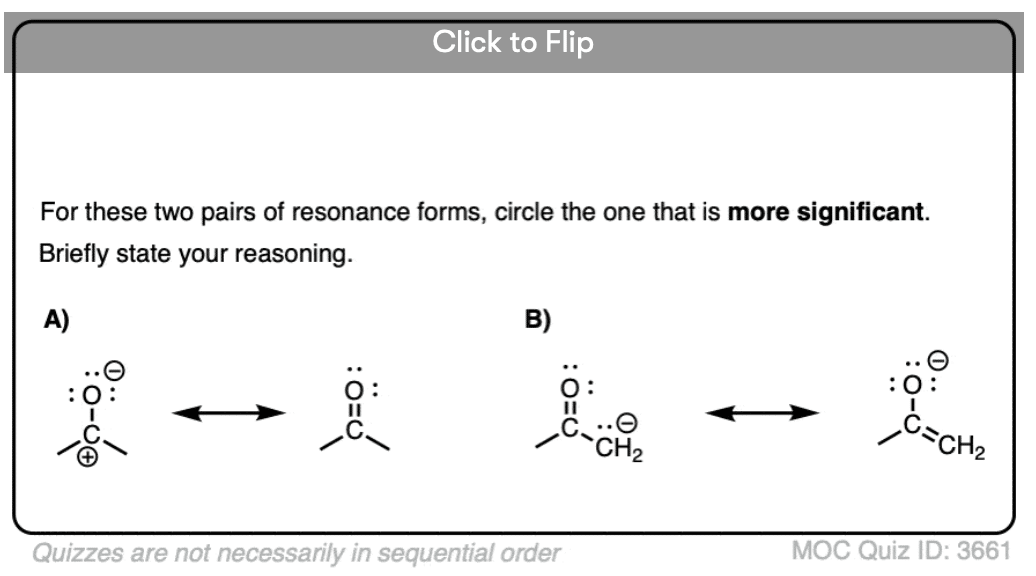
Become a MOC member to see the clickable quiz with answers on the back.
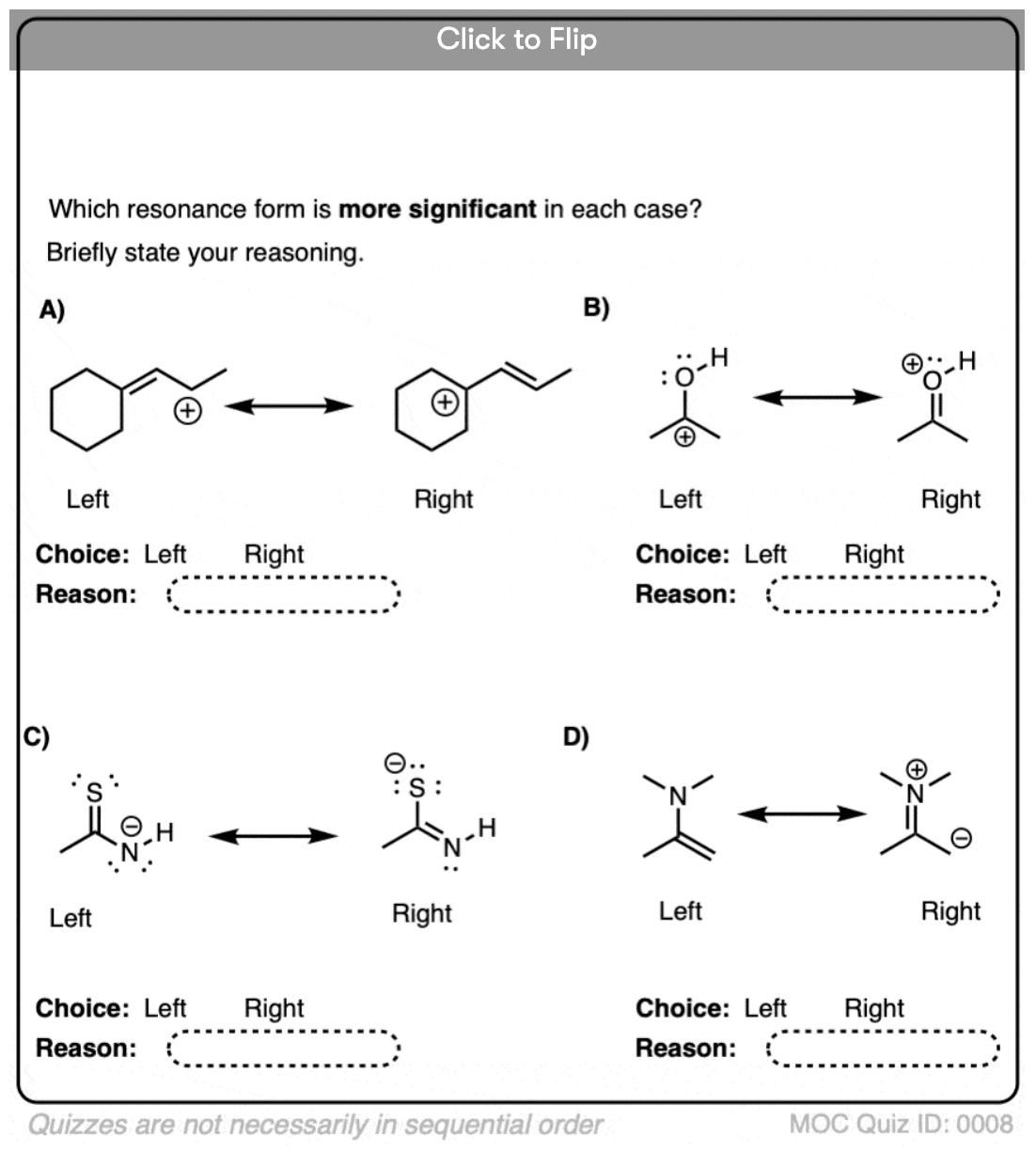
Become a MOC member to see the clickable quiz with answers on the back.
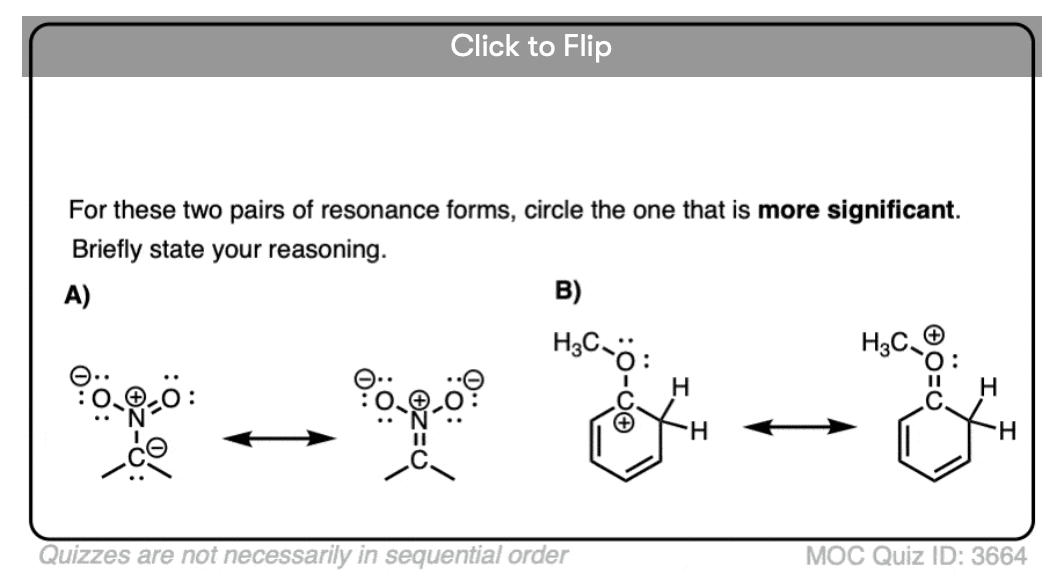
Become a MOC member to see the clickable quiz with answers on the back.
10. Acid Base
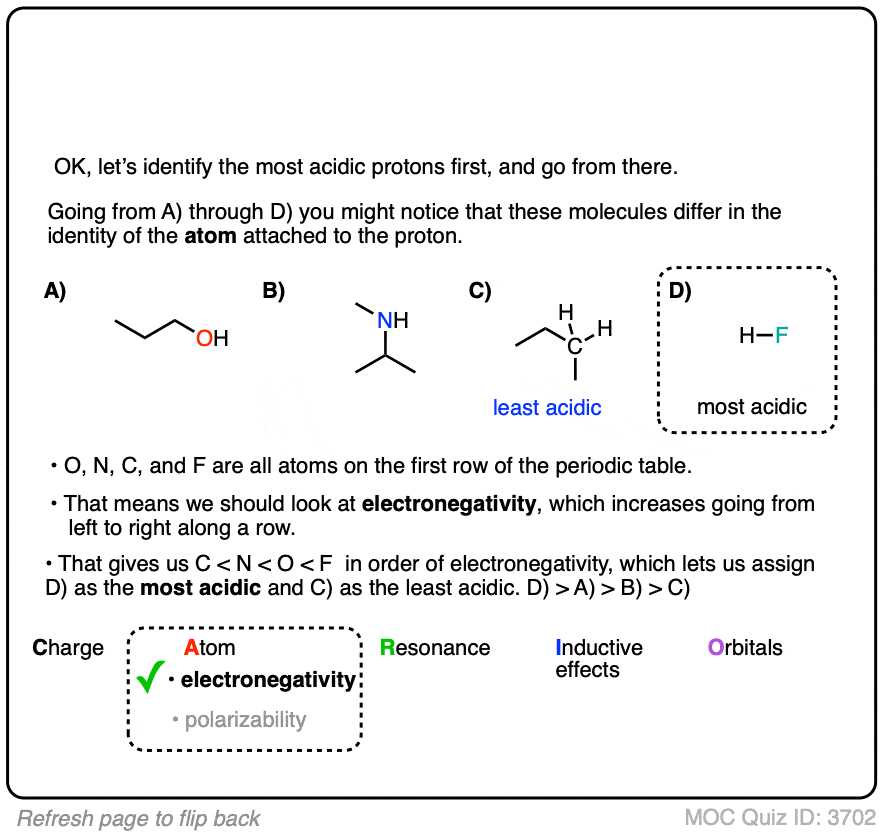
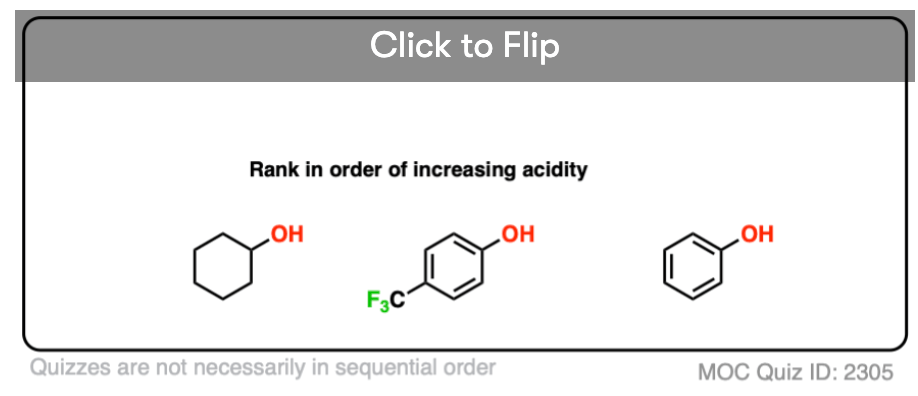
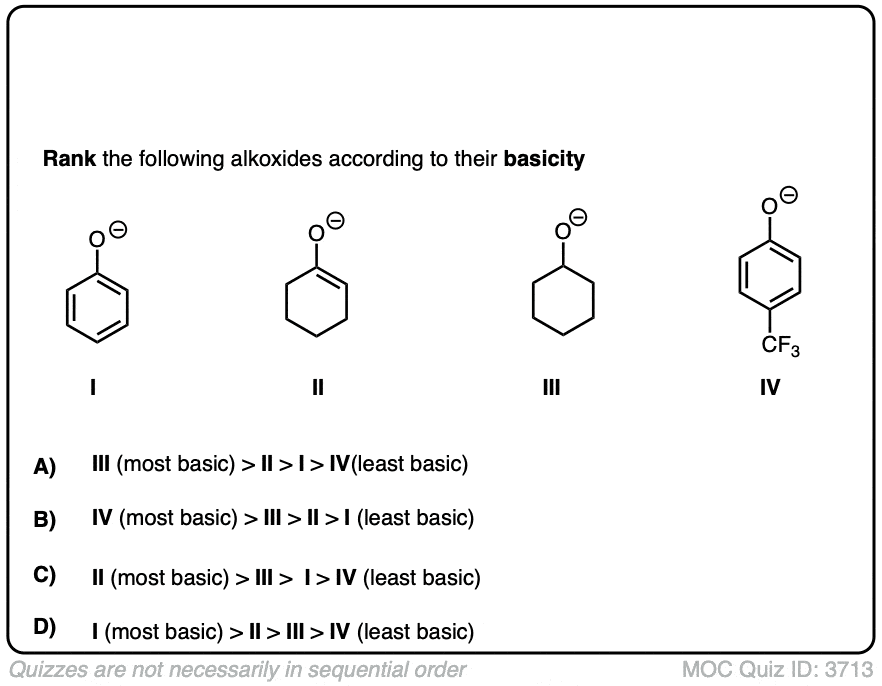
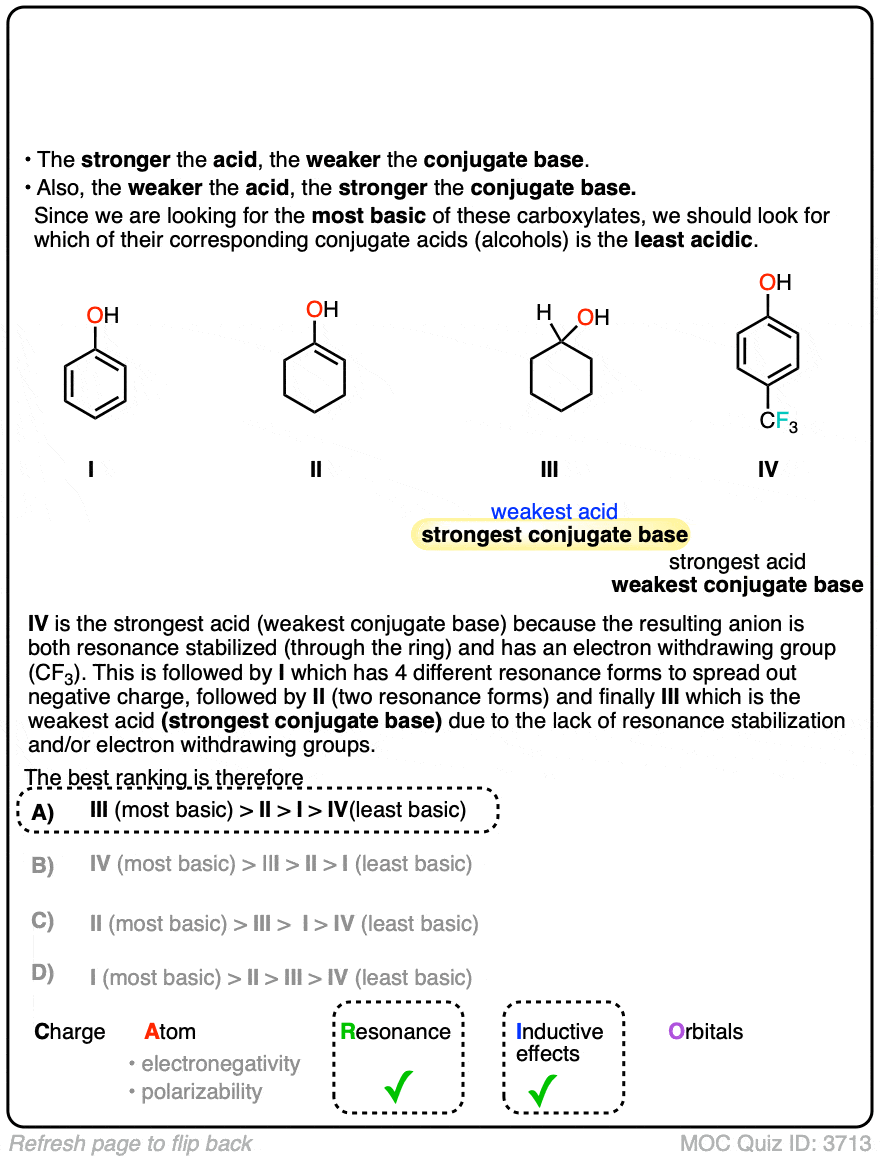
Another fundamental subject, which is essentially asking, “what factors stabilize negative charge?” (there are 5 big ones). Understanding that acid-base equilibria favor formation of the most stable conjugate base.
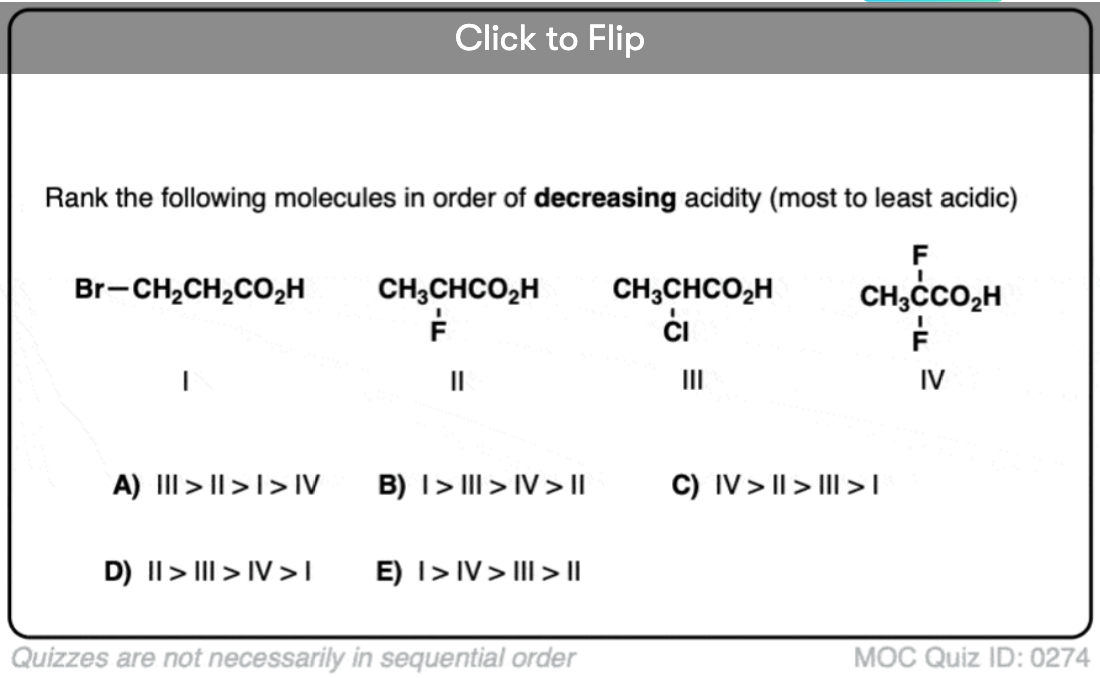
Become a MOC member to see the clickable quiz with answers on the back.
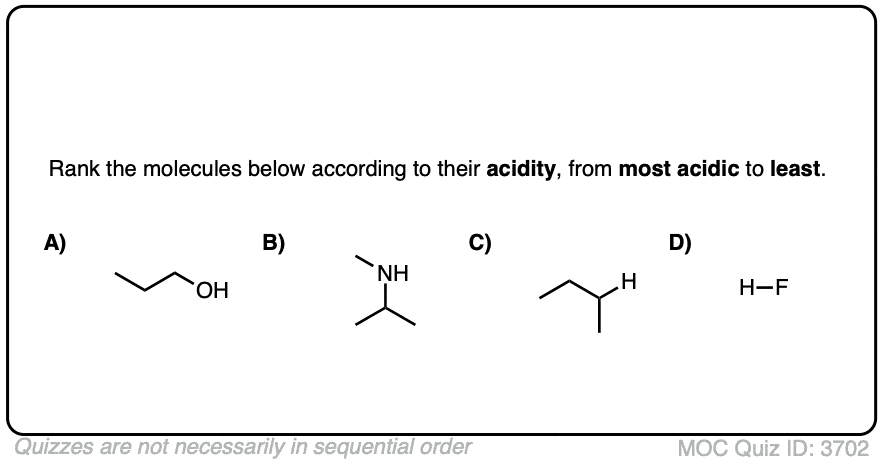 Click to Flip
Become a MOC member to see the clickable quiz with answers on the back.
 Click to Flip
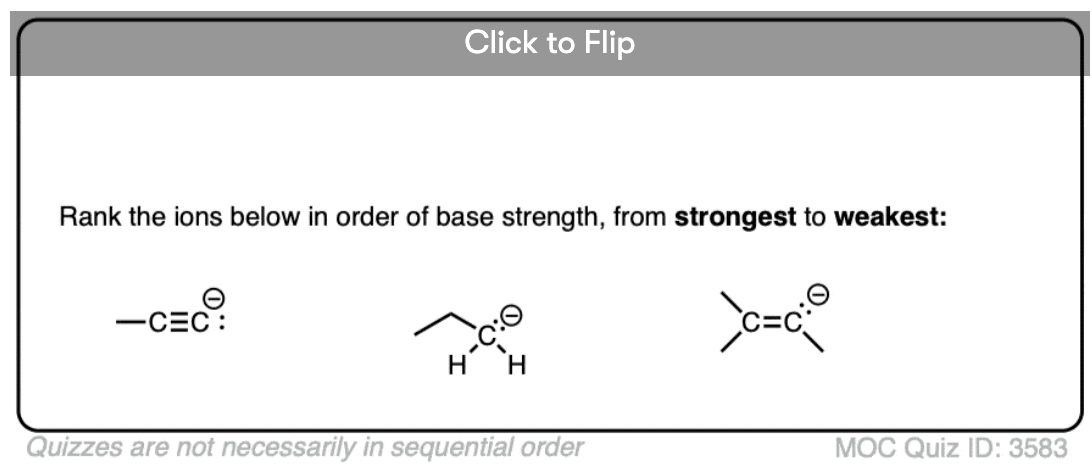
Become a MOC member to see the clickable quiz with answers on the back.
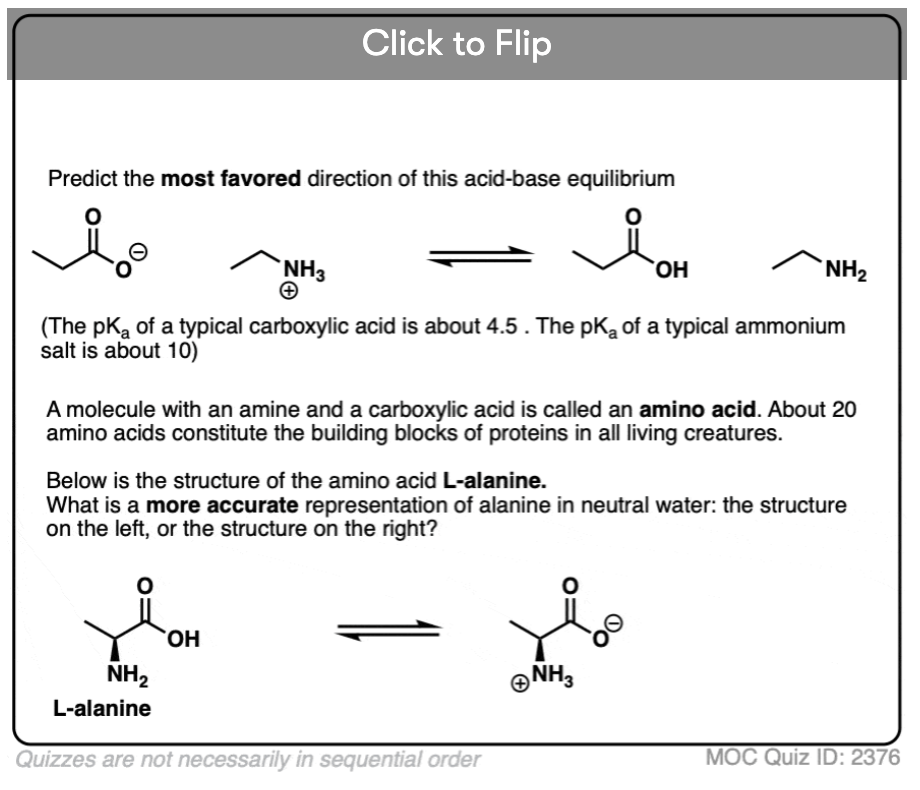
Become a MOC member to see the clickable quiz with answers on the back.
Comments
Comment section